
ROMO1 (NM_080748) Human Over-expression Lysate
SKU
LC409065
Lyophilized ROMO1 HEK293T cell transient overexpression lysate (as WB positive control)

$206.00
2 Weeks*
Specifications
| Product Data | |
| Species | Human |
|---|---|
| Expression Host | HEK293T |
| Expression cDNA Clone or AA Sequence | TrueORF Clone RC210655 |
| Tag | C-Myc/DDK |
| Detection Antibodies | Clone OTI4C5, Anti-DDK (FLAG) monoclonal antibody (TA50011-100) |
| ACCN | NM_080748, NP_542786 |
| Synonyms | bA353C18.2; C20orf52; MTGM; MTGMP |
| Predicted MW | 8.2 kDa |
| Components | 1 vial of 20 ug lyophilized total protein derived from gene specific transient over-expression cell lysate |
| Storage | The lysate can be shipped at ambient temperature, however upon receipt of the sample store at -20°C. Lysate samples are stable for 12 months from the date of receipt when stored at -20°C in their original lyophilized form. After reconstitution, avoid repeat freeze thaw cycles and store at -80°C. Lysate samples are stable for 12 months from date of receipt when stored at -20°C. |
| Shipping | Blue Ice |
| Preparation | HEK293T cells in 10-cm dishes were transiently transfected with MegaTran Transfection Reagent (TT200002) and 5ug TrueORF cDNA plasmid. Transfected cells were cultured for 48hrs before collection. The cells were lysed in modified RIPA buffer (25mM Tris-HCl pH7.6, 150mM NaCl, 1% NP-40, 1mM EDTA, 1xProteinase inhibitor cocktail mix (Sigma), 1mM PMSF and 1mM Na3VO4), and then centrifuged to clarify the lysate. Protein concentration was measured by BCA kit (Thermo Scientific Inc.). To facilitate transportation and protein, the products are supplied as lyophilized proteins. |
| Reconstitution Method | The 20 µg lyophilized sample can be reconstituted with deionized water, or directly into 1x SDS-PAGE running buffer (with reducing agent) if the sample is being prepared directly to be run on a gel. The lyophilized 20 ug product is derived from a liquid solution at 1 mg/ml of total lysate protein, thus reconstituting back to 1 mg/ml using 20 µl is recommended. After reconstitution, avoid repeat freeze thaw cycles and store at -80°C. |
| Reference Data | |
| RefSeq | NP_542786 |
| Locus ID | 140823 |
| Cytogenetics | 20q11.22 |
| Protein Families | WB |
Reviews


Documents
| Product Manuals |
| FAQs |
| SDS |
Resources
| Recombinant Protein Resources |
Other "ROMO1" proteins (3)
| SKU | Description | Size | Price | |
|---|---|---|---|---|
| PH310655 | ROMO1 MS Standard C13 and N15-labeled recombinant protein (NP_542786) | 10 ug |
$3,360.00
|
|
| LY409065 | Transient overexpression lysate of reactive oxygen species modulator 1 (ROMO1), nuclear gene encoding mitochondrial protein (as WB positive control) | 100 ug |
$436.00
|
|
| TP310655 | Recombinant protein of human reactive oxygen species modulator 1 (ROMO1), nuclear gene encoding mitochondrial protein, 20 µg | 20 ug |
$737.00
|
|
Citations
Overexpression of Romo1 is an unfavorable prognostic biomarker and a predictor of lymphatic metastasis in non-small cell lung cancer patients
Kim, Jo, Kim et al
Onco Targets Ther (2018) 11, 4233-4246 DOI: 10.2147/OTT.S161587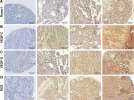
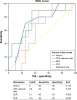
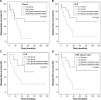
Kim, Jo, Kim et al
Onco Targets Ther (2018) 11, 4233-4246 DOI: 10.2147/OTT.S161587
AI Summary: OriGene's Romo1 antibody was used for immunohistochemical analysis to assess Romo1 expression in tumor tissues, enabling the study to link Romo1 levels with prognosis and lymphatic metastasis in non-small cell lung cancer patients.
Snippet: Then, we blocked the TMA slides with blocking buffer, and incubated them with antibodies for Romo1 (OriGene, Rockville, MD, USA) at a 1:150 dilution, VEGF-D (Abcam, Cambridge, UK) at a 1:50 dilution, and VEGF-C (Abnova, Taipei City, Taiwan) at a 1:25 dilution
Reactive oxygen species modulator-1 (Romo1) predicts unfavorable prognosis in colorectal cancer patients
Kim, Jo, Kim et al
PLoS ONE (2017) 12 (5), e0176834 DOI: 10.1371/journal.pone.0176834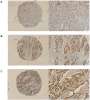
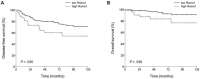
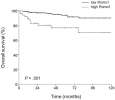
Kim, Jo, Kim et al
PLoS ONE (2017) 12 (5), e0176834 DOI: 10.1371/journal.pone.0176834
AI Summary: OriGene's Romo1 antibody was used for immunohistochemical detection of Romo1 expression in colorectal cancer tissue samples, enabling the study to assess its association with patient prognosis and tumor invasiveness.
Snippet: Then, we retrieved the antigens by heating samples at 95°C for 20min and cooling them for 10min. After universal block with blocking buffer, we incubated the TMA slides with Romo1 antibody (OriGene Technologies, Rockville, USA) at a 1:200 dilution. ... All 6 versions Cite SaveSaving
Maritoclax and dinaciclib inhibit MCL-1 activity and induce apoptosis in both a MCL-1-dependent and -independent manner
Varadarajan, Poornima, Milani et al
Oncotarget (2015) 6 (14), 12668-81 DOI: 10.18632/oncotarget.3706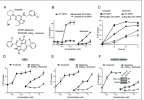
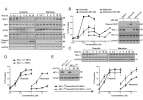
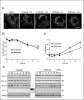
Varadarajan, Poornima, Milani et al
Oncotarget (2015) 6 (14), 12668-81 DOI: 10.18632/oncotarget.3706
Cited by 46
AI Summary: In this study, OriGene products including MCL-1 shRNA (OriGene, TL313386) and MCL-1 overexpression plasmid (OriGene, RC208445) were used to manipulate MCL-1 expression levels in order to investigate the effects of maritoclax and dinaciclib on apoptosis and MCL-1 dependency in cancer cells.
Showing 1-3 of 3 papers.
Powered by BizGenius
*Delivery time may vary from web posted schedule. Occasional delays may occur due to unforeseen
complexities in the preparation of your product. International customers may expect an additional 1-2 weeks
in shipping.
Related Products
- Price:
- Actual Price:
Welcome to OriGene AI!
I'm your AI-powered guide to everything OriGene.
Ask me anything:
- Product specs
- Ordering help
- Technical questions
- How to find exactly what your experiment needs
Prefer a live agent? Connect with us by clicking the green chat icon, as seen in the image below or email our team at custsupport@origene.com.
