
Unlocking the Role
of MSH3
A key biomarker in Huntington's Disease and genomic stability. Discover how MSH3 has emerged as a high-priority therapeutic target for neurodegenerative repeat expansion diseases.
The Emergence of MSH3 as a
Genetic Modifier
MutS homolog 3 (MSH3) is a critical component of the Mismatch Repair (MMR) pathway, traditionally recognized for its role in maintaining genomic stability and preventing carcinogenesis.
Therapeutic Target
GWAS Validated
CNS-Safe Intervention
MutSβ and the MIP-box Interaction
In the canonical MMR pathway, MSH3 functions as a heterodimer with MSH2 to form the MutSβ complex. This complex is specialized for the recognition of large DNA loops, typically those exceeding three nucleotides (>3 nt).
Key Distinction
This role is distinct from MutSα (MSH2-MSH6 heterodimer), which primarily handles base-base mismatches and smaller insertion-deletion loops.
Structural analysis reveals that MSH3's recruitment to the repair ecosystem is mediated by a specific MLH1-interacting protein (MIP) box. This conserved motif targets the S2 site of the MLH1 C-terminal domain (CTD).
MSH3: The Engine of Somatic
Expansion
While HD is an inherited disorder, the length of the inherited CAG tract is not static. Somatic repeat expansion causes these tracts to grow further within non-dividing cells.
Loop-to-Expansion Model
Somatic Mosaicism
Therapeutic Window
Mapping Risks and Safety Profiles
The clinical utility of MSH3 as a biomarker and target is underscored by its divergent disease associations.
Neurodegeneration
Oncology Profile
CNS Safety
Targeted MMRd Approach
MSH3-targeted therapies allow for the induction of "targeted MMRd" in the brain to stop expansion while avoiding the systemic risks of global MMR loss. This represents a paradigm shift in the treatment of repeat expansion disorders.
Related Biomarkers for Co-Study
The function of MSH3 is governed by complex protein-protein interactions within the MLH1 (CTD). High-level research into the MMR pathway necessitates the co-study of several interacting factors.
Validated Tools for MSH3 Research
The following validated tools, including those used in pivotal studies for protein verification and gene silencing, are available to support high-fidelity MSH3 research.
| Product Category | Catalog Number |
|---|---|
| Detection & Verification |
|
| Gene Modulation |
|
| Expression & Delivery |
|
| Analysis |
|
Featured Products
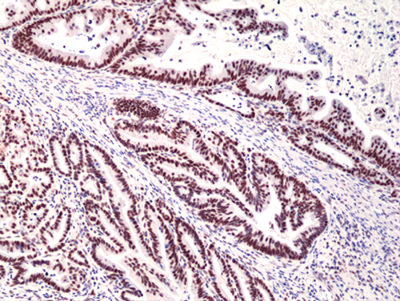
MSH3 Monoclonal Antibody
Clone RM405
Application: IHC, WB
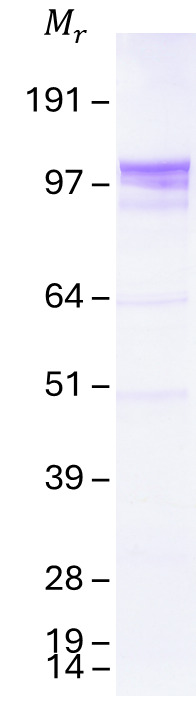
MSH3 Human Recombinant Protein
Full-length
HEK293T Expressed
Detection & Verification
| SKU | Name | Cart |
|---|---|---|
| TA323011 | MSH3 Rabbit Polyclonal Antibody | |
| TA398583 | MSH3 Rabbit Monoclonal Antibody [Clone ID: RM405] | |
| TS412391P5 | MSH3 CytoSection | |
| LY419328 | MSH3 (NM_002439) Human Over-expression Lysate |
Expression & Delivery
| SKU | Name | Cart |
|---|---|---|
| RC212391 | MSH3 (NM_002439) Human Tagged ORF Clone | |
| RG212391 | MSH3 (NM_002439) Human Tagged ORF Clone | |
| RR217479 | Msh3 (NM_001191957) Rat Tagged ORF Clone | |
| RC212391L4 | MSH3 (NM_002439) Human Tagged Lenti ORF Clone | |
| RC212391L3V | MSH3 (NM_002439) Human Tagged ORF Clone Lentiviral Particle | |
| RC212391L4V | MSH3 (NM_002439) Human Tagged ORF Clone Lentiviral Particle |
Analysis
| SKU | Name | Cart |
|---|---|---|
| HP206122 | MSH3 Human qPCR Primer Pair (NM_002439) |
The Future of MSH3-Targeted Therapies
Silencing MSH3 represents a paradigm shift in the treatment of repeat expansion disorders. By leveraging di-valent siRNA technology to achieve durable, potent reduction of MSH3 in the brain, it is now possible to arrest the molecular engine of the disease. This "targeted MMRd" approach offers a disease-modifying strategy that specifically blocks somatic mosaicism in the CNS while maintaining the genomic integrity required to prevent carcinogenesis.
Researchers are encouraged to utilize validated, high-quality molecular tools to further define the therapeutic windows of the MMR pathway and optimize the next generation of interventions for Huntington’s Disease and beyond.
Ready to Advance your Research?
Explore our comprehensive MSH3 research solution and discover how OriGene can support your breakthrough discoveries.
References:
|
1 Lack of correlation between MSH3 immunohistochemistry and microsatellite analysis for the detection of elevated microsatellite alterations at selected tetranucleotide repeats (EMAST) in colorectal cancers Published in Human Pathology |
PubMed: 34537247 |
|
2 Dose‑dependent reduction of somatic expansions but not Htt aggregates by di‑valent siRNA‑mediated silencing of MSH3 in HdhQ111 mice Published in Scientific Reports |
PubMed: 38267530 |
|
3 Targeting DNA Mismatch Repair as a Potential Therapeutic Strategy for Huntington’s Disease Published in Oligonucleotide Therapeutics Society |
View Publication |
|
4 PTC R&D Day 2025 Published in PTC Therapeutics |
View Publication |
|
5 Di-valent siRNA-mediated silencing of MSH3 blocks somatic repeat expansion in mouse models of Huntington's disease Published in Molecular Therapy |
PubMed: 37177784 |
|
6 MSH3 is a genetic modifier of somatic repeat instability in X-linked dystonia parkinsonism Published in The American Journal of Human Genetics |
PubMed: 40463055 |
|
7 New Insights from the Expression of the Mismatch Repair System in Pituitary Neuroendocrine Tumors Published in Endocrine Pathology |
PubMed: 41483255 |
|
8 Genetic modifiers of somatic expansion and clinical phenotypes in Huntington’s disease highlight shared and tissue-specific effects Published in Nature Genetics |
PubMed: 40490511 |
|
9 Disruption of protein–protein interaction hotspots in the C-terminal domain of MLH1 confers mismatch repair deficiency Published in NAR Cancer |
PubMed: 41480639 |
