Over-Expression Cell Lysates
Comprehensive library of whole-cell lysates from HEK293T cells over‑expressing target proteins. Validated positive controls for Western Blot and protein research applications.
Human Proteins
Proteome Coverage
Cell Expression
Tag Dectection

Validation Data
Proven Performance in Real Applications
See how OriGene over-expression lysates delivery reliable results across different experimental platforms and techniques.


Western Blot Controls
Positive Controls for Western Blot
OriGene's over-expression lysates are often cited for use as control in peer-reviewed articles.
Confirm Antibody Specificity with Confidence
Positive control in Western Blot: The specificity of a given antibody to CD2 is unknown. The antibody detects endogenous expression of a protein in Jurkat cells but not in other cell lines, raising the non-specificity concern of the antibody.
Adding a known positive CD2 over-expression cell lysate control along with a negative untransfected cell lysate confirms the CD2 detection.
Validates every stage of your Western blot workflow
Confirms antibody specificity against target protein
Includes negative untransfected lysate control
Pre-validated by Western Blot before shipping
Controls for Simple Western™ Platform
These lysates are validated for use in automated Simple Western platform from Bio‑Techne as a control. With access to over 20,000 human lysates, developing a high quality, well controlled experiment on the Simple Western platform is not difficult anymore.
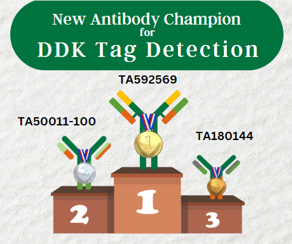
IDH1 over‑expression lysate (LY401782 and LC401782) was used as a control in the Simple Western system to validate the anti‑IDH1 mouse mAb (TA500610). Electropherogram view plots chemiluminescence by molecular weight along the capillary at a 1:50 dilution of the primary IDH1 antibody, demonstrating enriched IDH1 expression in the over‑expression lysate. The anti‑DDK signal overlaps with the gene‑specific band, highlighting the utility of the anti‑DDK antibody (TA180144) for convenient detection of target protein expression.

Antibody Validation
Over-expression lysates can serve as positive lysates for qualitative antibody validation using Western blot.

Qualitative Antibody Evaluation
Five commercial antibodies against human P53 evaluated in Western blot experiments with P53 over‑expression cell lysate.
Lysate was serially diluted before SDS‑PAGE and immunoblotting. Antibody quality and star rating is based on P53 protein detection level.
Protein Arrays for Large‑Scale Screening
OriGene’s high‑density protein array is made with more than 10,000 unique over‑expression lysates, printed in duplicate, with controls.
Such protein arrays can be used in antibody specificity validation, protein‑protein interaction, and auto‑antibody screening studies.

Avaliable Formats
Two Convenient Formulations & Sizes
Over‑expression lysates are available in liquid and lyophilized formats to fit your lab’s workflow, storage capacity, and experimental needs.
Liquid Lysates
Ready-to-use liquid format supplied with 100 µg of total protein, ideal for immediate Western blot and immunoassay workflows.
Lyophilized Lysates
Freeze‑dried format supplied with 20 µg of total protein for extended shelf life and convenient ambient shipping and storage.
Note: Total protein refers to the concentration of all proteins in the lysate sample, not the specific over‑expressed protein of interest.
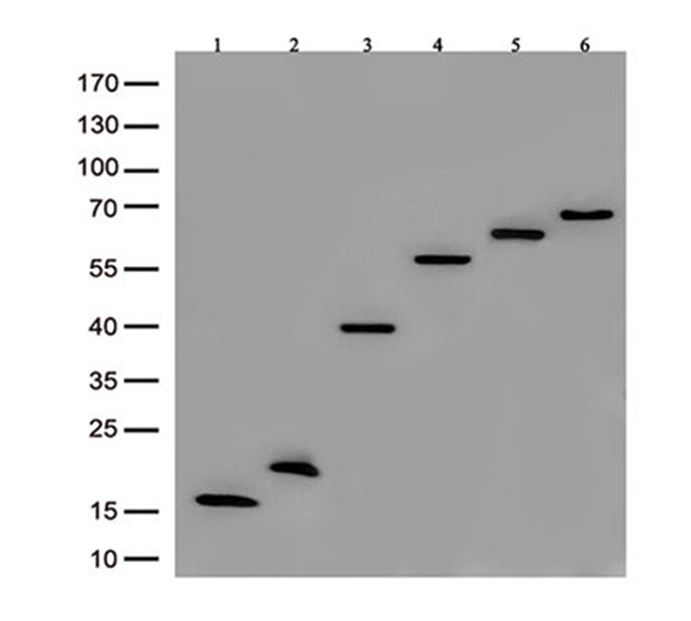
Each lysate sample has been validated by Western blot to confirm overexpression of the C‑terminal DDK‑tagged protein of interest.
Peer-Reviewed Research
Recent Citations for Over‑expression Cell Lysates
View over 700+ citations from top tier journals and publications using OriGene’s over‑expression cell lysates as positive control in various protein expression analysis studies.
Featured Products
Browse Our Top Selling Over-Expression Lysate
Search from 20,000+ validated over-expression lystates. All products include quality validation data and technical support.
| SKU | Name | Tags | Size | Symbol | Cart |
|---|---|---|---|---|---|
| LY421638 | UNC13A (NM_001080421) Human Over-expression Lysate | C-Myc/DDK | 100 ug | UNC13A | |
| LY403054 | TASL (NM_025159) Human Over-expression Lysate | C-Myc/DDK | 100 ug | TASL | |
| LY400379 | GPNMB (NM_001005340) Human Over-expression Lysate | C-Myc/DDK | 100 ug | GPNMB | |
| LY419381 | TACD2 (TACSTD2) (NM_002353) Human Over-expression Lysate | C-Myc/DDK | 100 ug | TACD2 | |
| LY418947 | SH3GL2 (NM_003026) Human Over-expression Lysate | C-Myc/DDK | 100 ug | SH3GL2 | |
| LY405006 | STING (TMEM173) (NM_198282) Human Over-expression Lysate | C-Myc/DDK | 100 ug | STING | |
| LY419328 | MSH3 (NM_002439) Human Over-expression Lysate | C-Myc/DDK | 100 ug | MSH3 | |
| LY403673 | Telomerase reverse transcriptase (TERT) (NM_198253) Human Over-expression Lysate | C-Myc/DDK | 100 ug | Telomerase reverse transcriptase | |
| LY424657 | PMS1 (NM_000534) Human Over-expression Lysate | C-Myc/DDK | 100 ug | PMS1 | |
| LY421909 | CDKL5 (NM_001037343) Human Over-expression Lysate | C-Myc/DDK | 100 ug | CDKL5 | |
| LY416418 | GPR75 (NM_006794) Human Over-expression Lysate | C-Myc/DDK | 100 ug | GPR75 | |
| LY415473 | PD-L1 (CD274) (NM_014143) Human Over-expression Lysate | C-Myc/DDK | 100 ug | PD-L1 | |
| LY412678 | TMPRSS4 (NM_019894) Human Over-expression Lysate | C-Myc/DDK | 100 ug | TMPRSS4 | |
| LY409983 | USP30 (NM_032663) Human Over-expression Lysate | C-Myc/DDK | 100 ug | USP30 | |
| LY401457 | TGF beta Receptor I (TGFBR1) (NM_004612) Human Over-expression Lysate | C-Myc/DDK | 100 ug | TGF beta Receptor I | |
| LY417434 | EGFR (NM_005228) Human Over-expression Lysate | C-Myc/DDK | 100 ug | EGFR | |
| LY427384 | TMEM106B (NM_001134232) Human Over-expression Lysate | C-Myc/DDK | 100 ug | TMEM106B | |
| LY424923 | Collagen I (COL1A1) (NM_000088) Human Over-expression Lysate | C-Myc/DDK | 100 ug | Collagen I | |
| LY401299 | NFkB Inducing Kinase NIK (MAP3K14) (NM_003954) Human Over-expression Lysate | C-Myc/DDK | 100 ug | NFkB Inducing Kinase NIK | |
| LY401727 | TMPRSS2 (NM_005656) Human Over-expression Lysate | C-Myc/DDK | 100 ug | TMPRSS2 |
| Recombinant Protein Resources |