
Cas9 in vitro digestion buffer

Specifications
| Product Data | |
| Storage | Please store at -20°C for long term storage. |
|---|---|
| Stability | The dried and the suspended DNA are stable for one year from date of shipping when stored at -20°C. |
| Shipping | Ambient |
Reviews


Documents
| Datasheet | |
| SDS | |
Resources
Citations
Encapsulating Cas9 into extracellular vesicles by protein myristoylation
Whitley, Kim, Lou et al
J Extracell Vesicles (2022) 11 (4), e12196 DOI: 10.1002/jev2.12196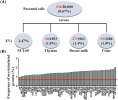
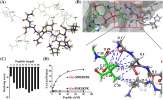
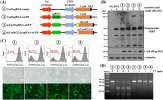
Whitley, Kim, Lou et al
J Extracell Vesicles (2022) 11 (4), e12196 DOI: 10.1002/jev2.12196
Cited by 62
AI Summary: OriGene’s CRISPR vectors were used as PCR templates to construct plasmids expressing N-myristoylated Cas9, enabling the study’s development of Cas9 encapsulation into extracellular vesicles for genome editing.
Snippet: in EV‐based genome editing therapy. 2 MATERIALS AND METHODS 2.1 Plasmid constructs To create non‐lentiviral vectors expressing N‐myristoylated Cas9 (mCas9), Cas9/sgRNA‐empty, CRISPR vectors (OriGene, Rockville, MD, USA) were used as PCR templates. The Src(WT;8 a.a) (forward primer) and mCas9 primer (reverse primer) (Table S1) were used to obtain a PCR product, which fused the DNA sequenc
Selenoprotein N is an endoplasmic reticulum calcium sensor that links luminal calcium levels to a redox activity
Chernorudskiy, Varone, Colombo et al
Proc Natl Acad Sci U S A (2020) 117 (35), 21288-21298 DOI: 10.1073/pnas.2003847117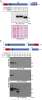
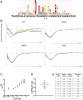
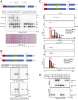
Chernorudskiy, Varone, Colombo et al
Proc Natl Acad Sci U S A (2020) 117 (35), 21288-21298 DOI: 10.1073/pnas.2003847117
Cited by 76
AI Summary: In this study, OriGene products such as the SEPN1 cDNA clone and SEPN1-specific shRNA were used to manipulate SEPN1 expression in cells, enabling the authors to investigate the protein’s role as an ER calcium sensor and its functional mechanisms.
Defective endoplasmic reticulum-mitochondria contacts and bioenergetics in SEPN1-related myopathy
Filipe, Chernorudskiy, Arbogast et al
Cell Death Differ. (2020)
Filipe, Chernorudskiy, Arbogast et al
Cell Death Differ. (2020)
Cited by 58
AI Summary: OriGene’s CRISPR/CAS9 technology was used to generate SEPN1 knockout HeLa cells, enabling the study of SEPN1’s role in ER-mitochondria contacts and bioenergetics in SEPN1-related myopathy.
Snippet: SEPN1 KO HeLa cells were generated with the CRISPR/CAS9 technology (OriGene) and have been previously described [14]
Cancer-derived small extracellular vesicles promote angiogenesis by heparin-bound, bevacizumab-insensitive VEGF, independent of vesicle uptake
Ko, Lee, Kenny et al
Commun Biol (2019) 2, 386 DOI: 10.1038/s42003-019-0609-x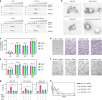
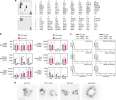
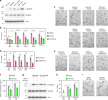
Ko, Lee, Kenny et al
Commun Biol (2019) 2, 386 DOI: 10.1038/s42003-019-0609-x
AI Summary: OriGene’s human VEGFA gene knockout kit was used to generate VEGFA-deficient, GFP-expressing ES2 cell lines via CRISPR/Cas9 gene editing, enabling the study of VEGF’s role in cancer-derived extracellular vesicle-mediated angiogenesis.
Snippet: GFP-expressing ES2 VEGF−/− cells were generated in this study by CRISPR/Cas9 gene editing using the human VEGFA gene knockout kit (Origene). Briefly, ES2 cells were co-transfected with VEGFA sgRNA plasmid and donor vector that contains predesigned homologous sequences flanking the GFP and puromycin resistance selection cassette. Individual clones, derived from single GFP-expressing cells, were sel...
A maladaptive ER stress response triggers dysfunction in highly active muscles of mice with SELENON loss
Pozzer, Varone, Chernorudskiy et al
Redox Biol (2019) 20, 354-366 DOI: 10.1016/j.redox.2018.10.017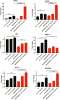
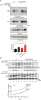
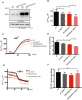
Pozzer, Varone, Chernorudskiy et al
Redox Biol (2019) 20, 354-366 DOI: 10.1016/j.redox.2018.10.017
AI Summary: OriGene's CRISPR/CAS9 technology was used to generate SELENON and ERO1 knockdown HeLa cells, enabling the study of ER stress responses and muscle dysfunction mechanisms in this paper.
Snippet: SC71-S D5 (to stain type 2 A fiber) from Iowa Hybridoma bank. 4.12 CRISPR/CAS9 technology SELENON KD, ERO1 KD and double SELENON, ERO1KD HeLa cells were generated with the CRISPR/CAS9 technology (OriGene), closely following the manufacturer's instructions. Three different gRNAs were designed to target exon 2 of the human SELENON gene on chromosome 1. The gRNA that gave the best knock down was
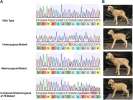
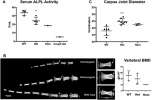
Genetic engineering a large animal model of human hypophosphatasia in sheep
Williams, Pinzón, Huggins et al
Sci Rep (2018) 8 (1), 16945 DOI: 10.1038/s41598-018-35079-y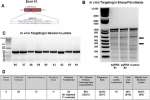
Williams, Pinzón, Huggins et al
Sci Rep (2018) 8 (1), 16945 DOI: 10.1038/s41598-018-35079-y
AI Summary: OriGene's All-in-One CRISPR/Cas9 vector (pCas-Guide-EF1a-GFP) was used to clone custom sgRNAs for genome editing, enabling the generation of the sheep model of human hypophosphatasia described in the study.
Snippet: cribed by Wong, et al.39 and the Mfold web server for nucleic acid folding and hybridization prediction (http://unafold.rna.albany.edu/?q=mfold/rna-folding-form)39. Custom sgRNAs were cloned into the Origene Technologies (Rockville, MD) All-in-One CRIPSR/Cas9 vector (pCas-Guide-EF1a-GFP). For the production of the sgRNA for microinjection into embryos, a T7 in vitro transcription of the sgRNA was;...
Showing 1-6 of 8 papers.
Powered by BizGenius
*Delivery time may vary from web posted schedule. Occasional delays may occur due to unforeseen
complexities in the preparation of your product. International customers may expect an additional 1-2 weeks
in shipping.
Related Products
- Price:
- Actual Price:
Welcome to OriGene AI!
I'm your AI-powered guide to everything OriGene.
Ask me anything:
- Product specs
- Ordering help
- Technical questions
- How to find exactly what your experiment needs
Prefer a live agent? Connect with us by clicking the green chat icon, as seen in the image below or email our team at custsupport@origene.com.
