
SP3 (NM_003111) Human Tagged ORF Clone


$715.00
In Stock*
Specifications
| Product Data | |
| Type | Human Tagged ORF Clone |
|---|---|
| Target Symbol | SP3 |
| Synonyms | SPR2 |
| Vector | pCMV6-Entry |
| E. coli Selection | Kanamycin (25 ug/mL) |
| Mammalian Cell Selection | Neomycin |
| Sequence Data | |
| Chromatograms |
Chromatograms
 Sequencher program is needed, download here |
| Restriction Sites | SgfI-MluI Cloning Scheme for this gene | |
| ACCN | NM_003111 |
| ORF Size | 2343 bp |
| OTI Disclaimer | The molecular sequence of this clone aligns with the gene accession number as a point of reference only. However, individual transcript sequences of the same gene can differ through naturally occurring variations (e.g. polymorphisms), each with its own valid existence. This clone is substantially in agreement with the reference, but a complete review of all prevailing variants is recommended prior to use. More info |
| OTI Annotation | This clone was engineered to express the complete ORF with an expression tag. Expression varies depending on the nature of the gene. |
| Components | The ORF clone is ion-exchange column purified and shipped in a 2D barcoded Matrix tube containing 10ug of transfection-ready, dried plasmid DNA (reconstitute with 100 ul of water). |
| Reconstitution Method | 1. Centrifuge at 5,000xg for 5min. 2. Carefully open the tube and add 100ul of sterile water to dissolve the DNA. 3. Close the tube and incubate for 10 minutes at room temperature. 4. Briefly vortex the tube and then do a quick spin (less than 5000xg) to concentrate the liquid at the bottom. 5. Store the suspended plasmid at -20°C. The DNA is stable for at least one year from date of shipping when stored at -20°C. |
| Note | Plasmids are not sterile. For experiments where strict sterility is required, filtration with 0.22um filter is required. |
| Shipping | Ambient |
| Reference Data | |
| RefSeq | NM_003111.5 |
| RefSeq Size | 3920 bp |
| RefSeq ORF | 2346 bp |
| Locus ID | 6670 |
| UniProt ID | Q02447, Q86TP0 |
| Cytogenetics | 2q31.1 |
| Protein Families | Druggable Genome, Transcription Factors |
| MW | 81.7 kDa |
| Summary | This gene belongs to a family of Sp1 related genes that encode transcription factors that regulate transcription by binding to consensus GC- and GT-box regulatory elements in target genes. This protein contains a zinc finger DNA-binding domain and several transactivation domains, and has been reported to function as a bifunctional transcription factor that either stimulates or represses the transcription of numerous genes. Transcript variants encoding different isoforms have been described for this gene, and one has been reported to initiate translation from a non-AUG (AUA) start codon. Additional isoforms, resulting from the use of alternate downstream translation initiation sites, have also been noted. A related pseudogene has been identified on chromosome 13. provided by RefSeq, Feb 2010 |
Reviews


Documents
| Product Manuals |
| FAQs |
| SDS |
Resources
"NM_003111" in other vectors (6)
| SKU | Description | Size | Price | |
|---|---|---|---|---|
| RC222027L1 | Lenti ORF clone of Human Sp3 transcription factor (SP3), transcript variant 1, Myc-DDK-tagged | 10 ug |
$1,015.00
|
|
| RC222027L2 | Lenti ORF clone of Human Sp3 transcription factor (SP3), transcript variant 1, mGFP tagged | 10 ug |
$1,015.00
|
|
| RC222027L3 | Lenti ORF clone of Human Sp3 transcription factor (SP3), transcript variant 1, Myc-DDK-tagged | 10 ug |
$1,015.00
|
|
| RC222027L4 | Lenti ORF clone of Human Sp3 transcription factor (SP3), transcript variant 1, mGFP tagged | 10 ug |
$1,015.00
|
|
| RG222027 | SP3 (tGFP-tagged) - Human Sp3 transcription factor (SP3), transcript variant 1 | 10 ug |
$789.00
$915.00
|
|
| SC121408 | SP3 (untagged)-Human Sp3 transcription factor (SP3), transcript variant 1 | 10 ug |
$716.00
|
|
Citations
A type 2 diabetes-associated SNP in KCNQ1 (rs163184) modulates the binding activity of the locus for Sp3 and Lsd1/Kdm1a, potentially affecting CDKN1C expression
Hiramoto, Udagawa, Ishibashi et al
Int J Mol Med (2018) 41 (2), 717-728 DOI: 10.3892/ijmm.2017.3273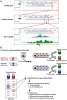
Hiramoto, Udagawa, Ishibashi et al
Int J Mol Med (2018) 41 (2), 717-728 DOI: 10.3892/ijmm.2017.3273
Cited by 17
AI Summary: In this study, OriGene products—specifically the human SP3 shRNA plasmid (TL313206) and human KDM1A (LSD1) shRNA plasmid (TL313865)—were used to knock down SP3 and KDM1A gene expression, enabling the authors to investigate how these proteins interact with the KCNQ1 SNP rs163184 locus and affect CDKN1C gene expression.
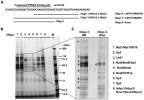
Differential effects of Sp cellular transcription factors on viral promoter activation by varicella-zoster virus (VZV) IE62 protein
Khalil, Ruyechan, Hay et al
Virology (2015) 485, 47-57 DOI: 10.1016/j.virol.2015.06.031
Khalil, Ruyechan, Hay et al
Virology (2015) 485, 47-57 DOI: 10.1016/j.virol.2015.06.031
Cited by 7
AI Summary: OriGene products contributed to this study by providing the pCMV-Sp1, pCMV-Sp2, pCMV-Sp3, and pCMV-Sp4 expression plasmids, which were used to analyze the effects of Sp family transcription factors on VZV IE62-mediated viral promoter activation.
Snippet: The pCMV62-d20 was derived from pCMV62 by site-directed mutagenesis using the QuikChange site-directed mutagenesis kit (Stratagene, Cedar Creek, TX) to delete 20 amino acids (238–258) in the ORF62 gene. The pCMV-Sp1, pCMV-Sp2, pCMV-Sp3 and pCMV-Sp4 expressing plasmids were purchased from Origene Technologies (Rockville, MD)
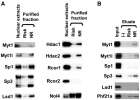
Regulation of the bone-restricted IFITM-like (Bril) gene transcription by Sp and Gli family members and CpG methylation
Kasaai, Gaumond, Moffatt
J. Biol. Chem. (2013) 288 (19), 13278-94 DOI: 10.1074/jbc.M113.457010
Kasaai, Gaumond, Moffatt
J. Biol. Chem. (2013) 288 (19), 13278-94 DOI: 10.1074/jbc.M113.457010
Cited by 2
Showing 1-3 of 3 papers.
Powered by BizGenius
*Delivery time may vary from web posted schedule. Occasional delays may occur due to unforeseen
complexities in the preparation of your product. International customers may expect an additional 1-2 weeks
in shipping.
Related Products
- Price:
- Actual Price:
Welcome to OriGene AI!
I'm your AI-powered guide to everything OriGene.
Ask me anything:
- Product specs
- Ordering help
- Technical questions
- How to find exactly what your experiment needs
Prefer a live agent? Connect with us by clicking the green chat icon, as seen in the image below or email our team at custsupport@origene.com.
