
SIRT6 (NM_016539) Human Tagged ORF Clone


$686.00
In Stock*
Specifications
| Product Data | |
| Type | Human Tagged ORF Clone |
|---|---|
| Target Symbol | SIRT6 |
| Synonyms | SIR2L6 |
| Vector | pCMV6-Entry |
| E. coli Selection | Kanamycin (25 ug/mL) |
| Mammalian Cell Selection | Neomycin |
| Sequence Data | |
| Chromatograms |
Chromatograms
 Sequencher program is needed, download here |
| Restriction Sites |
SgfI-MluI Cloning Scheme for this gene
|
Plasmid Map

|
| ACCN | NM_016539 |
| ORF Size | 1065 bp |
| OTI Disclaimer | The molecular sequence of this clone aligns with the gene accession number as a point of reference only. However, individual transcript sequences of the same gene can differ through naturally occurring variations (e.g. polymorphisms), each with its own valid existence. This clone is substantially in agreement with the reference, but a complete review of all prevailing variants is recommended prior to use. More info |
| OTI Annotation | This clone was engineered to express the complete ORF with an expression tag. Expression varies depending on the nature of the gene. |
| Components | The ORF clone is ion-exchange column purified and shipped in a 2D barcoded Matrix tube containing 10ug of transfection-ready, dried plasmid DNA (reconstitute with 100 ul of water). |
| Reconstitution Method | 1. Centrifuge at 5,000xg for 5min. 2. Carefully open the tube and add 100ul of sterile water to dissolve the DNA. 3. Close the tube and incubate for 10 minutes at room temperature. 4. Briefly vortex the tube and then do a quick spin (less than 5000xg) to concentrate the liquid at the bottom. 5. Store the suspended plasmid at -20°C. The DNA is stable for at least one year from date of shipping when stored at -20°C. |
| Note | Plasmids are not sterile. For experiments where strict sterility is required, filtration with 0.22um filter is required. |
| Shipping | Ambient |
| Reference Data | |
| RefSeq | NM_016539.4 |
| RefSeq Size | 1657 bp |
| RefSeq ORF | 1068 bp |
| Locus ID | 51548 |
| UniProt ID | Q8N6T7 |
| Cytogenetics | 19p13.3 |
| Protein Families | Druggable Genome, Transcription Factors |
| MW | 39.1 kDa |
| Summary | This gene encodes a member of the sirtuin family of NAD-dependent enzymes that are implicated in cellular stress resistance, genomic stability, aging and energy homeostasis. The encoded protein is localized to the nucleus, exhibits ADP-ribosyl transferase and histone deacetylase activities, and plays a role in DNA repair, maintenance of telomeric chromatin, inflammation, lipid and glucose metabolism. Alternative splicing results in multiple transcript variants encoding different isoforms. provided by RefSeq, Mar 2016 |
Reviews


Documents
| Product Manuals |
| FAQs |
| SDS |
Resources
"NM_016539" in other vectors (6)
| SKU | Description | Size | Price | |
|---|---|---|---|---|
| RC202833L1 | Lenti ORF clone of Human sirtuin 6 (SIRT6), transcript variant 1, Myc-DDK-tagged | 10 ug |
$986.00
|
|
| RC202833L2 | Lenti ORF clone of Human sirtuin 6 (SIRT6), transcript variant 1, mGFP tagged | 10 ug |
$986.00
|
|
| RC202833L3 | Lenti ORF clone of Human sirtuin 6 (SIRT6), transcript variant 1, Myc-DDK-tagged | 10 ug |
$986.00
|
|
| RC202833L4 | Lenti ORF clone of Human sirtuin 6 (SIRT6), transcript variant 1, mGFP tagged | 10 ug |
$986.00
|
|
| RG202833 | SIRT6 (tGFP-tagged) - Human sirtuin 6 (SIRT6), transcript variant 1 | 10 ug |
$886.00
|
|
| SC123758 | SIRT6 (untagged)-Human sirtuin 6 (SIRT6), transcript variant 1 | 10 ug |
$457.00
|
|
Citations
The SIRT6-Autophagy-Warburg Effect Axis in Papillary Thyroid Cancer
Yang, Huang, Wei et al
Front Oncol (2020) 10, 1265 DOI: 10.3389/fonc.2020.01265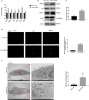
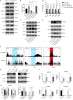
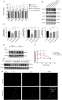
Yang, Huang, Wei et al
Front Oncol (2020) 10, 1265 DOI: 10.3389/fonc.2020.01265
Cited by 36
AI Summary: In this paper, OriGene products including the SIRT6 overexpression plasmid (RC221307) and SIRT6 shRNA lentiviral particles (TL314307V) were used to manipulate SIRT6 expression in papillary thyroid cancer cells, enabling the authors to investigate the role of SIRT6 in regulating autophagy and the Warburg effect.
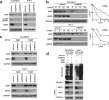
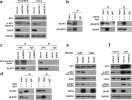
NQO1 potentiates apoptosis evasion and upregulates XIAP via inhibiting proteasome-mediated degradation SIRT6 in hepatocellular carcinoma
Zhou, Zeng, Yuan et al
Cell Commun. Signal (2019) 17 (1), 168 DOI: 10.1186/s12964-019-0491-7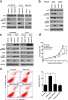
Zhou, Zeng, Yuan et al
Cell Commun. Signal (2019) 17 (1), 168 DOI: 10.1186/s12964-019-0491-7
Cited by 54
AI Summary: In this study, OriGene’s Myc-DDK-tagged-SIRT6 (RC202833) and pCMV6-NQO1 (SC119599) plasmids were used to investigate the roles of SIRT6 and NQO1 in hepatocellular carcinoma cell signaling and tumor growth.
Snippet: s, plasmids and chemicals The pcDNA3-Xiap-Myc (#11833) plasmid was purchased from Addgene (Cambridge, MA). The plasmids of Myc-DDK-tagged-SIRT6 (RC202833) and pCMV6-NQO1 (SC119599) were obtained from OriGene Technologies (Rockville, MD). Rabbit anti-AKT (#4691), rabbit anti-phospho-AKT (#4060), mouse anti-ubiquitin (#3936), rabbit anti-acetylated-Lysine (#9441), rabbit anti-SIRT1 (#9475), rabbit a
microRNA-4532 inhibition protects human lens epithelial cells from ultra-violet-induced oxidative injury via activating SIRT6-Nrf2 signaling
Sun, Huang, Li et al
Biochem. Biophys. Res. Commun. (2019) 514 (3), 777-784 DOI: 10.1016/j.bbrc.2019.05.026
Sun, Huang, Li et al
Biochem. Biophys. Res. Commun. (2019) 514 (3), 777-784 DOI: 10.1016/j.bbrc.2019.05.026
AI Summary: OriGene contributed primers used in the study to investigate the role of miR-4532 in regulating SIRT6-Nrf2 signaling and protecting human lens epithelial cells from UV-induced oxidative injury.
Snippet: All the sequences (including miR-4532 mimics and control mimics), viral constructs, and primers were provided by Shanghai Genechem (Shanghai, China) and Origene (Beijing, China). 2.2. HLECs and UV radiation. HLECs
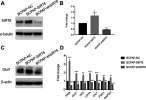
SIRT6 promotes the Warburg effect of papillary thyroid cancer cell BCPAP through reactive oxygen species
Yu, Yang, Huang et al
Onco Targets Ther (2019) 12, 2861-2868 DOI: 10.2147/OTT.S194256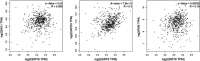
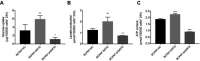
Yu, Yang, Huang et al
Onco Targets Ther (2019) 12, 2861-2868 DOI: 10.2147/OTT.S194256
AI Summary: OriGene contributed to this study by providing the human SIRT6 cDNA (RC202833), which was used to generate SIRT6-overexpressing and knockdown BCPAP cell lines for investigating the role of SIRT6 in the Warburg effect in papillary thyroid cancer.
Snippet: The cDNA of human SIRT6 was purchased from Origene (RC202833;Rockville, MD, USA) and shRNA of SIRT6 (sequence: GCAGTCTTCCAGTGTGGTGTT) were cloned into the pCDH-CMV-MCS-EF1-Puro lentiviral vector for the pCDH-SIRT6 and pCDH-shSIRT6 plasmids
SIRT6/HIF-1α axis promotes papillary thyroid cancer progression by inducing epithelial-mesenchymal transition
Yang, Yu, Huang et al
Cancer Cell Int (2019) 19, 17 DOI: 10.1186/s12935-019-0730-4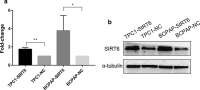
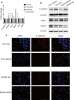
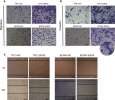
Yang, Yu, Huang et al
Cancer Cell Int (2019) 19, 17 DOI: 10.1186/s12935-019-0730-4
Cited by 59
AI Summary: OriGene products, specifically the SIRT6 (RC218307L2) and HIF-1α (RC208726L2) lentiviral particles, were used to generate SIRT6- and HIF-1α-upregulated papillary thyroid cancer cell lines, enabling the study of their roles in epithelial-mesenchymal transition and cancer progression.
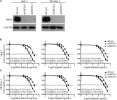
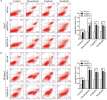
SIRT6 Depletion Sensitizes Human Hepatoma Cells to Chemotherapeutics by Downregulating MDR1 Expression
Xia, Hua, Juan et al
Front Pharmacol (2018) 9, 194 DOI: 10.3389/fphar.2018.00194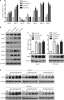
Xia, Hua, Juan et al
Front Pharmacol (2018) 9, 194 DOI: 10.3389/fphar.2018.00194
AI Summary: OriGene’s SIRT6 expression vector (RC202833) was used in this study to manipulate SIRT6 levels in hepatoma cells, enabling the investigation of SIRT6’s role in multidrug resistance and chemosensitivity.
Snippet: Anti-SIRT6 (Novus, NB100-2522), anti-SIRT7 (Sigma, S5947), Anti-MDR1 (Wanleibio, WL02395), Anti-C/EBPβ (Wanleibio, WL01710), Anti-acetyl-Histone H3 (Ac-Lys9) (Millipore, 07-352), Anti-GAPDH (Santa, sc-365062), SIRT6 expression vector (OriGene, RC202833 Cached
Showing 1-6 of 6 papers.
Powered by BizGenius
*Delivery time may vary from web posted schedule. Occasional delays may occur due to unforeseen
complexities in the preparation of your product. International customers may expect an additional 1-2 weeks
in shipping.
Related Products
- Price:
- Actual Price:
Welcome to OriGene AI!
I'm your AI-powered guide to everything OriGene.
Ask me anything:
- Product specs
- Ordering help
- Technical questions
- How to find exactly what your experiment needs
Prefer a live agent? Connect with us by clicking the green chat icon, as seen in the image below or email our team at custsupport@origene.com.
