
Superoxide Dismutase 1 (SOD1) (NM_000454) Human Tagged ORF Clone

$225.00
5 Days*
Specifications
| Product Data | |
| Type | Human Tagged ORF Clone |
|---|---|
| Target Symbol | Superoxide Dismutase 1 |
| Synonyms | ALS; ALS1; HEL-S-44; homodimer; hSod1; IPOA; SOD; STAHP |
| Vector | pCMV6-Entry |
| E. coli Selection | Kanamycin (25 ug/mL) |
| Mammalian Cell Selection | Neomycin |
| Sequence Data | |
| Chromatograms |
Chromatograms
 Sequencher program is needed, download here |
| Restriction Sites |
SgfI-MluI Cloning Scheme for this gene
|
Plasmid Map

|
| ACCN | NM_000454 |
| ORF Size | 462 bp |
| OTI Disclaimer | Due to the inherent nature of this plasmid, standard methods to replicate additional amounts of DNA in E. coli are highly likely to result in mutations and/or rearrangements. Therefore, OriGene does not guarantee the capability to replicate this plasmid DNA. Additional amounts of DNA can be purchased from OriGene with batch-specific, full-sequence verification at a reduced cost. Please contact our customer care team at custsupport@origene.com or by calling 301.340.3188 option 3 for pricing and delivery. The molecular sequence of this clone aligns with the gene accession number as a point of reference only. However, individual transcript sequences of the same gene can differ through naturally occurring variations (e.g. polymorphisms), each with its own valid existence. This clone is substantially in agreement with the reference, but a complete review of all prevailing variants is recommended prior to use. More info |
| OTI Annotation | This clone was engineered to express the complete ORF with an expression tag. Expression varies depending on the nature of the gene. |
| Components | The ORF clone is ion-exchange column purified and shipped in a 2D barcoded Matrix tube containing 10ug of transfection-ready, dried plasmid DNA (reconstitute with 100 ul of water). |
| Reconstitution Method | 1. Centrifuge at 5,000xg for 5min. 2. Carefully open the tube and add 100ul of sterile water to dissolve the DNA. 3. Close the tube and incubate for 10 minutes at room temperature. 4. Briefly vortex the tube and then do a quick spin (less than 5000xg) to concentrate the liquid at the bottom. 5. Store the suspended plasmid at -20°C. The DNA is stable for at least one year from date of shipping when stored at -20°C. |
| Note | Plasmids are not sterile. For experiments where strict sterility is required, filtration with 0.22um filter is required. |
| Shipping | Ambient |
| Reference Data | |
| RefSeq | NM_000454.5 |
| RefSeq Size | 981 bp |
| RefSeq ORF | 465 bp |
| Locus ID | 6647 |
| UniProt ID | P00441 |
| Cytogenetics | 21q22.11 |
| Domains | sodcu |
| Protein Families | Druggable Genome |
| Protein Pathways | Amyotrophic lateral sclerosis (ALS), Huntington's disease, Prion diseases |
| MW | 15.9 kDa |
| Summary | The protein encoded by this gene binds copper and zinc ions and is one of two isozymes responsible for destroying free superoxide radicals in the body. The encoded isozyme is a soluble cytoplasmic protein, acting as a homodimer to convert naturally-occuring but harmful superoxide radicals to molecular oxygen and hydrogen peroxide. The other isozyme is a mitochondrial protein. In addition, this protein contains an antimicrobial peptide that displays antibacterial, antifungal, and anti-MRSA activity against E. coli, E. faecalis, S. aureus, S. aureus MRSA LPV+, S. agalactiae, and yeast C. krusei. Mutations in this gene have been implicated as causes of familial amyotrophic lateral sclerosis. Rare transcript variants have been reported for this gene. provided by RefSeq, Jul 2020 |
Reviews


Documents
| Product Manuals |
| FAQs |
| SDS |
Resources
"NM_000454" in other vectors (6)
| SKU | Description | Size | Price | |
|---|---|---|---|---|
| RC200725L1 | Lenti ORF clone of Human superoxide dismutase 1, soluble (SOD1), Myc-DDK-tagged | 10 ug |
$525.00
|
|
| RC200725L2 | Lenti ORF clone of Human superoxide dismutase 1, soluble (SOD1), mGFP tagged | 10 ug |
$525.00
|
|
| RC200725L3 | Lenti ORF clone of Human superoxide dismutase 1, soluble (SOD1), Myc-DDK-tagged | 10 ug |
$525.00
|
|
| RC200725L4 | Lenti ORF clone of Human superoxide dismutase 1, soluble (SOD1), mGFP tagged | 10 ug |
$525.00
|
|
| RG200725 | SOD1 (tGFP-tagged) - Human superoxide dismutase 1, soluble (SOD1) | 10 ug |
$425.00
|
|
| SC111022 | SOD1 (untagged)-Human superoxide dismutase 1, soluble (SOD1) | 10 ug |
$150.00
|
|
Citations
A potential role for neuronal connexin 36 in the pathogenesis of amyotrophic lateral sclerosis
Belousov, Nishimune, Denisova et al
Neurosci. Lett. (2017) 666, 1-4 DOI: 10.1016/j.neulet.2017.12.027
Belousov, Nishimune, Denisova et al
Neurosci. Lett. (2017) 666, 1-4 DOI: 10.1016/j.neulet.2017.12.027
AI Summary: OriGene’s (Myc-DDK-tagged)-human soluble SOD1 expression plasmid was used to overexpress mutant SOD1-G93A in neuronal cultures, enabling the study of connexin 36’s role in ALS-related neuronal death.
Snippet: A multiplicity of transduction of 20 for both lentiviral vectors was employed. Suppressed of Cx36 protein by shRNA-Cx36 was confirmed using western blots (see Results). An expression plasmid for (Myc-DDK-tagged)-human soluble SOD1 was purchased from Origene
M2 polarization of macrophages facilitates arsenic-induced cell transformation of lung epithelial cells
Cui, Xu, Chen et al
Oncotarget (2017) 8 (13), 21398-21409 DOI: 10.18632/oncotarget.15232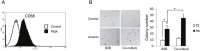
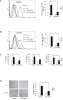
Cui, Xu, Chen et al
Oncotarget (2017) 8 (13), 21398-21409 DOI: 10.18632/oncotarget.15232
Superoxide Dismutase 1 Regulation of CXCR4-Mediated Signaling in Prostate Cancer Cells is Dependent on Cellular Oxidative State
Young, Purcell, Kuang et al
Cell. Physiol. Biochem. (2015) 37 (6), 2071-84 DOI: 10.1159/000438566
Young, Purcell, Kuang et al
Cell. Physiol. Biochem. (2015) 37 (6), 2071-84 DOI: 10.1159/000438566
Cited by 27
AI Summary: In this study, the pCMV6-myc-DDK-hSOD1 wild-type plasmid from OriGene was used to express SOD1 in prostate cancer cells, enabling investigation of its role in regulating CXCR4-mediated signaling under different oxidative conditions.
Snippet: Molecular Constructs. The pcDNA3.1 HA-CXCR4 receptor was purchased from Missouri University of Science and Technology cDNA resource center (Rolla, MO, USA). pCMV6-myc-DDK-hSOD1 wild-type (WT) was purchased from Origene Technologies Inc. ... Cite SaveSaving
Cadmium induces carcinogenesis in BEAS-2B cells through ROS-dependent activation of PI3K/AKT/GSK-3β/β-catenin signaling
Son, Wang, Poyil et al
Toxicol. Appl. Pharmacol. (2012) 264 (2), 153-60 DOI: 10.1016/j.taap.2012.07.028
Son, Wang, Poyil et al
Toxicol. Appl. Pharmacol. (2012) 264 (2), 153-60 DOI: 10.1016/j.taap.2012.07.028
Cited by 126
AI Summary: OriGene products, specifically the CAT-Myc-DDK and SOD1-Myc-DDK tagged plasmids, were used to transfect BEAS-2B cells with antioxidant enzymes, enabling the study to demonstrate that overexpression of catalase and SOD1 inhibited cadmium-induced carcinogenic signaling and cell transformation.
Snippet: CAT-Myc-DDK- and SOD1-Myc-DDK-tagged plasmids were purchased from Origene (Rockville, MD). ... However, most previous studies described the potential of cadmium to cause carcinogenic effects using short-term exposure to this toxic metal at high concentrations.
Superoxide dismutase 1 (SOD1) is a target for a small molecule identified in a screen for inhibitors of the growth of lung adenocarcinoma cell lines
Somwar, Erdjument-Bromage, Larsson et al
Proc Natl Acad Sci U S A (2011) 108 (39), 16375-80 DOI: 10.1073/pnas.1113554108
Somwar, Erdjument-Bromage, Larsson et al
Proc Natl Acad Sci U S A (2011) 108 (39), 16375-80 DOI: 10.1073/pnas.1113554108
Cited by 162
AI Summary: In this study, OriGene’s SOD1 cDNA was used to overexpress SOD1 in H358 lung adenocarcinoma cells, demonstrating that increased SOD1 levels enhanced cell proliferation and reduced sensitivity to the small molecule inhibitor LCS-1.
The dual roles of c-Jun NH2-terminal kinase signaling in Cr(VI)-induced apoptosis in JB6 cells
Son, Hitron, Cheng et al
Toxicol. Sci. (2011) 119 (2), 335-45 DOI: 10.1093/toxsci/kfq335
Son, Hitron, Cheng et al
Toxicol. Sci. (2011) 119 (2), 335-45 DOI: 10.1093/toxsci/kfq335
Cited by 14
Showing 1-6 of 6 papers.
Powered by BizGenius
*Delivery time may vary from web posted schedule. Occasional delays may occur due to unforeseen
complexities in the preparation of your product. International customers may expect an additional 1-2 weeks
in shipping.
Related Products
- Price:
- Actual Price:
Welcome to OriGene AI!
I'm your AI-powered guide to everything OriGene.
Ask me anything:
- Product specs
- Ordering help
- Technical questions
- How to find exactly what your experiment needs
Prefer a live agent? Connect with us by clicking the green chat icon, as seen in the image below or email our team at custsupport@origene.com.
