
LDL Receptor (LDLR) (NM_000527) Human Tagged ORF Clone

SKU
RC200006
LDLR (Myc-DDK-tagged)-Human low density lipoprotein receptor (LDLR), transcript variant 1

$1,181.00
In Stock*
Specifications
| Product Data | |
| Type | Human Tagged ORF Clone |
|---|---|
| Target Symbol | LDL Receptor |
| Synonyms | FH; FHC; FHCL1; LDLCQ2 |
| Vector | pCMV6-Entry |
| E. coli Selection | Kanamycin (25 ug/mL) |
| Mammalian Cell Selection | Neomycin |
| Sequence Data | |
| Chromatograms |
Chromatograms
 Sequencher program is needed, download here |
| Restriction Sites |
SgfI-MluI Cloning Scheme for this gene
|
Plasmid Map

|
| ACCN | NM_000527 |
| ORF Size | 2580 bp |
| OTI Disclaimer | Due to the inherent nature of this plasmid, standard methods to replicate additional amounts of DNA in E. coli are highly likely to result in mutations and/or rearrangements. Therefore, OriGene does not guarantee the capability to replicate this plasmid DNA. Additional amounts of DNA can be purchased from OriGene with batch-specific, full-sequence verification at a reduced cost. Please contact our customer care team at custsupport@origene.com or by calling 301.340.3188 option 3 for pricing and delivery. The molecular sequence of this clone aligns with the gene accession number as a point of reference only. However, individual transcript sequences of the same gene can differ through naturally occurring variations (e.g. polymorphisms), each with its own valid existence. This clone is substantially in agreement with the reference, but a complete review of all prevailing variants is recommended prior to use. More info |
| OTI Annotation | This clone was engineered to express the complete ORF with an expression tag. Expression varies depending on the nature of the gene. |
| Components | The ORF clone is ion-exchange column purified and shipped in a 2D barcoded Matrix tube containing 10ug of transfection-ready, dried plasmid DNA (reconstitute with 100 ul of water). |
| Reconstitution Method | 1. Centrifuge at 5,000xg for 5min. 2. Carefully open the tube and add 100ul of sterile water to dissolve the DNA. 3. Close the tube and incubate for 10 minutes at room temperature. 4. Briefly vortex the tube and then do a quick spin (less than 5000xg) to concentrate the liquid at the bottom. 5. Store the suspended plasmid at -20°C. The DNA is stable for at least one year from date of shipping when stored at -20°C. |
| Note | Plasmids are not sterile. For experiments where strict sterility is required, filtration with 0.22um filter is required. |
| Shipping | Ambient |
| Reference Data | |
| RefSeq | NM_000527.2, NP_000518.1 |
| RefSeq Size | 5175 bp |
| RefSeq ORF | 2583 bp |
| Locus ID | 3949 |
| UniProt ID | P01130 |
| Cytogenetics | 19p13.2 |
| Domains | EGF, EGF_CA, ldl_recept_a, ldl_recept_b |
| Protein Families | Druggable Genome, ES Cell Differentiation/IPS, Transmembrane |
| Protein Pathways | Endocytosis |
| MW | 95.38 kDa |
| Summary | The low density lipoprotein receptor (LDLR) gene family consists of cell surface proteins involved in receptor-mediated endocytosis of specific ligands. Low density lipoprotein (LDL) is normally bound at the cell membrane and taken into the cell ending up in lysosomes where the protein is degraded and the cholesterol is made available for repression of microsomal enzyme 3-hydroxy-3-methylglutaryl coenzyme A (HMG CoA) reductase, the rate-limiting step in cholesterol synthesis. At the same time, a reciprocal stimulation of cholesterol ester synthesis takes place. Mutations in this gene cause the autosomal dominant disorder, familial hypercholesterolemia. Alternate splicing results in multiple transcript variants.provided by RefSeq, Sep 2010 |
Reviews


Documents
| Product Manuals |
| FAQs |
| SDS |
Resources
"NM_000527" in other vectors (6)
| SKU | Description | Size | Price | |
|---|---|---|---|---|
| RC200006L1 | Lenti ORF clone of Human low density lipoprotein receptor (LDLR), transcript variant 1, Myc-DDK-tagged | 10 ug |
$1,481.00
|
|
| RC200006L2 | Lenti ORF clone of Human low density lipoprotein receptor (LDLR), transcript variant 1, mGFP tagged | 10 ug |
$1,481.00
|
|
| RC200006L3 | Lenti ORF clone of Human low density lipoprotein receptor (LDLR), transcript variant 1, Myc-DDK-tagged | 10 ug |
$1,481.00
|
|
| RC200006L4 | Lenti ORF clone of Human low density lipoprotein receptor (LDLR), transcript variant 1, mGFP tagged | 10 ug |
$1,481.00
|
|
| RG200006 | LDLR (tGFP-tagged) - Human low density lipoprotein receptor (LDLR), transcript variant 1 | 10 ug |
$1,381.00
|
|
| SC110941 | LDLR (untagged)-Human low density lipoprotein receptor (LDLR), transcript variant 1 | 10 ug |
$1,182.00
|
|
Citations
Positively charged cytoplasmic residues in corin prevent signal peptidase cleavage and endoplasmic reticulum retention
Li, Sun, Guo et al
Commun Biol (2025) 8 (1), 89 DOI: 10.1038/s42003-025-07545-7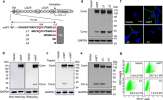
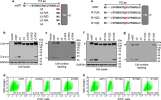
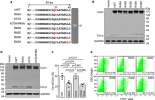
Li, Sun, Guo et al
Commun Biol (2025) 8 (1), 89 DOI: 10.1038/s42003-025-07545-7
Cited by 4
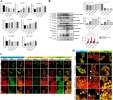
AI Summary: OriGene's full-length human LDLR cDNA (RC200006, pCMV6-Entry, with a Flag tag) was used in this study to investigate the role of positively charged cytoplasmic residues in membrane protein processing and localization.
Snippet: ds The pcDNA3.1/V5 (Thermo Fisher, K4800-01) based plasmids expressing mouse corin (mWT), human corin (hWT), and human matriptase-2 were published36,37,50,70. The full-length human LDLR cDNA was from Origene (RC200006, pCMV6-Entry, with a Flag tag). The full-length human SPC18 cDNA was amplified from HEK293 cells and inserted in the pCMV6-Entry plasmid. Additional corin, matriptase-2, LDLR, and SP
GRP78/BiP alleviates oxLDL-induced hepatotoxicity in familial hypercholesterolemia caused by missense variants of LDLR in a HepG2 cellular model
Varghese, Oommen, John et al
Lipids Health Dis (2023) 22 (1), 69 DOI: 10.1186/s12944-023-01835-x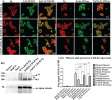
Varghese, Oommen, John et al
Lipids Health Dis (2023) 22 (1), 69 DOI: 10.1186/s12944-023-01835-x
Cited by 8
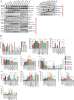
AI Summary: OriGene’s C-terminal Myc-DDK tagged human LDL Receptor plasmid (Cat No. RC200006) was used to generate wild-type and mutant LDLR constructs for stable expression in HepG2 cells, enabling the study of ER stress and hepatotoxicity mechanisms in familial hypercholesterolemia.
Snippet: of LDLR All experiments in this manuscript refer to the ORF of the human LDLR clone with Accession Number NM_000527. …RC200006). … No. 6;All experiments in this manuscript refer to the ORF of the human LDLR clone with Accession Number NM_000527. …RC200006)
Isocitrate dehydrogenase 1 mutation enhances 24(S)-hydroxycholesterol production and alters cholesterol homeostasis in glioma
Yang, Zhao, Gu et al
Oncogene (2020)
Yang, Zhao, Gu et al
Oncogene (2020)
Cited by 31
AI Summary: OriGene’s MycDDK-tagged LDLR plasmid (#RC200006) was used to study LDL receptor expression, and their plasmids enabled inducible expression of mutant IDH1(R132H) in glioma cells, facilitating investigation of cholesterol homeostasis in the context of IDH1 mutation.
Snippet: Isocitrate dehydrogenase (IDH) mutation is the most important initiating event in gliomagenesis, and the increasing evidence shows that IDH mutation is associated with the metabolic reprogramming in the tumor. Dysregulated cholesterol metabolism is a hallmark of;The MycDDK-tagged LDLR plasmid (#RC200006) was obtained from Origene, and transfected into 293T cells by polyethylenimine (Sigma, USA). …
Release of VSVG-pseudotyped Lentivirus from the Host Cell is impaired upon Low-density Lipoprotein Receptor Overexpression
Otahal, Fuchs, Al-Allaf et al
J. Virol. (2015)
Otahal, Fuchs, Al-Allaf et al
J. Virol. (2015)
A common polymorphism in the LDL receptor gene has multiple effects on LDL receptor function
Gao, Ihn, Medina et al
Hum. Mol. Genet. (2013) 22 (7), 1424-31 DOI: 10.1093/hmg/dds559
Gao, Ihn, Medina et al
Hum. Mol. Genet. (2013) 22 (7), 1424-31 DOI: 10.1093/hmg/dds559
Cited by 39
AI Summary: OriGene’s pCMV6-LDLR-FLAG plasmid was used in this study to overexpress LDL receptor protein in HepG2 cells, enabling assessment of how the rs688 polymorphism affects LDLR function and localization.
Snippet: (B) Quantification of band intensity of LDLR normalized ... pCMV6-LDLR-FLAG plasmid (Origene), a mammalian expression vector that contains the entire LDLR cDNA with a FLAG tag (also known as MYC-DDK tag) fused to the 3′ end was used for overexpressing LDLR protein.
Showing 1-5 of 5 papers.
Powered by BizGenius
*Delivery time may vary from web posted schedule. Occasional delays may occur due to unforeseen
complexities in the preparation of your product. International customers may expect an additional 1-2 weeks
in shipping.
Related Products
- Price:
- Actual Price:
Welcome to OriGene AI!
I'm your AI-powered guide to everything OriGene.
Ask me anything:
- Product specs
- Ordering help
- Technical questions
- How to find exactly what your experiment needs
Prefer a live agent? Connect with us by clicking the green chat icon, as seen in the image below or email our team at custsupport@origene.com.
