
TissueScan, Cancer Survey cDNA Array 96 - I
SKU
CSRT101
96 samples covering 8 different cancers: Breast, Colon, Kidney, Liver, Lung, Ovarian, Prostate, Thyroid. Available in 2, 5, 10 identical plates.

$850.00
In Stock*
Specifications
Reviews


Documents
| Product Manuals |
| FAQs |
| SDS |
Citations
WRN helicase upregulates mitophagy by resolving an intricate nexus of G-quadruplexes-R loops-ATG7 pre-mRNA maturation in cancer
Gupta, Tyagi, Majumdar et al
bioRxiv (2025)
Gupta, Tyagi, Majumdar et al
bioRxiv (2025)
AI Summary: OriGene's TissueScan qPCR Cancer Survey cDNA Array (#CSRT101) was used in this study to measure ATG7 and WRN gene expression across multiple cancer types by RT-qPCR, enabling the authors to assess the relationship between WRN and autophagy-related gene regulation in cancer.
Snippet: OriGene's TissueScan qPCR Cancer Survey cDNA Array 693 I (#CSRT101) was used to evaluate the gene expression of ATG7 (proximal and distal 694 mRNA) and WRN across four different cancer types (lung, breast, kidney, and ovarian) 695 by RT-qPCR using SYBR
SIX1 Downregulation Suppresses Self-renewal Capacity and THY1 Expression in Hepatocellular Carcinoma and SIX1 Dominate the Survival in Liver Cancer
Balçık-Erçin, Aysan, Salık et al
Turk J Gastroenterol (2023)
Balçık-Erçin, Aysan, Salık et al
Turk J Gastroenterol (2023)
Cited by 2
AI Summary: OriGene’s TissueScan qPCR Cancer Survey cDNA array I (#CSRT101) was used to assess SIX1 gene expression across various cancer types by RT-qPCR in this study.
Snippet: The expression of SIX1 was assessed by RT-qPCR in commercial TissueScan qPCR Cancer Survey cDNA arrays I (Origene, #CSRT101)
SIX1 Down-Regulation Influence Drug Resistance, Epithelial-Mesenchymal Transcription Factors and Self-Renewal Capacity in Hepatocellular Carcinoma
Ercin, Aysan, Salik et al
Research Square (2021)
Ercin, Aysan, Salik et al
Research Square (2021)
Snippet: Analyses of SIX1 Expression in Human Cancer Samples The expression of SIX1 was assessed by RT-qPCR in commercial TissueScan qPCR Cancer Survey cDNA arrays I (Origene, #CSRT101). The array consists of 72 tumors and 24 non-malignant tissue samples
BTG4 is A Novel p53 Target Gene That Inhibits Cell Growth and Induces Apoptosis
Zhang, Jiang, Wang et al
Genes (Basel) (2020) 11 (2) DOI: 10.3390/genes11020217
Zhang, Jiang, Wang et al
Genes (Basel) (2020) 11 (2) DOI: 10.3390/genes11020217
Cited by 10
AI Summary: OriGene’s TissueScan cancer panels (CSRT101) were used in this study to analyze BTG4 mRNA expression levels in normal and cancerous lung and colorectal tissues.
Snippet: … The BTG/Tob proteins are structurally characterized by the highly conserved N-terminal BTG domain, which contains two conserved motifs, BOX-A and BOX-B, whereas their C-terminal reg;- Figure 7. The expression of BTG4 mRNA in lung and colon cancers. BTG4 expression levels in normal and cancerous tissues were analyzed with quantitative RT-PCR using OriGene TissueScan cancer panels (CSRT101). 0 denotes normal lung or colorectal tissues
A novel histone H4 variant H4G regulates rDNA transcription in breast cancer
Long, Sun, Shi et al
Nucleic Acids Res. (2019) 47 (16), 8399-8409 DOI: 10.1093/nar/gkz547
Long, Sun, Shi et al
Nucleic Acids Res. (2019) 47 (16), 8399-8409 DOI: 10.1093/nar/gkz547
AI Summary: OriGene's Human Cancer Survey cDNA panel was used in this study to assess H4G expression levels across eight different tumor types, including breast cancer.
Snippet: Table S1). We then checked the expression levels of h4g using the human cancer survey cDNA panel (ORIGENE) contain- ing eight different tumors (breast, colon, kidney, liver, lung, ovary, prostate and thyroid). The results
The p52 isoform of SHC1 is a key driver of breast cancer initiation
Wright, Miller, El-Meanawy et al
Breast Cancer Res. (2019) 21 (1), 74 DOI: 10.1186/s13058-019-1155-7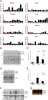
Wright, Miller, El-Meanawy et al
Breast Cancer Res. (2019) 21 (1), 74 DOI: 10.1186/s13058-019-1155-7
AI Summary: In this study, OriGene products including the SHC1 antibody (Cat# TA806872) and SHC1 cDNA clone (Cat# RC208801) were used to detect and analyze SHC1 isoform expression, contributing to the identification of p52SHC as the key driver of breast cancer initiation.
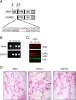
Snippet: in patient samples with metastatic breast tumors [5–7]. However, to date, there has been no direct in vivo examination of the role of specific SHC1 protein isoforms in the progression of mammary tumorigenesis. The ubiquitously expressed adaptor protein SHC1 [8] exists in three isoforms with relative molecular masses of 46 kDa, 52 kDa, and 66 kDa (p46SHC, p52SHC, and p66SHC) encoded by sin
Showing 1-6 of 48 papers.
Powered by BizGenius
*Delivery time may vary from web posted schedule. Occasional delays may occur due to unforeseen
complexities in the preparation of your product. International customers may expect an additional 1-2 weeks
in shipping.
Related Products
- Price:
- Actual Price:
Welcome to OriGene AI!
I'm your AI-powered guide to everything OriGene.
Ask me anything:
- Product specs
- Ordering help
- Technical questions
- How to find exactly what your experiment needs
Prefer a live agent? Connect with us by clicking the green chat icon, as seen in the image below or email our team at custsupport@origene.com.
