
Frozen Tissue Sections, Multiple digestive system sites
SKU
CS645257
Tissue Sections (5x5um), Frozen; Multiple digestive system sites; Carcinoma of unknown origin, neuroendocrine, metastatic

$440.00
2 Weeks*
Specifications
| Product Data | |
| Disease State | Cancer |
|---|---|
| Diagnosis Category | Cancer of Unknown Origin |
| Sample ID | FR0003A6AE |
| Case ID | CU0000014153 |
| Tissue of Origin | Multiple digestive system sites |
| Site of Finding | Liver |
| Appearance | T |
| Sample Diagnosis (from Pathology Verification) | Carcinoma of unknown origin, neuroendocrine, metastatic |
| Normal | 0% |
| Lesional | 0% |
| Tumor | 40% |
| Tumor Hypo/Acellular Stroma | 60% |
| Tumor Hypercellular Stroma | 0% |
| Necrosis | 0% |
| Pathology Verification notes from H&E review | Tumor Stroma (Hypo/Acellular): Desmoplastic reaction |
| T (Extent of Primary Tumor) | TX |
| N (Lymph node metastasis) | NX |
| M (Distant metastasis) | M1 |
| CASE Diagnosis (from medical center path report) | Carcinoma of unknown origin, neuroendocrine, metastatic |
| Age | 57 |
| Gender | Male |
| Tumor Grade | Not Reported |
| Minimum Stage Grouping | IV |
| Storage | Store frozen tissue sections at -80°C. |
| Stability | All frozen tissue sections are stable for 1 year from date of purchase if stored at -80°C without repeated freeze/thaws. |
| Shipping | Dry Ice |
Reviews


Documents
| Datasheet | |
| SDS | |
Citations
MARCH-II is a syntaxin-6-binding protein involved in endosomal trafficking
Nakamura, Fukuda, Kato et al
Mol Biol Cell (2005) 16 (4), 1696-710 DOI: 10.1091/mbc.e04-03-0216
Nakamura, Fukuda, Kato et al
Mol Biol Cell (2005) 16 (4), 1696-710 DOI: 10.1091/mbc.e04-03-0216
Cited by 91
AI Summary: In this study, OriGene’s anti-syntaxin 6 antibody and MARCH-II expression plasmid were used to investigate the interaction between MARCH-II and syntaxin 6 and to assess the functional role of MARCH-II in endosomal trafficking.
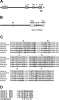
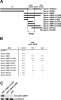
Identification and characterization of Iporin as a novel interaction partner for rab1
Bayer, Fischer, Kremerskothen et al
BMC Cell Biol (2005) 6 (1), 15 DOI: 10.1186/1471-2121-6-15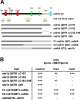
Bayer, Fischer, Kremerskothen et al
BMC Cell Biol (2005) 6 (1), 15 DOI: 10.1186/1471-2121-6-15
Cited by 32
AI Summary: In this study, OriGene’s anti-GM130 antibody (Catalog No. TA327322) was used for immunofluorescence staining to investigate the subcellular localization and interactions of GM130, contributing to the characterization of Iporin as a novel rab1-interacting protein.
Eme1 is involved in DNA damage processing and maintenance of genomic stability in mammalian cells
Abraham, Lemmers, Hande et al
EMBO J (2003) 22 (22), 6137-47 DOI: 10.1093/emboj/cdg580
Abraham, Lemmers, Hande et al
EMBO J (2003) 22 (22), 6137-47 DOI: 10.1093/emboj/cdg580
Cited by 137
AI Summary: In this study, OriGene’s Eme1 cDNA (MC205527) was used to investigate the function of Eme1 in DNA damage processing and genome stability in mammalian cells.
Novel ATPase of SNF2-like protein family interacts with androgen receptor and modulates androgen-dependent transcription
Rouleau, Domans'kyi, Reeben et al
Mol Biol Cell (2002) 13 (6), 2106-19 DOI: 10.1091/mbc.01-10-0484
Rouleau, Domans'kyi, Reeben et al
Mol Biol Cell (2002) 13 (6), 2106-19 DOI: 10.1091/mbc.01-10-0484
Cited by 52
AI Summary: OriGene products contributed to this study by providing the human ARIP4 cDNA clone (OriGene, Cat# SC117690), which was used to investigate ARIP4’s interaction with the androgen receptor and its role in modulating androgen-dependent transcription.
Limb-girdle muscular dystrophy type 2H associated with mutation in TRIM32, a putative E3-ubiquitin-ligase gene
Frosk, Weiler, Nylen et al
Am J Hum Genet (2002) 70 (3), 663-72 DOI: 10.1086/339083
Frosk, Weiler, Nylen et al
Am J Hum Genet (2002) 70 (3), 663-72 DOI: 10.1086/339083
Cited by 271
AI Summary: In this study, OriGene’s TRIM32 cDNA clone was used to analyze gene mutations, helping identify the D487N mutation in TRIM32 as the cause of limb-girdle muscular dystrophy type 2H.
Characterization of MALS/Velis-1, -2, and -3: a family of mammalian LIN-7 homologs enriched at brain synapses in association with the postsynaptic density-95/NMDA receptor postsynaptic complex
Jo, Derin, Li et al
J Neurosci (1999) 19 (11), 4189-99 DOI: 10.1523/JNEUROSCI.19-11-04189.1999
Jo, Derin, Li et al
J Neurosci (1999) 19 (11), 4189-99 DOI: 10.1523/JNEUROSCI.19-11-04189.1999
AI Summary: OriGene products contributed to this paper by providing the MALS-1, MALS-2, and MALS-3 cDNA clones, which were used to study the expression and localization of these synaptic proteins.
Showing 1-6 of 6 papers.
Powered by BizGenius
*Delivery time may vary from web posted schedule. Occasional delays may occur due to unforeseen
complexities in the preparation of your product. International customers may expect an additional 1-2 weeks
in shipping.
Related Products
- Price:
- Actual Price:
Welcome to OriGene AI!
I'm your AI-powered guide to everything OriGene.
Ask me anything:
- Product specs
- Ordering help
- Technical questions
- How to find exactly what your experiment needs
Prefer a live agent? Connect with us by clicking the green chat icon, as seen in the image below or email our team at custsupport@origene.com.
