
Mouse Itch activation kit by CRISPRa
$1,657.00
4 Weeks*
Specifications
| Product Data | |
| Format | 3 gRNAs (5ug each), 1 scramble ctrl (10ug) and 1 enhancer vector (10ug) |
|---|---|
| Target Symbol | Itch |
| Locus ID | 16396 |
| Components |
GA202191G1, Itch gRNA vector 1 in pCas-Guide-GFP-CRISPRa GA202191G2, Itch gRNA vector 2 in pCas-Guide-GFP-CRISPRa GA202191G3, Itch gRNA vector 3 in pCas-Guide-GFP-CRISPRa 1 CRISPRa-Enhancer vector, SKU GE100056 1 CRISPRa scramble vector, SKU GE100077 |
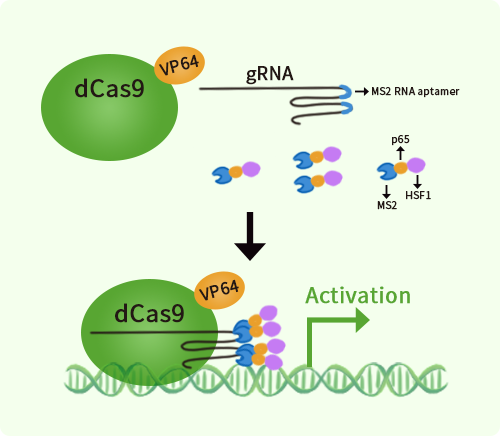
| OTI Disclaimer | These products are manufactured and supplied by OriGene under license from ERS. The kit is designed based on the best knowledge of CRISPRa SAM technology. The efficiency of the activation can be affected by many factors, including nucleosome occupancy status, chromatin structure and the gene expression level of the target, etc. |
| Shipping | Ambient |
| Reference Data | |
| RefSeq | NM_001243712, NM_008395, NR_037196 |
| UniProt ID | Q8C863 |
| Synonyms | 6720481N21Rik; 8030492O04Rik; A130065M08; AIP4; C230047C07Rik |
| Summary | Acts as an E3 ubiquitin-protein ligase which accepts ubiquitin from an E2 ubiquitin-conjugating enzyme in the form of a thioester and then directly transfers the ubiquitin to targeted substrates (PubMed:15358865, PubMed:16446428, PubMed:17592138, PubMed:18628966, PubMed:20392206, PubMed:25632008). It catalyzes 'Lys-29'-, 'Lys-48'- and 'Lys-63'-linked ubiquitin conjugation (By similarity). Involved in the control of inflammatory signaling pathways (By similarity). Is an essential component of a ubiquitin-editing protein complex, comprising also TNFAIP3, TAX1BP1 and RNF11, that ensures the transient nature of inflammatory signaling pathways (By similarity). Promotes the association of the complex after TNF stimulation (By similarity). Once the complex is formed, TNFAIP3 deubiquitinates 'Lys-63' polyubiquitin chains on RIPK1 and catalyzes the formation of 'Lys-48'-polyubiquitin chains (By similarity). This leads to RIPK1 proteasomal degradation and consequently termination of the TNF- or LPS-mediated activation of NFKB1 (By similarity). Ubiquitinates RIPK2 by 'Lys-63'-linked conjugation and influences NOD2-dependent signal transduction pathways (By similarity). Regulates the transcriptional activity of several transcription factors involved in immune response (PubMed:15358865, PubMed:11828324). Ubiquitinates NFE2 by 'Lys-63' linkages and is implicated in the control of the development of hematopoietic lineages (By similarity). Mediates JUN ubiquitination and degradation (PubMed:15358865). Mediates JUNB ubiquitination and degradation (PubMed:11828324, PubMed:15358865). Critical regulator of type 2 helper T (Th2) cell cytokine production by inducing JUNB ubiquitination and degradation (PubMed:11828324). Involved in the negative regulation of MAVS-dependent cellular antiviral responses (By similarity). Ubiquitinates MAVS through 'Lys-48'-linked conjugation resulting in MAVS proteasomal degradation (By similarity). Following ligand stimulation, regulates sorting of Wnt receptor FZD4 to the degradative endocytic pathway probably by modulating PI42KA activity (By similarity). Ubiquitinates PI4K2A and negatively regulates its catalytic activity (By similarity). Ubiquitinates chemokine receptor CXCR4 and regulates sorting of CXCR4 to the degradative endocytic pathway following ligand stimulation by ubiquitinating endosomal sorting complex required for transport ESCRT-0 components HGS and STAM (By similarity). Targets DTX1 for lysosomal degradation and controls NOTCH1 degradation, in the absence of ligand, through 'Lys-29'-linked polyubiquitination (PubMed:18628966). Ubiquitinates SNX9 (By similarity). Ubiquitinates MAP3K7 through 'Lys-48'-linked conjugation (PubMed:25632008). Involved in the regulation of apoptosis and reactive oxygen species levels through the ubiquitination and proteasomal degradation of TXNIP (By similarity). Mediates the antiapoptotic activity of epidermal growth factor through the ubiquitination and proteasomal degradation of p15 BID (PubMed:20392206). Ubiquitinates BRAT1 and this ubiquitination is enhanced in the presence of NDFIP1 (By similarity).UniProtKB/Swiss-Prot Function |
Reviews


Documents
| Product Manuals |
| FAQs |
| SDS |
Resources
Other Versions
| SKU | Description | Size | Price | |
|---|---|---|---|---|
| KN508466 | Itch - KN2.0, Mouse gene knockout kit via CRISPR, non-homology mediated. | 1 kit |
$1,657.00
|
|
Citations
*Delivery time may vary from web posted schedule. Occasional delays may occur due to unforeseen
complexities in the preparation of your product. International customers may expect an additional 1-2 weeks
in shipping.
Related Products
- Price:
- Actual Price:
Welcome to OriGene AI!
I'm your AI-powered guide to everything OriGene.
Ask me anything:
- Product specs
- Ordering help
- Technical questions
- How to find exactly what your experiment needs
Prefer a live agent? Connect with us by clicking the green chat icon, as seen in the image below or email our team at custsupport@origene.com.
