
Her2 (ERBB2) (NM_004448) Human Tagged ORF Clone Lentiviral Particle
- LentiORF®
-

SKU
RC212583L1V
Lenti ORF particles, ERBB2 (Myc-DDK tagged) - Human v-erb-b2 erythroblastic leukemia viral oncogene homolog 2, neuro/glioblastoma derived oncogene homolog (avian) (ERBB2), transcript variant 1, 200ul, >10^7 TU/mL

$1,642.00
3 Weeks*
Specifications
| Product Data | |
| Type | Human Tagged ORF Clone Lentiviral Particle |
|---|---|
| Tag | Myc-DDK |
| Target Symbol | Her2 |
| Synonyms | CD340; HER-2; HER-2/neu; HER2; MLN 19; NEU; NGL; TKR1 |
| Vector | pLenti-C-Myc-DDK |
| Mammalian Cell Selection | None |
| Sequence Data | |
| ACCN | NM_004448 |
| ORF Size | 3765 bp |
| OTI Disclaimer | The molecular sequence of this clone aligns with the gene accession number as a point of reference only. However, individual transcript sequences of the same gene can differ through naturally occurring variations (e.g. polymorphisms), each with its own valid existence. This clone is substantially in agreement with the reference, but a complete review of all prevailing variants is recommended prior to use. More info |
| OTI Annotation | This clone was engineered to express the complete ORF with an expression tag. Expression varies depending on the nature of the gene. |
| Shipping | Dry Ice |
| Reference Data | |
| RefSeq | NM_004448.2 |
| RefSeq Size | 4624 bp |
| RefSeq ORF | 3768 bp |
| Locus ID | 2064 |
| UniProt ID | P04626, X5DNK3 |
| Cytogenetics | 17q12 |
| Domains | FU, Furin-like, pkinase, Recep_L_domain, S_TKc, TyrKc, YLP |
| Protein Families | Druggable Genome, Protein Kinase, Transmembrane |
| Protein Pathways | Adherens junction, Bladder cancer, Calcium signaling pathway, Endometrial cancer, ErbB signaling pathway, Focal adhesion, Non-small cell lung cancer, Pancreatic cancer, Pathways in cancer, Prostate cancer |
| MW | 137.7 kDa |
| Summary | This gene encodes a member of the epidermal growth factor (EGF) receptor family of receptor tyrosine kinases. This protein has no ligand binding domain of its own and therefore cannot bind growth factors. However, it does bind tightly to other ligand-bound EGF receptor family members to form a heterodimer, stabilizing ligand binding and enhancing kinase-mediated activation of downstream signalling pathways, such as those involving mitogen-activated protein kinase and phosphatidylinositol-3 kinase. Allelic variations at amino acid positions 654 and 655 of isoform a (positions 624 and 625 of isoform b) have been reported, with the most common allele, Ile654/Ile655, shown here. Amplification and/or overexpression of this gene has been reported in numerous cancers, including breast and ovarian tumors. Alternative splicing results in several additional transcript variants, some encoding different isoforms and others that have not been fully characterized. provided by RefSeq, Jul 2008 |
Reviews


Documents
| Product Manuals |
| FAQs |
| SDS |
Resources
Citations
Chimeric antigen receptor macrophages (CAR-M) sensitize HER2+ solid tumors to PD1 blockade in pre-clinical models
Pierini, Gabbasov, Oliveira-Nunes et al
Nat Commun (2025) 16 (1), 706 DOI: 10.1038/s41467-024-55770-1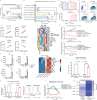
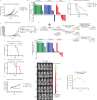
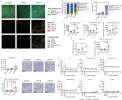
Pierini, Gabbasov, Oliveira-Nunes et al
Nat Commun (2025) 16 (1), 706 DOI: 10.1038/s41467-024-55770-1
Cited by 111
AI Summary: OriGene’s human HER2 lentiviral vector (RC212583L1V) was used to transduce murine cell lines, enabling the creation of HER2-expressing tumor models for evaluating the efficacy of CAR macrophage therapies in this study.
Snippet: vector encoding Nuclight Green (NLG) under an EF-1α promoter (4475;Sartorius). The murine cell lines were transduced with a lentiviral vector encoding human HER2, transcript variant 1 (RC212583L1V;Origene) or a chimeric HER2 (cHER2) under a CMV promoter. MC38 cell line was transduced with a lentiviral vector encoding ovalbumin (OVA) and green fluorescent protein (GFP), separated by IRES sequenc
Integrity of the Antiviral STING-mediated DNA Sensing in Tumor Cells Is Required to Sustain the Immunotherapeutic Efficacy of Herpes Simplex Oncolytic Virus
Froechlich, Caiazza, Gentile et al
Cancers (Basel) (2020) 12 (11) DOI: 10.3390/cancers12113407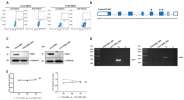
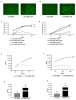
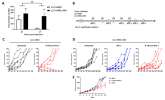
Froechlich, Caiazza, Gentile et al
Cancers (Basel) (2020) 12 (11) DOI: 10.3390/cancers12113407
Cited by 39
AI Summary: OriGene contributed to this study by providing the human HER2 transduction product (RC212583L1V), which was used to generate HER2-expressing CT26 tumor cells for experimental analysis of oncolytic virus efficacy.
Snippet: ern Blotting Substrate (Thermo Scientific, Waltham, MA, USA) was used for signal development, according to the manufacturer’s recommendations. Human HER2 transduction of CT26 cells was performed by Origene, Rockville, MD, USA, RC212583L1V. To evaluate the HER2 expression, cells were stained with FITC-conjugated anti-human HER2 (ab31891 Abcam, Cambridge, UK) and analyzed with FACS. 4.2. Cytotoxi
Intra-tumor genetic heterogeneity and alternative driver genetic alterations in breast cancers with heterogeneous HER2 gene amplification
Ng, Martelotto, Gauthier et al
Genome Biol (2015) 16 (1), 107 DOI: 10.1186/s13059-015-0657-6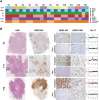
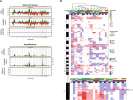
Ng, Martelotto, Gauthier et al
Genome Biol (2015) 16 (1), 107 DOI: 10.1186/s13059-015-0657-6
Cited by 137
AI Summary: In this study, OriGene products—including the BRF2 (RC202756) and DSN1 (RC220863) expression plasmids—were used to perform in vitro functional assays, helping to demonstrate that overexpression of BRF2 and DSN1 can drive tumorigenic features in HER2-negative breast cancer cells.
Time-resolved fluorescence resonance energy transfer (TR-FRET) to analyze the disruption of EGFR/HER2 dimers: a new method to evaluate the efficiency of targeted therapy using monoclonal antibodies
Gaborit, Larbouret, Vallaghe et al
J. Biol. Chem. (2011) 286 (13), 11337-45 DOI: 10.1074/jbc.M111.223503
Gaborit, Larbouret, Vallaghe et al
J. Biol. Chem. (2011) 286 (13), 11337-45 DOI: 10.1074/jbc.M111.223503
Cited by 13
Showing 1-4 of 4 papers.
Powered by BizGenius
*Delivery time may vary from web posted schedule. Occasional delays may occur due to unforeseen
complexities in the preparation of your product. International customers may expect an additional 1-2 weeks
in shipping.
Related Products
- Price:
- Actual Price:
Welcome to OriGene AI!
I'm your AI-powered guide to everything OriGene.
Ask me anything:
- Product specs
- Ordering help
- Technical questions
- How to find exactly what your experiment needs
Prefer a live agent? Connect with us by clicking the green chat icon, as seen in the image below or email our team at custsupport@origene.com.
