
EPCAM (NM_002354) Human Untagged Clone

$300.00
In Stock*
Specifications
| Product Data | |
| Type | Human Untagged Clone |
|---|---|
| Target Symbol | EPCAM |
| Synonyms | DIAR5; EGP-2; EGP40; EGP314; ESA; HNPCC8; KS1/4; KSA; M4S1; MIC18; MK-1; TACSTD1; TROP1 |
| Vector | pCMV6-Entry |
| E. coli Selection | Kanamycin (25 ug/mL) |
| Mammalian Cell Selection | Neomycin |
| Sequence Data | |
| Restriction Sites | Please inquire | |
| ACCN | NM_002354 |
| OTI Disclaimer | Our molecular clone sequence data has been matched to the reference identifier above as a point of reference. Note that the complete sequence of our molecular clones may differ from the sequence published for this corresponding reference, e.g., by representing an alternative RNA splicing form or single nucleotide polymorphism (SNP). |
| OTI Annotation | This TrueClone is provided through our Custom Cloning Process that includes sub-cloning into OriGene's pCMV6 vector and full sequencing to provide a non-variant match to the expected reference without frameshifts, and is delivered as lyophilized plasmid DNA. |
| Components | The ORF clone is ion-exchange column purified and shipped in a 2D barcoded Matrix tube containing 10ug of transfection-ready, dried plasmid DNA (reconstitute with 100 ul of water). |
| Reconstitution Method | 1. Centrifuge at 5,000xg for 5min. 2. Carefully open the tube and add 100ul of sterile water to dissolve the DNA. 3. Close the tube and incubate for 10 minutes at room temperature. 4. Briefly vortex the tube and then do a quick spin (less than 5000xg) to concentrate the liquid at the bottom. 5. Store the suspended plasmid at -20°C. The DNA is stable for at least one year from date of shipping when stored at -20°C. |
| Note | Plasmids are not sterile. For experiments where strict sterility is required, filtration with 0.22um filter is required. |
| Shipping | Ambient |
| Reference Data | |
| RefSeq | NM_002354.1, NP_002345.1 |
| RefSeq Size | 1528 bp |
| RefSeq ORF | 945 bp |
| Locus ID | 4072 |
| UniProt ID | P16422 |
| Cytogenetics | 2p21 |
| Domains | thyroglobulin_1 |
| Protein Families | ES Cell Differentiation/IPS, Transmembrane |
| Summary | This gene encodes a carcinoma-associated antigen and is a member of a family that includes at least two type I membrane proteins. This antigen is expressed on most normal epithelial cells and gastrointestinal carcinomas and functions as a homotypic calcium-independent cell adhesion molecule. The antigen is being used as a target for immunotherapy treatment of human carcinomas. Mutations in this gene result in congenital tufting enteropathy. provided by RefSeq, Dec 2008 |
Reviews


Documents
| Product Manuals |
| FAQs |
| SDS |
Resources
"NM_002354" in other vectors (7)
| SKU | Description | Size | Price | |
|---|---|---|---|---|
| RC201989 | EPCAM (Myc-DDK-tagged)-Human epithelial cell adhesion molecule (EPCAM) | 10 ug |
$300.00
|
|
| RC201989L1 | Lenti ORF clone of Human epithelial cell adhesion molecule (EPCAM), Myc-DDK-tagged | 10 ug |
$600.00
|
|
| RC201989L2 | Lenti ORF clone of Human epithelial cell adhesion molecule (EPCAM), mGFP tagged | 10 ug |
$600.00
|
|
| RC201989L3 | Lenti ORF clone of Human epithelial cell adhesion molecule (EPCAM), Myc-DDK-tagged | 10 ug |
$600.00
|
|
| RC201989L4 | Lenti ORF clone of Human epithelial cell adhesion molecule (EPCAM), mGFP tagged | 10 ug |
$600.00
|
|
| RG201989 | EPCAM (tGFP-tagged) - Human epithelial cell adhesion molecule (EPCAM) | 10 ug |
$489.00
$500.00
|
|
| SC118692 | EPCAM (untagged)-Human epithelial cell adhesion molecule (EPCAM) | 10 ug |
$300.00
|
|
Citations
EpCAM proteolysis and release of complexed claudin-7 repair and maintain the tight junction barrier
Higashi, Saito, Fukazawa et al
J Cell Biol (2023) 222 (1) DOI: 10.1083/jcb.202204079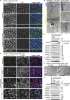
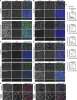
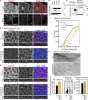
Higashi, Saito, Fukazawa et al
J Cell Biol (2023) 222 (1) DOI: 10.1083/jcb.202204079
Cited by 39
AI Summary: OriGene's Mouse anti-EpCAM monoclonal antibody (clone OTI1H9; SC322331) was used in this study to detect EpCAM protein, contributing to the investigation of its role in tight junction repair and maintenance.
Snippet: ito et al., 2021). Thus, the claudin-2-KO cell line is referred to as the “Ctrl” cell line throughout this manuscript. Antibodies Mouse anti-EpCAM mAb (clone OTI1H9;SC322331) was purchased from Origene Technologies. Rabbit anti-EpCAM mAb (clone E6V8Y;#93790) and rabbit anti–α-catenin mAb (clone 23B2;#3240) were purchased from Cell Signaling Technology. Rabbit anti-TMPRSS1 (HPN) polyclon
Viral and tumor antigen-specific CD8 T-cell responses in Merkel cell carcinoma
Samimi, Benlalam, Aumond et al
Cell. Immunol. (2019) 344, 103961 DOI: 10.1016/j.cellimm.2019.103961
Samimi, Benlalam, Aumond et al
Cell. Immunol. (2019) 344, 103961 DOI: 10.1016/j.cellimm.2019.103961
AI Summary: OriGene products contributed EpCAM and Rb pCMV6-XL4 plasmids, which were used to study tumor antigen-specific CD8 T-cell responses in Merkel cell carcinoma.
Snippet: Her-2/neu was a gift from Kostas Kosmatopoulos (UMR484 INSERM, Villejuif, France). EpCAM and Rb pCMV6-XL4 plasmids were purchased from Origene, France. The MCPyV major capsid protein VP1 plasmid was purchased from Addgene, France
Regulation of epithelial migration by epithelial cell adhesion molecule requires its Claudin-7 interaction domain
Barth, Kim, Riedel-Kruse
PLoS ONE (2018) 13 (10), e0204957 DOI: 10.1371/journal.pone.0204957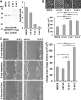
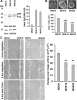
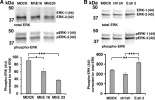
Barth, Kim, Riedel-Kruse
PLoS ONE (2018) 13 (10), e0204957 DOI: 10.1371/journal.pone.0204957
AI Summary: OriGene’s anti-EpCAM antibody (UMAB131) was used to assess EpCAM protein levels by immunoblotting in MDCK cell lines with altered EpCAM expression, enabling the study of EpCAM’s role in regulating epithelial migration.
Snippet: SH134T-mU6-01). Stable MDCK cell lines either overexpressing EpCAM or depleted of EpCAM were established by screening clonal lines for EpCAM levels by immunoblotting with anti-EpCAM antibody UMAB131 (OriGene Technologies, Inc., Rockville, MD). EpCAM-depleted MDCK line Esh2 was transfected with expression vectors for EY (EpCAM-YFP), EIY (EpCAM-YFP defective for Claudin-7 binding), or EEY (EpCAM-YFP
Off-target-free gene delivery by affinity-purified receptor-targeted viral vectors
Münch, Muth, Muik et al
Nat Commun (2015) 6, 6246 DOI: 10.1038/ncomms7246
Münch, Muth, Muik et al
Nat Commun (2015) 6, 6246 DOI: 10.1038/ncomms7246
Cited by 140
AI Summary: OriGene's pCMV6-AC-EpCAMcDNA plasmid was used as the source of human EpCAM cDNA to generate CHO-EpCAM cells for evaluating the specificity of receptor-targeted AAV vectors in this study.
Snippet: A3.01 (ATCC CRL-2570), A2.01 (ATCC CCL-120.1), Raji (ATCC CCL-86) and Jurkat (ATCC TIB-152) cells were grown in RPMI medium supplemented with 10% FCS and 1% glutamine. For the generation of CHO-EpCAM cells, the cDNA sequence of human EpCAM (pCMV6-AC-EpCAMcDNA, Origene, Rockville, USA) and a puromycin resistance gene were cloned into a lentiviral transfer vector resulting in the bicistronic plasmid...
Epithelial cell adhesion molecule (EpCAM) is associated with prostate cancer metastasis and chemo/radioresistance via the PI3K/Akt/mTOR signaling pathway
Ni, Cozzi, Hao et al
Int. J. Biochem. Cell Biol. (2013) 45 (12), 2736-2748 DOI: 10.1016/j.biocel.2013.09.008
Ni, Cozzi, Hao et al
Int. J. Biochem. Cell Biol. (2013) 45 (12), 2736-2748 DOI: 10.1016/j.biocel.2013.09.008
Cited by 203
AI Summary: OriGene’s EpCAM expression plasmid and empty vector were used to manipulate EpCAM levels in prostate cancer cells, enabling the study of EpCAM’s role in cancer metastasis and treatment resistance.
Snippet: EpCAM expression plasmid and empty vector were purchased from OriGene Technologies Inc (Rockville, MD, USA). Insulin, B27, EGF, bFGF and G418 were purchased from Invitrogen Australia Pty Ltd (Melbourne, VIC, Australia). Table 1.
Ep-CAM is a significant prognostic factor in pancreatic cancer patients by suppressing cell activity
Akita, Nagano, Takeda et al
Oncogene (2011) 30 (31), 3468-76 DOI: 10.1038/onc.2011.59
Akita, Nagano, Takeda et al
Oncogene (2011) 30 (31), 3468-76 DOI: 10.1038/onc.2011.59
Cited by 43
AI Summary: OriGene contributed to this study by providing the Ep-CAM expression plasmid, which was used to generate Ep-CAM-transfected pancreatic cancer cell lines for functional assays investigating the role of Ep-CAM in cell activity and prognosis.
Snippet: These factors leads to the selection of patients who actually need to receive the intensive post-operative therapy based on significant parameters. ... Gene transfection. Ep-CAM expression plasmid was purchased from OriGene Technologies Inc. (Rockville, MD, USA).
Showing 1-6 of 6 papers.
Powered by BizGenius
*Delivery time may vary from web posted schedule. Occasional delays may occur due to unforeseen
complexities in the preparation of your product. International customers may expect an additional 1-2 weeks
in shipping.
Related Products
- Price:
- Actual Price:
Welcome to OriGene AI!
I'm your AI-powered guide to everything OriGene.
Ask me anything:
- Product specs
- Ordering help
- Technical questions
- How to find exactly what your experiment needs
Prefer a live agent? Connect with us by clicking the green chat icon, as seen in the image below or email our team at custsupport@origene.com.
