
Twist (TWIST1) (NM_000474) Human Untagged Clone

$300.00
In Stock*
Specifications
| Product Data | |
| Type | Human Untagged Clone |
|---|---|
| Target Symbol | Twist |
| Synonyms | ACS3; bHLHa38; BPES2; BPES3; CRS; CRS1; CSO; SCS; SWCOS; TWIST |
| Vector | pCMV6-AC |
| E. coli Selection | Ampicillin (100 ug/mL) |
| Mammalian Cell Selection | Neomycin |
| Sequence Data | |
| Restriction Sites | Please inquire | |
| ACCN | NM_000474 |
| Insert Size | 609 bp |
| OTI Disclaimer | Our molecular clone sequence data has been matched to the reference identifier above as a point of reference. Note that the complete sequence of our molecular clones may differ from the sequence published for this corresponding reference, e.g., by representing an alternative RNA splicing form or single nucleotide polymorphism (SNP). |
| OTI Annotation | This TrueClone is provided through our Custom Cloning Process that includes sub-cloning into OriGene's pCMV6 vector and full sequencing to provide a non-variant match to the expected reference without frameshifts, and is delivered as lyophilized plasmid DNA. |
| Components | The ORF clone is ion-exchange column purified and shipped in a 2D barcoded Matrix tube containing 10ug of transfection-ready, dried plasmid DNA (reconstitute with 100 ul of water). |
| Reconstitution Method | 1. Centrifuge at 5,000xg for 5min. 2. Carefully open the tube and add 100ul of sterile water to dissolve the DNA. 3. Close the tube and incubate for 10 minutes at room temperature. 4. Briefly vortex the tube and then do a quick spin (less than 5000xg) to concentrate the liquid at the bottom. 5. Store the suspended plasmid at -20°C. The DNA is stable for at least one year from date of shipping when stored at -20°C. |
| Note | Plasmids are not sterile. For experiments where strict sterility is required, filtration with 0.22um filter is required. |
| Shipping | Ambient |
| Reference Data | |
| RefSeq | NM_000474.3, NP_000465.1 |
| RefSeq Size | 1669 bp |
| RefSeq ORF | 609 bp |
| Locus ID | 7291 |
| UniProt ID | Q15672 |
| Cytogenetics | 7p21.1 |
| Protein Families | Druggable Genome |
| Summary | This gene encodes a basic helix-loop-helix (bHLH) transcription factor that plays an important role in embryonic development. The encoded protein forms both homodimers and heterodimers that bind to DNA E box sequences and regulate the transcription of genes involved in cranial suture closure during skull development. This protein may also regulate neural tube closure, limb development and brown fat metabolism. This gene is hypermethylated and overexpressed in multiple human cancers, and the encoded protein promotes tumor cell invasion and metastasis, as well as metastatic recurrence. Mutations in this gene cause Saethre-Chotzen syndrome in human patients, which is characterized by craniosynostosis, ptosis and hypertelorism. provided by RefSeq, Jul 2020 |
Reviews


Documents
| Product Manuals |
| FAQs |
| SDS |
Resources
"NM_000474" in other vectors (6)
| SKU | Description | Size | Price | |
|---|---|---|---|---|
| RC202920 | TWIST1 (Myc-DDK-tagged)-Human twist homolog 1 (Drosophila) (TWIST1) | 10 ug |
$450.00
|
|
| RC202920L1 | Lenti ORF clone of Human twist homolog 1 (Drosophila) (TWIST1), Myc-DDK-tagged | 10 ug |
$750.00
|
|
| RC202920L2 | Lenti ORF clone of Human twist homolog 1 (Drosophila) (TWIST1), mGFP tagged | 10 ug |
$750.00
|
|
| RC202920L3 | Lenti ORF clone of Human twist homolog 1 (Drosophila) (TWIST1), Myc-DDK-tagged | 10 ug |
$750.00
|
|
| RC202920L4 | Lenti ORF clone of Human twist homolog 1 (Drosophila) (TWIST1), mGFP tagged | 10 ug |
$750.00
|
|
| RG202920 | TWIST1 (tGFP-tagged) - Human twist homolog 1 (Drosophila) (TWIST1) | 10 ug |
$489.00
$650.00
|
|
Citations
Knockdown of PLOD3 suppresses the malignant progression of renal cell carcinoma via reducing TWIST1 expression
Xie, Li, Wei et al
Mol. Cell. Probes (2020) 53, 101608 DOI: 10.1016/j.mcp.2020.101608
Xie, Li, Wei et al
Mol. Cell. Probes (2020) 53, 101608 DOI: 10.1016/j.mcp.2020.101608
Cited by 14
AI Summary: OriGene contributed to this study by providing the 29mer shRNA targeting human PLOD3 gene (shPLOD3, Cat# TR310350) and the PLOD3 overexpression plasmid (Cat# SC321467), which were used to manipulate PLOD3 expression in renal cell carcinoma cells and investigate its role in cancer progression.
Snippet: Procollagen-lysine, 2-oxoglutarate 5-dioxygenase (PLOD3), also known as lysyl hydroxylase 3 (LH3) has been demonstrated to be overexpressed in several kinds of cancers and facilitate cell migration. Currently, we aimed to reveal the role of PLOD3 in renal cell carcinoma (RCC) progression, and explore whether TWIST1" style="font-weight: bold;">TWIST1 (Twist family bHLH transcription factor 1) is involved in this process. Fifty-eight paired RCC tissues and normal tissues were collected and subjected to qPCR and immunohistochemistry (IHC) technology to detect the expression levels of PLOD3. The clinical value of PLOD3 in predicting RCC progression was then explored. …PLOD3 expression was enhanced in RCC tissues and cells, which predicted higher T (tumor), N (lymph node) and M (metastasis) stages, histological grade and TNM (tumor, lymph node, metastasis) stage. PLOD3 downregulation in RCC A498 cells obviously inhibited cell proliferation, migration, invasion, EMT and tumorigenesis and increased cell apoptosis. PLOD3 overexpression led to opposite results in RCC A704 cells. PLOD3 downregulation reduced the expression levels of TWIST1" style="font-weight: bold;">TWIST1, β-catenin and p-AKT. In addition, TWIST1" style="font-weight: bold;">TWIST1 overexpression rescued the repressions of cell proliferation, migration, invasion, EMT and the activation of β-catenin and AKT signaling in addition to apoptosis promotion induced by PLOD3 downregulation. Collectively, this study illustrated that PLOD3 knockdown suppressed RCC malignance via inhibiting TWIST1" style="font-weight: bold;">TWIST1-mediated activation of β-catenin and AKT signaling. … Published by Elsevier Ltd.;Procollagen-lysine, 2-oxoglutarate 5-dioxygenase (PLOD3), also known as lysyl hydroxylase 3 (LH3) has been demonstrated to be overexpressed in several kinds of cancers and facilitate cell migration. Currently, we aimed to reveal the role of PLOD3 in renal cell carcinoma (RCC) progression, and explore whether TWIST1" style="font-weight: bold;">TWIST1 (Twist family bHLH transcription factor 1) is involved in this process. Fifty-eight paired RCC tissues and normal tissues were collected and subjected to qPCR and immunohistochemistry (IHC) technology to detect the expression levels of PLOD3. The clinical value of PLOD3 in predicting RCC progression was then explored. …PLOD3 expression was enhanced in RCC tissues and cells, which predicted higher T (tumor), N (lymph node) and M (metastasis) stages, histological grade and TNM (tumor, lymph node, metastasis) stage. PLOD3 downregulation in RCC A498 cells obviously inhibited cell proliferation, migration, invasion, EMT and tumorigenesis and increased cell apoptosis. PLOD3 overexpression led to opposite results in RCC A704 cells. PLOD3 downregulation reduced the expression levels of TWIST1" style="font-weight: bold;">TWIST1, β-catenin and p-AKT. In addition, TWIST1" style="font-weight: bold;">TWIST1 overexpression rescued the repressions of cell proliferation, migration, invasion, EMT and the activation of β-catenin and AKT signaling in addition to apoptosis promotion induced by PLOD3 downregulation. Collectively, this study illustrated that PLOD3 knockdown suppressed RCC malignance via inhibiting TWIST1" style="font-weight: bold;">TWIST1-mediated activation of β-catenin and AKT signaling. … Published by Elsevier Ltd.;- The unique 29mer shRNA targeting human PLOD3 gene (shPLOD3) constructed in retroviral untagged vector and the retroviral control vector were purchased from Origene (no. TR310350, Beijing, China) SC321467) were established by Origene in pCMV6-AC vectors
Rhodopsin T17M Mutant Inhibits Complement C3 Secretion in Retinal Pigment Epithelium via ROS Induced Downregulation of TWIST1
Xiong, Yu, Zhou et al
J Cell Biochem (2017) 118 (12), 4914-4920 DOI: 10.1002/jcb.26177
Xiong, Yu, Zhou et al
J Cell Biochem (2017) 118 (12), 4914-4920 DOI: 10.1002/jcb.26177
Cited by 2
AI Summary: OriGene products contributed to this study by providing the rhodopsin cDNA clones (RC211218 for wild-type and RC211218Mut for T17M mutant) used to overexpress rhodopsin variants in ARPE-19 cells, enabling the investigation of their effects on C3 secretion and related molecular pathways.
Activation of TWIST1 by COL11A1 promotes chemoresistance and inhibits apoptosis in ovarian cancer cells by modulating NF-κB-mediated IKKβ expression
Wu, Huang, Chang et al
Int. J. Cancer (2017)
Wu, Huang, Chang et al
Int. J. Cancer (2017)
AI Summary: OriGene products, specifically the COL11A1 siRNA (SR300918) and the pCMV6-AC-GFP expression vector (PS100010), were used in this study to manipulate COL11A1 expression and investigate its role in chemoresistance and apoptosis in ovarian cancer cells.
EZH2 inhibition suppresses endometrial cancer progression via miR-361/Twist axis
Ihira, Dong, Xiong et al
Oncotarget (2017)
Ihira, Dong, Xiong et al
Oncotarget (2017)
Snippet: Media was changed daily or added every 3 d (sphere formation assay). Transient transfection of miRNA mimic, antisense miRNA inhibitor, and siRNA (Ambion, Austin, TX), or plasmids including pCMV6-AC, pCMV6-TWIST (321467;OriGene, Rockville, MD), pCMV/hygro ... All 4 versions Cite SaveSaving
Twist1 Is a TNF-Inducible Inhibitor of Clock Mediated Activation of Period Genes
Meier, Lopez, Franken et al
PLoS ONE (2015) 10 (9), e0137229 DOI: 10.1371/journal.pone.0137229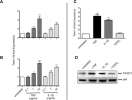
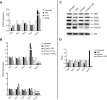
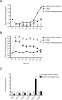
Meier, Lopez, Franken et al
PLoS ONE (2015) 10 (9), e0137229 DOI: 10.1371/journal.pone.0137229
Cited by 11
AI Summary: OriGene’s TrueClone pCMV6::Twist1, pCMV6::Twist2, and pCMV6::empty plasmids were used to overexpress Twist1 and Twist2 in NIH-3T3 cells, enabling the authors to investigate the specific roles of these transcription factors in cytokine-induced inhibition of clock genes.
Snippet: Overexpression of Twist1" style="font-weight: bold;">Twist1 and Twist2" style="font-weight: bold;">Twist2 was established by stable transfection of TrueClone pCMV6::Twist1" style="font-weight: bold;">Twist1, pCMV6::Twist2" style="font-weight: bold;">Twist2 and pCMV6::empty plasmid (Origene) into NIH-3T3 cells with FugeneHD transfection reagent (Promega) according to the manufacturer's instructions ... Cite SaveSaving
Silencing of CDC42 inhibits neuroblastoma cell proliferation and transformation
Lee, Craig, Romain et al
Cancer Lett. (2014)
Lee, Craig, Romain et al
Cancer Lett. (2014)
Cited by 23
AI Summary: OriGene products pCMV6-XL5-Twist and pCMV6-XL4-N-myc plasmids were used in this study to investigate the roles of Twist and N-myc in neuroblastoma cell proliferation and transformation following CDC42 silencing.
Snippet: Plasmid pCDNA3.1 was obtained from Invitrogen (Carlsbad, CA), and pcDNA3-Myr HA-AKT2 (Addgene plasmid 9016, Cambridge, MA), pCMV6-XL5-Twist, and pCMV6-XL4-N-myc were purchased from OriGene (Rockville, MD). ... Cite SaveSaving
Showing 1-6 of 7 papers.
Powered by BizGenius
*Delivery time may vary from web posted schedule. Occasional delays may occur due to unforeseen
complexities in the preparation of your product. International customers may expect an additional 1-2 weeks
in shipping.
Related Products
- Price:
- Actual Price:
Welcome to OriGene AI!
I'm your AI-powered guide to everything OriGene.
Ask me anything:
- Product specs
- Ordering help
- Technical questions
- How to find exactly what your experiment needs
Prefer a live agent? Connect with us by clicking the green chat icon, as seen in the image below or email our team at custsupport@origene.com.
