
GFAP (NM_002055) Human Tagged ORF Clone
- TrueORF®
SKU
RG204548
GFAP (tGFP-tagged) - Human glial fibrillary acidic protein (GFAP), transcript variant 1

$489.00
$657.00
In Stock*
Specifications
| Product Data | |
| Type | Human Tagged ORF Clone |
|---|---|
| Target Symbol | GFAP |
| Synonyms | ALXDRD |
| Vector | pCMV6-AC-GFP |
| E. coli Selection | Ampicillin (100 ug/mL) |
| Mammalian Cell Selection | Neomycin |
| Sequence Data | |
| Restriction Sites |
SgfI-MluI Cloning Scheme for this gene
|
Plasmid Map

|
| ACCN | NM_002055 |
| ORF Size | 1296 bp |
| OTI Disclaimer | The molecular sequence of this clone aligns with the gene accession number as a point of reference only. However, individual transcript sequences of the same gene can differ through naturally occurring variations (e.g. polymorphisms), each with its own valid existence. This clone is substantially in agreement with the reference, but a complete review of all prevailing variants is recommended prior to use. More info |
| OTI Annotation | This clone was engineered to express the complete ORF with an expression tag. Expression varies depending on the nature of the gene. |
| Components | The ORF clone is ion-exchange column purified and shipped in a 2D barcoded Matrix tube containing 10ug of transfection-ready, dried plasmid DNA (reconstitute with 100 ul of water). |
| Reconstitution Method | 1. Centrifuge at 5,000xg for 5min. 2. Carefully open the tube and add 100ul of sterile water to dissolve the DNA. 3. Close the tube and incubate for 10 minutes at room temperature. 4. Briefly vortex the tube and then do a quick spin (less than 5000xg) to concentrate the liquid at the bottom. 5. Store the suspended plasmid at -20°C. The DNA is stable for at least one year from date of shipping when stored at -20°C. |
| Note | Plasmids are not sterile. For experiments where strict sterility is required, filtration with 0.22um filter is required. |
| Shipping | Ambient |
| Reference Data | |
| RefSeq | NM_002055.5 |
| RefSeq Size | 3035 bp |
| RefSeq ORF | 1299 bp |
| Locus ID | 2670 |
| UniProt ID | P14136, A7REI1 |
| Cytogenetics | 17q21.31 |
| Domains | filament, filament_head |
| Protein Families | ES Cell Differentiation/IPS |
| Summary | This gene encodes one of the major intermediate filament proteins of mature astrocytes. It is used as a marker to distinguish astrocytes from other glial cells during development. Mutations in this gene cause Alexander disease, a rare disorder of astrocytes in the central nervous system. Alternative splicing results in multiple transcript variants encoding distinct isoforms. provided by RefSeq, Oct 2008 |
Reviews


Documents
| Product Manuals |
| FAQs |
| SDS |
Resources
"NM_002055" in other vectors (6)
| SKU | Description | Size | Price | |
|---|---|---|---|---|
| RC204548 | GFAP (Myc-DDK-tagged)-Human glial fibrillary acidic protein (GFAP), transcript variant 1 | 10 ug |
$457.00
|
|
| RC204548L1 | Lenti ORF clone of Human glial fibrillary acidic protein (GFAP), transcript variant 1, Myc-DDK-tagged | 10 ug |
$757.00
|
|
| RC204548L2 | Lenti ORF clone of Human glial fibrillary acidic protein (GFAP), transcript variant 1, mGFP tagged | 10 ug |
$757.00
|
|
| RC204548L3 | Lenti ORF clone of Human glial fibrillary acidic protein (GFAP), transcript variant 1, Myc-DDK-tagged | 10 ug |
$757.00
|
|
| RC204548L4 | Lenti ORF clone of Human glial fibrillary acidic protein (GFAP), transcript variant 1, mGFP tagged | 10 ug |
$757.00
|
|
| SC118873 | GFAP (untagged)-Human glial fibrillary acidic protein (GFAP), transcript variant 1 | 10 ug |
$457.00
|
|
Citations
Involvement of TNFRSF9 in the Pathogenesis of Autoimmune Glial Fibrillary Acidic Protein Astrocytopathy
Kimura, Takekoshi, Maekawa et al
Neurology (2026) 107 (3), e218306 DOI: 10.1212/WNL.0000000000218306
Kimura, Takekoshi, Maekawa et al
Neurology (2026) 107 (3), e218306 DOI: 10.1212/WNL.0000000000218306
Investigation of Prognostic Factors in Patients With Autoimmune Glial Fibrillary Acidic Protein Astrocytopathy
Kimura, Takekoshi, Maekawa et al
Eur J Neurol (2026) 33 (1), e70489 DOI: 10.1111/ene.70489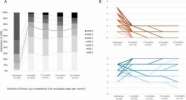
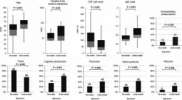
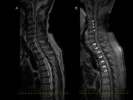
Kimura, Takekoshi, Maekawa et al
Eur J Neurol (2026) 33 (1), e70489 DOI: 10.1111/ene.70489
Cited by 5
AI Summary: OriGene's GFAPα-GFP plasmid (RG204548) was used to transfect HEK293 cells for cell-based assays to detect GFAP-IgG in patient cerebrospinal fluid, contributing to the diagnosis and analysis of autoimmune GFAP astrocytopathy in this study.
Snippet: For CBA, HEK293 cells transfected with a GFAPα-GFP plasmid (OriGene, RG204548) were fixed and incubated with diluted CSF (1:4) for 1 h at room temperature. …For CBA, HEK293 cells transfected with a GFAPα‐GFP plasmid (OriGene, RG204548) were fixed and incubated with diluted CSF (1:4) for 1 h at room temperature. …
Intrathecal Epstein-Barr virus reactivation in patients with autoimmune glial fibrillary acidic protein astrocytopathy
Handa, Uzawa, Kimura et al
J Neurol Neurosurg Psychiatry (2025)
Handa, Uzawa, Kimura et al
J Neurol Neurosurg Psychiatry (2025)
Cited by 4
AI Summary: OriGene's GFAPα-GFP plasmid (pCMV6-AC-GFAPα-GFP; catalogue no: RG204548) was used to transfect HEK293 cells for cell-based assays to detect GFAPα autoantibodies in cerebrospinal fluid samples, contributing to the investigation of autoimmunity in patients with GFAP astrocytopathy.
Snippet: GFAPα autoantibodies were determined in Gifu University. Briefly, CSF samples were diluted fourfold and the CSF-GFAPα autoantibodies were assayed using CBA in HEK293 cells transfected with a GFAPα-GFP plasmid (pCMV6-AC-GFAPα-GFP;catalogue no: RG204548;Origene, Rockville, Maryland, USA), following the protocol by Flanagan et al.2 16 Additionally, immunohistochemistry was performed to confirm immunoreactivity to GFAP in frozen rat brain sections (catalogue no:
Clinical and neuroimaging findings of patients with glial fibrillary acidic protein-immunoglobulin G-like anti-astrocytic antibodies in cerebrospinal fluid
Kimura, Takekoshi, Shimohata
J Neuroimmunol (2025) 400, 578545 DOI: 10.1016/j.jneuroim.2025.578545
Kimura, Takekoshi, Shimohata
J Neuroimmunol (2025) 400, 578545 DOI: 10.1016/j.jneuroim.2025.578545
AI Summary: OriGene’s pCMV6-AC-GFAP-α-GFP plasmid (RG204548) was used to transfect HEK293 cells for the cell-based assay to assess patient antibodies’ reactivity against GFAPα in this study.
Snippet: ples according to previous reports (Flanagan et al., 2017;Kimura et al., 2019). The CBA employed human embryonic kidney 293 (HEK293) cells transfected with a plasmid from OriGene (Rockville, MD, USA) encoding the single Homo sapiens GFAP transcript variant 1 (RG204548;pCMV6-AC-GFAP-α-GFP). Transfected cells were fixed with 2 % paraformaldehyde for 20 min an
Serum glial fibrillary acidic protein (GFAP)-antibody in idiopathic intracranial hypertension
Yetimler, Tzartos, Şengül et al
Int. J. Neurosci. (2020)
Yetimler, Tzartos, Şengül et al
Int. J. Neurosci. (2020)
Cited by 19
AI Summary: OriGene's pCMV6-AC-GFAP-α-GFP plasmid was used to transfect HEK293 cells for the cell-based assay that enabled detection of GFAP antibodies in patient sera and CSF samples in this study.
Snippet: Sera and CSF of all patients and controls were examined for GFAP-antibody by a cell-based assay (CBA) using HEK293 cells transfected with the pCMV6-AC-GFAP-α-GFP plasmid (OriGene, Rockville, MD, USA), as previously described [13,14];- Sera and CSF of all patients and controls were examined for GFAP-antibody by a cell-based assay (CBA) using HEK293 cells transfected with the pCMV6-AC-GFAP-α-GFP plasmid (OriGene, Rockville, MD, USA), as previously described [13,14]
Glial fibrillary acidic protein (GFAP)-antibody in children with focal seizures of undetermined cause
Savaş, Tzartos, Küçükali et al
Acta Neurol Belg (2020)
Savaş, Tzartos, Küçükali et al
Acta Neurol Belg (2020)
Cited by 19
AI Summary: OriGene's pCMV6-AC-GFAP-α-GFP plasmid was used to transfect HEK293 cells for the cell-based assay that enabled detection of GFAP antibodies in children with focal seizures of undetermined cause.
Snippet: … GFAP-antibody detection was achieved by a cell-based assay (CBA) using HEK293 cells transfected with the pCMV6-AC-GFAP-α-GFP plasmid (OriGene, Rockville, MD, USA), as previously described [9, 15]. … GFAP-antibody detection was achieved by a cell-based assay (CBA) using HEK293 cells transfected with the pCMV6-AC-GFAP-α-GFP plasmid (OriGene, Rockville, MD, USA), as previously described [9, 15]. …
Showing 1-6 of 12 papers.
Powered by BizGenius
*Delivery time may vary from web posted schedule. Occasional delays may occur due to unforeseen
complexities in the preparation of your product. International customers may expect an additional 1-2 weeks
in shipping.
Related Products
- Price:
- Actual Price:
Welcome to OriGene AI!
I'm your AI-powered guide to everything OriGene.
Ask me anything:
- Product specs
- Ordering help
- Technical questions
- How to find exactly what your experiment needs
Prefer a live agent? Connect with us by clicking the green chat icon, as seen in the image below or email our team at custsupport@origene.com.
