
GFAP (NM_002055) Human Untagged Clone

$457.00
In Stock*
Specifications
| Product Data | |
| Type | Human Untagged Clone |
|---|---|
| Target Symbol | GFAP |
| Synonyms | ALXDRD |
| Vector | pCMV6-XL4 |
| E. coli Selection | Ampicillin (100 ug/mL) |
| Mammalian Cell Selection | None |
| Sequence Data | |
| Restriction Sites | NotI-NotI | |
| ACCN | NM_002055 |
| Insert Size | 3075 bp |
| OTI Disclaimer | Our molecular clone sequence data has been matched to the reference identifier above as a point of reference. Note that the complete sequence of our molecular clones may differ from the sequence published for this corresponding reference, e.g., by representing an alternative RNA splicing form or single nucleotide polymorphism (SNP). |
| Components | The ORF clone is ion-exchange column purified and shipped in a 2D barcoded Matrix tube containing 10ug of transfection-ready, dried plasmid DNA (reconstitute with 100 ul of water). |
| Reconstitution Method | 1. Centrifuge at 5,000xg for 5min. 2. Carefully open the tube and add 100ul of sterile water to dissolve the DNA. 3. Close the tube and incubate for 10 minutes at room temperature. 4. Briefly vortex the tube and then do a quick spin (less than 5000xg) to concentrate the liquid at the bottom. 5. Store the suspended plasmid at -20°C. The DNA is stable for at least one year from date of shipping when stored at -20°C. |
| Note | Plasmids are not sterile. For experiments where strict sterility is required, filtration with 0.22um filter is required. |
| Shipping | Ambient |
| Reference Data | |
| RefSeq | NM_002055.2, NP_002046.1 |
| RefSeq Size | 3035 bp |
| RefSeq ORF | 1299 bp |
| Locus ID | 2670 |
| UniProt ID | P14136 |
| Cytogenetics | 17q21.31 |
| Domains | filament, filament_head |
| Protein Families | ES Cell Differentiation/IPS |
| Summary | This gene encodes one of the major intermediate filament proteins of mature astrocytes. It is used as a marker to distinguish astrocytes from other glial cells during development. Mutations in this gene cause Alexander disease, a rare disorder of astrocytes in the central nervous system. Alternative splicing results in multiple transcript variants encoding distinct isoforms. provided by RefSeq, Oct 2008 Transcript Variant: This variant (1) represents the longest transcript and encodes a predominant isoform (1, also known as alpha). |
Reviews


Documents
| Product Manuals |
| FAQs |
| SDS |
Resources
"NM_002055" in other vectors (6)
| SKU | Description | Size | Price | |
|---|---|---|---|---|
| RC204548 | GFAP (Myc-DDK-tagged)-Human glial fibrillary acidic protein (GFAP), transcript variant 1 | 10 ug |
$457.00
|
|
| RC204548L1 | Lenti ORF clone of Human glial fibrillary acidic protein (GFAP), transcript variant 1, Myc-DDK-tagged | 10 ug |
$757.00
|
|
| RC204548L2 | Lenti ORF clone of Human glial fibrillary acidic protein (GFAP), transcript variant 1, mGFP tagged | 10 ug |
$757.00
|
|
| RC204548L3 | Lenti ORF clone of Human glial fibrillary acidic protein (GFAP), transcript variant 1, Myc-DDK-tagged | 10 ug |
$757.00
|
|
| RC204548L4 | Lenti ORF clone of Human glial fibrillary acidic protein (GFAP), transcript variant 1, mGFP tagged | 10 ug |
$757.00
|
|
| RG204548 | GFAP (tGFP-tagged) - Human glial fibrillary acidic protein (GFAP), transcript variant 1 | 10 ug |
$489.00
$657.00
|
|
Citations
Alexander disease GFAP R239C mutant shows increased susceptibility to lipoxidation and elicits mitochondrial dysfunction and oxidative stress
Viedma-Poyatos, González-Jiménez, Pajares et al
Redox Biology (2022) 55, 102415 DOI: 10.1016/j.redox.2022.102415
Viedma-Poyatos, González-Jiménez, Pajares et al
Redox Biology (2022) 55, 102415 DOI: 10.1016/j.redox.2022.102415
Cited by 37
AI Summary: OriGene products contributed to this study by providing the human GFAP expression plasmid (pCMV6-XL6-GFAP, Cat# SC118873), which was used to express wild-type GFAP in astrocytic cells for comparison with disease-associated mutants.
Snippet: cells received an equivalent volume of vehicle. Plasmids, mutagenesis and transfection procedures - Expression vectors for human GFAP (pCMV6-XL6-GFAP, SC118873) and GFP-GFAP (EX-D0090-M29) were from Origene and Genecopoeia, respectively. The ORF of GFAP was subcloned into the EcoRI and SacII sites of the pIRES2 DSred-Express2 vector (Clontech) to generate the bicistronic vector RFP//GFAP, from wh
Adult-Onset Alexander Disease: New Causal Sequence Variant in the GFAP Gene
Goerttler, Zanetti, Regoni et al
Neurol Genet (2022) 8 (3), e681 DOI: 10.1212/NXG.0000000000000681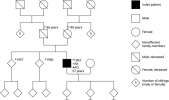
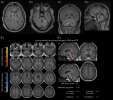
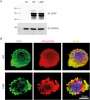
Goerttler, Zanetti, Regoni et al
Neurol Genet (2022) 8 (3), e681 DOI: 10.1212/NXG.0000000000000681
AI Summary: OriGene’s human GFAP plasmid (SC118873) was used as the template to introduce and study the novel GFAP-L58P mutation in HeLa cells, enabling the authors to demonstrate its pathogenic effect in adult-onset Alexander disease.
Snippet: y to be pathogenic.6 To test whether this new mutation c.173T>C;p.L58P in GFAP affects intermediated filament network formation, we introduced the point mutation in the plasmid encoding human GFAP (OriGene Technologies, SC118873 by mutagenesis (QuikChange XL Site-Directed Mutagenesis Kit, Agilent)). HeLa cells were transfected with either GFAP-WT or GFAP-L58P. Forty-eight hours after transfectio;To test whether this new mutation c.173TC;p.L58P in GFAP affects intermediated filament network formation, we introduced the point mutation in the plasmid encoding human GFAP (OriGene Technologies, SC118873 by mutagenesis (QuikChange XL Site-Directed Mutagenesis Kit, Agilent))
A Novel Mutation of GFAP Causing Adult-Onset Alexander Disease
Ciammola, Sangalli, Sassone et al
Front Neurol (2019) 10, 1124 DOI: 10.3389/fneur.2019.01124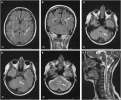
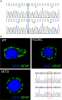
Ciammola, Sangalli, Sassone et al
Front Neurol (2019) 10, 1124 DOI: 10.3389/fneur.2019.01124
AI Summary: OriGene’s human GFAP plasmid (SC118873) was used to express both wild-type and mutant GFAP proteins in cell studies, enabling functional analysis of the novel GFAP mutation identified in the patient with adult-onset Alexander disease.
Snippet: Plasmid encoding human GFAP was purchased from OriGene Technologies (SC118873). … HeLa cells were grown in Dulbecco's modified Eagle's medium, 10% fetal bovine serum, 1% Pen-Strep, 5% CO2 at 37°C, and transfected using lipofectamine 2000;48 h after transfection the cells were immunostained with mAb #3670 Cell signaling GFAP (1: 300). …
Site-specific phosphorylation and caspase cleavage of GFAP are new markers of Alexander Disease severity
Battaglia, Beltran, Delic et al
Elife (2019) 8 DOI: 10.7554/eLife.47789
Battaglia, Beltran, Delic et al
Elife (2019) 8 DOI: 10.7554/eLife.47789
The cysteine residue of glial fibrillary acidic protein is a critical target for lipoxidation and required for efficient network organization
Viedma-Poyatos, de Pablo, Pekny et al
Free Radic. Biol. Med. (2018) 120, 380-394 DOI: 10.1016/j.freeradbiomed.2018.04.007
Viedma-Poyatos, de Pablo, Pekny et al
Free Radic. Biol. Med. (2018) 120, 380-394 DOI: 10.1016/j.freeradbiomed.2018.04.007
Clinical and immunological characteristics of the spectrum of GFAP autoimmunity: a case series of 22 patients
Iorio, Damato, Evoli et al
J. Neurol. Neurosurg. Psychiatr. (2017)
Iorio, Damato, Evoli et al
J. Neurol. Neurosurg. Psychiatr. (2017)
AI Summary: OriGene products pCMV6-XL6-GFAPα (SC118873) and pCMV6-Entry-GFAPδ (SC325916) were used to transfect HEK-293 cells for cell-based assays, enabling the detection and confirmation of GFAP autoantibodies in patient samples in this study.
Snippet: … HEK-293 cells were transfected with plasmids encoding GFAP homo sapiens transcript variant 1 (SC118873, pCMV6-XL6-GFAPα) and variant 2 (SC325916, pCMV6-Entry-GFAPδ, OriGene) using Lipofectamine 3000 (Invitrogen). ...;... … HEK-293 cells were transfected with plasmids encoding GFAP homo sapiens transcript variant 1 (SC118873, pCMV6-XL6-GFAPα) and variant 2 (SC325916, pCMV6-Entry-GFAPδ, OriGene) using Lipofectamine 3000 (Invitrogen). ...;... … HEK-293 cells were transfected with plasmids encoding GFAP homo sapiens transcript variant 1 (SC118873, pCMV6-XL6-GFAPα) and variant 2 (SC325916, pCMV6-Entry-GFAPδ, OriGene) using Lipofectamine 3000 (Invitrogen).
Showing 1-6 of 8 papers.
Powered by BizGenius
*Delivery time may vary from web posted schedule. Occasional delays may occur due to unforeseen
complexities in the preparation of your product. International customers may expect an additional 1-2 weeks
in shipping.
Related Products
- Price:
- Actual Price:
Welcome to OriGene AI!
I'm your AI-powered guide to everything OriGene.
Ask me anything:
- Product specs
- Ordering help
- Technical questions
- How to find exactly what your experiment needs
Prefer a live agent? Connect with us by clicking the green chat icon, as seen in the image below or email our team at custsupport@origene.com.
