
TrkB (NTRK2) (NM_006180) Human Tagged ORF Clone

SKU
RC221794
NTRK2 (Myc-DDK-tagged)-Human neurotrophic tyrosine kinase, receptor, type 2 (NTRK2), transcript variant a

$767.00
In Stock*
Specifications
| Product Data | |
| Type | Human Tagged ORF Clone |
|---|---|
| Target Symbol | TrkB |
| Synonyms | DEE58; EIEE58; GP145-TrkB; OBHD; trk-B; TRKB |
| Vector | pCMV6-Entry |
| E. coli Selection | Kanamycin (25 ug/mL) |
| Mammalian Cell Selection | Neomycin |
| Sequence Data | |
| Chromatograms |
Chromatograms
 Sequencher program is needed, download here |
| Restriction Sites |
SgfI-MluI Cloning Scheme for this gene
|
Plasmid Map

|
| ACCN | NM_006180 |
| ORF Size | 2514 bp |
| OTI Disclaimer | The molecular sequence of this clone aligns with the gene accession number as a point of reference only. However, individual transcript sequences of the same gene can differ through naturally occurring variations (e.g. polymorphisms), each with its own valid existence. This clone is substantially in agreement with the reference, but a complete review of all prevailing variants is recommended prior to use. More info |
| OTI Annotation | This clone was engineered to express the complete ORF with an expression tag. Expression varies depending on the nature of the gene. |
| Components | The ORF clone is ion-exchange column purified and shipped in a 2D barcoded Matrix tube containing 10ug of transfection-ready, dried plasmid DNA (reconstitute with 100 ul of water). |
| Reconstitution Method | 1. Centrifuge at 5,000xg for 5min. 2. Carefully open the tube and add 100ul of sterile water to dissolve the DNA. 3. Close the tube and incubate for 10 minutes at room temperature. 4. Briefly vortex the tube and then do a quick spin (less than 5000xg) to concentrate the liquid at the bottom. 5. Store the suspended plasmid at -20°C. The DNA is stable for at least one year from date of shipping when stored at -20°C. |
| Note | Plasmids are not sterile. For experiments where strict sterility is required, filtration with 0.22um filter is required. |
| Shipping | Ambient |
| Reference Data | |
| RefSeq | NM_006180.6 |
| RefSeq Size | 5608 bp |
| RefSeq ORF | 2517 bp |
| Locus ID | 4915 |
| UniProt ID | Q16620, Q5VWE5, A0A024R230 |
| Cytogenetics | 9q21.33 |
| Domains | ig, IG, IGc2, LRR, LRRCT, LRRNT, pkinase, S_TKc, TyrKc |
| Protein Families | Druggable Genome, Protein Kinase, Transmembrane |
| Protein Pathways | MAPK signaling pathway, Neurotrophin signaling pathway |
| MW | 93.83 kDa |
| Summary | This gene encodes a member of the neurotrophic tyrosine receptor kinase (NTRK) family. This kinase is a membrane-bound receptor that, upon neurotrophin binding, phosphorylates itself and members of the MAPK pathway. Signalling through this kinase leads to cell differentiation. Mutations in this gene have been associated with obesity and mood disorders. Alternative splicing results in multiple transcript variants. provided by RefSeq, May 2014 |
Reviews


Documents
| Product Manuals |
| FAQs |
| SDS |
Resources
"NM_006180" in other vectors (6)
| SKU | Description | Size | Price | |
|---|---|---|---|---|
| RC221794L1 | Lenti ORF clone of Human neurotrophic tyrosine kinase, receptor, type 2 (NTRK2), transcript variant a, Myc-DDK-tagged | 10 ug |
$1,067.00
|
|
| RC221794L2 | Lenti ORF clone of Human neurotrophic tyrosine kinase, receptor, type 2 (NTRK2), transcript variant a, mGFP tagged | 10 ug |
$1,067.00
|
|
| RC221794L3 | Lenti ORF clone of Human neurotrophic tyrosine kinase, receptor, type 2 (NTRK2), transcript variant a, Myc-DDK-tagged | 10 ug |
$1,067.00
|
|
| RC221794L4 | Lenti ORF clone of Human neurotrophic tyrosine kinase, receptor, type 2 (NTRK2), transcript variant a, mGFP tagged | 10 ug |
$1,067.00
|
|
| RG221794 | NTRK2 (tGFP-tagged) - Human neurotrophic tyrosine kinase, receptor, type 2 (NTRK2), transcript variant a | 10 ug |
$789.00
$967.00
|
|
| SC127911 | NTRK2 (untagged)-Human neurotrophic tyrosine kinase, receptor, type 2 (NTRK2), transcript variant a | 10 ug |
$768.00
|
|
Citations
Comprehensive characterization and targeted treatment of a pediatric epithelioid glioblastoma with a rare TRIM24-NTRK2 fusion
Keane, Sjöberg, Deland et al
NPJ Precis Oncol (2025) 9 (1), 394 DOI: 10.1038/s41698-025-01190-3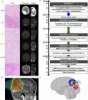
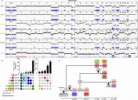
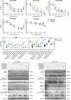
Keane, Sjöberg, Deland et al
NPJ Precis Oncol (2025) 9 (1), 394 DOI: 10.1038/s41698-025-01190-3
AI Summary: OriGene products, specifically the wild-type NTRK2 construct (Cat# RC221794) and pCMV6 empty vector (Cat# PS10000), were used in this study to investigate the oncogenic properties of the TRIM24::NTRK2 fusion in pediatric epithelioid glioblastoma.
Snippet: pCMV6-TRIM24-NTRK2-Myc-DDK (TRIM24::NTRK2 fusion), and pCMV6-Myc-DDK (empty vector). The wild-type NTRK2 (NM_006180, 838 aa, #RC221794) and pCMV6 empty vector (#PS10000) constructs were ordered from Origene (Origene, Rockville, MD, USA). Vector constructs for the TRIM24::NTRK2 fusion transcripts exon 12–13 (1044 aa), and exon 12-14 fusion (1028 aa) were synthesized, subcloned, and sequenced by
Novel TPR::ROS1 Fusion Gene Activates MAPK, PI3K and JAK/STAT Signaling in an Infant-type Pediatric Glioma
Deland, Keane, Bontell et al
Cancer Genomics Proteomics (2022) 19 (6), 711-726 DOI: 10.21873/cgp.20354
Deland, Keane, Bontell et al
Cancer Genomics Proteomics (2022) 19 (6), 711-726 DOI: 10.21873/cgp.20354
Cited by 11
AI Summary: OriGene products, specifically the wild-type ROS1 construct (NM_002944.2, #RC221794) and the pCMV6 empty vector (#PS10000), were used as controls in transfection experiments to assess the functional impact of the novel TPR::ROS1 fusion gene in this study.
Snippet: Background/Aim: Although fusion genes involving the proto-oncogene receptor tyrosine kinase ROS1 are rare in pediatric glioma, targeted therapies with small inhibitors Save;type ROS1 (NM_002944.2, 2347 aa, #RC221794) and pCMV6 empty vector (#PS10000) constructs were ordered from Origene (Origene, Rockville, MD, USA). …
Discovery of a rare GKAP1-NTRK2 fusion in a pediatric low-grade glioma, leading to targeted treatment with TRK-inhibitor larotrectinib
Deland, Keane, Olsson Bontell et al
Cancer Biol Ther (2021) 22 (3), 184-195 DOI: 10.1080/15384047.2021.1899573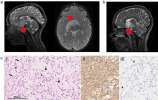
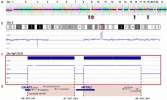
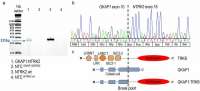
Deland, Keane, Olsson Bontell et al
Cancer Biol Ther (2021) 22 (3), 184-195 DOI: 10.1080/15384047.2021.1899573
Cited by 16
AI Summary: OriGene products, specifically the wild-type NTRK2 construct (Cat# RC221794) and the pCMV6 empty vector (Cat# PS10000), were used in this study to perform functional analyses by transfecting HEK293 cells, enabling comparison of signaling activity between GKAP1-NTRK2 fusion and wild-type NTRK2 proteins.
Snippet: pCMV6-Myc-DDK (empty vector). The wild-type NTRK2 (NM_006180, 838 aa, #RC221794) and pCMV6 empty vector (#PS10000) constructs were ordered from Origene (Origene, Rockville, MD, USA). Vector construct for the
Human BDNF/TrkB variants impair hippocampal synaptogenesis and associate with neurobehavioural abnormalities
Sonoyama, Stadler, Zhu et al
Sci Rep (2020) 10 (1), 9028 DOI: 10.1038/s41598-020-65531-x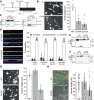
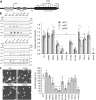
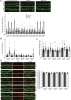
Sonoyama, Stadler, Zhu et al
Sci Rep (2020) 10 (1), 9028 DOI: 10.1038/s41598-020-65531-x
Cited by 70
AI Summary: OriGene products, specifically the human cDNA clones of TrkB (RC221794) and BDNF (RC212882) with C-terminal Myc- and Flag-tags, were used as expression plasmids to study the functional effects of BDNF and TrkB variants in this research.
Snippet: … Plasmids and mutagenesis Human cDNA clones of TrkB (RC221794) and BDNF (RC212882) with C-terminal Myc- and Flag-tags were obtained from Origene (Rockville, MD, USA) within the pCMV6-entry backbone. For studies in hippocampal neurons BDNF and TrkB mutants were subcloned into pCAGGS vectors using the Gateway system. …Human cDNA clones of TrkB (RC221794) and BDNF (RC212882) with C-terminal Myc- and Flag-tags were obtained from Origene (Rockville, MD, USA) within the pCMV6-entry backbone. …
A Systematic Analysis Revealed the Potential Gene Regulatory Processes of ATRA-Triggered Neuroblastoma Differentiation and Identified a Novel RA Response Sequence in the NTRK2 Gene
Guo, Lin, Zhang et al
Biomed Res Int (2020) 2020, 6734048 DOI: 10.1155/2020/6734048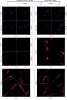
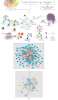
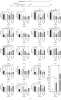
Guo, Lin, Zhang et al
Biomed Res Int (2020) 2020, 6734048 DOI: 10.1155/2020/6734048
Cited by 9
AI Summary: In this study, OriGene's NTRK2 overexpression plasmid (RC209882) and NTRK2-specific siRNA (SR321423) were used to manipulate NTRK2 gene expression in neuroblastoma cells, enabling the authors to demonstrate that NTRK2 upregulation promotes differentiation-like changes and to validate its regulatory role in ATRA-triggered neuroblastoma differentiation.
The juxtamembrane region of TrkA kinase is critical for inhibitor selectivity
Furuya, Momose, Katsuno et al
Bioorg. Med. Chem. Lett. (2017)
Furuya, Momose, Katsuno et al
Bioorg. Med. Chem. Lett. (2017)
Showing 1-6 of 6 papers.
Powered by BizGenius
*Delivery time may vary from web posted schedule. Occasional delays may occur due to unforeseen
complexities in the preparation of your product. International customers may expect an additional 1-2 weeks
in shipping.
Related Products
- Price:
- Actual Price:
Welcome to OriGene AI!
I'm your AI-powered guide to everything OriGene.
Ask me anything:
- Product specs
- Ordering help
- Technical questions
- How to find exactly what your experiment needs
Prefer a live agent? Connect with us by clicking the green chat icon, as seen in the image below or email our team at custsupport@origene.com.
