
Androgen Receptor (AR) (NM_000044) Human Tagged ORF Clone


$589.00
$840.00
In Stock*
Specifications
| Product Data | |
| Type | Human Tagged ORF Clone |
|---|---|
| Target Symbol | Androgen Receptor |
| Synonyms | AIS; AR8; DHTR; HUMARA; HYSP1; KD; NR3C4; SBMA; SMAX1; TFM |
| Vector | pCMV6-Entry |
| E. coli Selection | Kanamycin (25 ug/mL) |
| Mammalian Cell Selection | Neomycin |
| Sequence Data | |
| Chromatograms |
Chromatograms
 Sequencher program is needed, download here |
| Restriction Sites |
SgfI-MluI Cloning Scheme for this gene
|
Plasmid Map

|
| ACCN | NM_000044 |
| ORF Size | 2751 bp |
| OTI Disclaimer | The molecular sequence of this clone aligns with the gene accession number as a point of reference only. However, individual transcript sequences of the same gene can differ through naturally occurring variations (e.g. polymorphisms), each with its own valid existence. This clone is substantially in agreement with the reference, but a complete review of all prevailing variants is recommended prior to use. More info |
| OTI Annotation | This clone was engineered to express the complete ORF with an expression tag. Expression varies depending on the nature of the gene. |
| Components | The ORF clone is ion-exchange column purified and shipped in a 2D barcoded Matrix tube containing 10ug of transfection-ready, dried plasmid DNA (reconstitute with 100 ul of water). |
| Reconstitution Method | 1. Centrifuge at 5,000xg for 5min. 2. Carefully open the tube and add 100ul of sterile water to dissolve the DNA. 3. Close the tube and incubate for 10 minutes at room temperature. 4. Briefly vortex the tube and then do a quick spin (less than 5000xg) to concentrate the liquid at the bottom. 5. Store the suspended plasmid at -20°C. The DNA is stable for at least one year from date of shipping when stored at -20°C. |
| Note | Plasmids are not sterile. For experiments where strict sterility is required, filtration with 0.22um filter is required. |
| Shipping | Ambient |
| Reference Data | |
| RefSeq Size | 4314 bp |
| RefSeq ORF | 2763 bp |
| Locus ID | 367 |
| UniProt ID | P10275 |
| Cytogenetics | Xq12 |
| Domains | Androgen_recep, HOLI, zf-C4 |
| Protein Families | Druggable Genome, Nuclear Hormone Receptor, Transcription Factors |
| Protein Pathways | Oocyte meiosis, Pathways in cancer, Prostate cancer |
| MW | 98.7 kDa |
| Summary | The androgen receptor gene is more than 90 kb long and codes for a protein that has 3 major functional domains: the N-terminal domain, DNA-binding domain, and androgen-binding domain. The protein functions as a steroid-hormone activated transcription factor. Upon binding the hormone ligand, the receptor dissociates from accessory proteins, translocates into the nucleus, dimerizes, and then stimulates transcription of androgen responsive genes. This gene contains 2 polymorphic trinucleotide repeat segments that encode polyglutamine and polyglycine tracts in the N-terminal transactivation domain of its protein. Expansion of the polyglutamine tract from the normal 9-34 repeats to the pathogenic 38-62 repeats causes spinal bulbar muscular atrophy (SBMA, also known as Kennedy's disease). Mutations in this gene are also associated with complete androgen insensitivity (CAIS). Alternative splicing results in multiple transcript variants encoding different isoforms. provided by RefSeq, Jan 2017 |
Reviews


Documents
| Product Manuals |
| FAQs |
| SDS |
Resources
"NM_000044" in other vectors (13)
| SKU | Description | Size | Price | |
|---|---|---|---|---|
| RC215316L1 | Lenti ORF clone of Human androgen receptor (AR), OriGene unique variant 1, Myc-DDK-tagged | 10 ug |
$1,140.00
|
|
| RC215316L2 | Lenti ORF clone of Human androgen receptor (AR), OriGene unique variant, mGFP tagged | 10 ug |
$1,140.00
|
|
| RC215316L3 | Lenti ORF clone of Human androgen receptor (AR), OriGene unique variant 1, Myc-DDK-tagged | 10 ug |
$1,140.00
|
|
| RC215316L4 | Lenti ORF clone of Human androgen receptor (AR), OriGene unique variant, mGFP tagged | 10 ug |
$1,140.00
|
|
| RC235415 | AR (Myc-DDK-tagged)-Human androgen receptor (AR), transcript variant 1 | 10 ug |
$589.00
$1,263.00
|
|
| RC235415L1 | Lenti ORF clone of Human androgen receptor (AR), transcript variant 1, Myc-DDK-tagged | 10 ug |
$1,563.00
|
|
| RC235415L2 | Lenti ORF clone of Human androgen receptor (AR), transcript variant 1, mGFP tagged | 10 ug |
$1,563.00
|
|
| RC235415L3 | Lenti ORF clone of Human androgen receptor (AR), transcript variant 1, Myc-DDK-tagged | 10 ug |
$1,563.00
|
|
| RC235415L4 | Lenti ORF clone of Human androgen receptor (AR), transcript variant 1, mGFP tagged | 10 ug |
$1,563.00
|
|
| RG215316 | AR (tGFP-tagged) - Human androgen receptor (AR), OriGene unique variant | 10 ug |
$789.00
$1,040.00
|
|
| RG235415 | AR (tGFP-tagged) - Human androgen receptor (AR), transcript variant 1 | 10 ug |
$789.00
$1,463.00
|
|
| SC114220 | AR (untagged)-Human androgen receptor (AR), OriGene unique variant 1 | 10 ug |
$1,265.00
|
|
| SC333310 | AR (untagged)-Human androgen receptor (AR), transcript variant 1 | 10 ug |
$1,349.00
|
|
Citations
Covalent Destabilizing Degrader of AR and AR-V7 in Androgen-Independent Prostate Cancer Cells
Zammit, Nadel, Lin et al
bioRxiv (2025)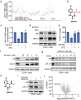
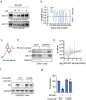
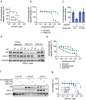
Zammit, Nadel, Lin et al
bioRxiv (2025)
Cited by 2
AI Summary: OriGene’s FLAG-tagged WT AR plasmid (RC215316) was used in transfection experiments to study the effects of the covalent degrader EN1441 on androgen receptor stability and activity in prostate cancer cells.
Snippet: orter Activity Rescue Studies Cells were seeded in white 96-well plates (30,000 cells, 100 μL) and left overnight to adhere. The cells were transfected 24 hours after seeding with FLAG-tagged WT AR (OriGene Technologies, Inc., RC215316), C125S AR and AR-Luc (Signosis, Inc. LR-2105) plasmids. For plasmid transfection, 10 μL of the following mixture was added to the culture medium: 2.5 μg of WT A
α-Mangostin Promotes In Vitro and In Vivo Degradation of Androgen Receptor and AR-V7 Splice Variant in Prostate Cancer Cells
Nauman, Won, Petiwala et al
Cancers (Basel) (2023) 15 (7) DOI: 10.3390/cancers15072118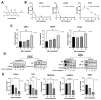
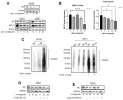
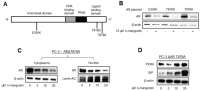
Nauman, Won, Petiwala et al
Cancers (Basel) (2023) 15 (7) DOI: 10.3390/cancers15072118
Cited by 13
AI Summary: OriGene products contributed to this study by providing the AR (androgen receptor) and AR-V7 expression plasmids (Cat# RC220845 and Cat# RC211706), which were used in transfection experiments to assess the effects of α-mangostin on androgen receptor degradation in prostate cancer cells.
Snippet: 20,21]. Our group has been studying xanthones for their in vitro and in vivo anticancer activity, and our data suggests that xanthones promote apoptosis in PCa cells, degrade AR, and slow prostate tumorigenesis in mice [22,23,24,25,26,27,28,29]. This study was undertaken to test our hypothesis that α-mangostin, the most abundant mangosteen xanthone, promotes the ubiquitination and degradation of
Antagonistic effect of cyclin-dependent kinases and a calcium-dependent phosphatase on polyglutamine-expanded androgen receptor toxic gain of function
Piol, Tosatto, Zuccaro et al
Sci Adv (2023) 9 (1), eade1694 DOI: 10.1126/sciadv.ade1694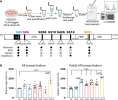
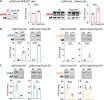
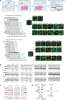
Piol, Tosatto, Zuccaro et al
Sci Adv (2023) 9 (1), eade1694 DOI: 10.1126/sciadv.ade1694
Cited by 12
AI Summary: OriGene’s human AR expression vector (catalog no. RC215316) was used to generate FLAG-tagged androgen receptor constructs, enabling the study of AR phosphorylation and toxicity in cellular models.
Snippet: (www.ebi.ac.uk/Tools/msa/tcoffee/) (68). The resulting alignment was visualized with ESPript (69). Expression vectors Vectors expressing human AR (NM_000044) tagged with FLAG were generated from the Origene vector (catalog no. RC215316). The full-length AR sequence was subcloned into a pEGFP-N1 vector from Clontech (catalog no. 6085-1) to generate EGFP-tagged AR at the C terminus. Vectors express
Dual Inhibitory Action of a Novel AKR1C3 Inhibitor on Both Full-Length AR and the Variant AR-V7 in Enzalutamide Resistant Metastatic Castration Resistant Prostate Cancer
Kafka, Mayr, Temml et al
Cancers (Basel) (2020) 12 (8) DOI: 10.3390/cancers12082092
Kafka, Mayr, Temml et al
Cancers (Basel) (2020) 12 (8) DOI: 10.3390/cancers12082092
Cited by 25
AI Summary: OriGene’s pCMV6-XL5NR3C1 plasmid (encoding the glucocorticoid receptor, GR) was used in this study to transiently transfect PC-3 cells for reporter gene assays assessing the effects of AKR1C3 inhibitors on androgen receptor signaling in prostate cancer models.
Snippet: To assess reporter gene activity, AR negative PC-3 cells were transiently transfected with a CMV promoter-driven pFlag tagged full-length AR (AR-FL), the AR truncated splice variant 7 (AR-V7) or GR (pCMV6-XL5NR3C1, Origene), and a NanoLuc luciferase reporter gene under the control of a promoter element consisting of two consecutive canonical androgen response elements (AREs) and a TATA box (pNL1.1.-ARE2TATA) using ViaFect lipofection reagent (Promega). …
Showing 1-5 of 5 papers.
Powered by BizGenius
*Delivery time may vary from web posted schedule. Occasional delays may occur due to unforeseen
complexities in the preparation of your product. International customers may expect an additional 1-2 weeks
in shipping.
Related Products
- Price:
- Actual Price:
Welcome to OriGene AI!
I'm your AI-powered guide to everything OriGene.
Ask me anything:
- Product specs
- Ordering help
- Technical questions
- How to find exactly what your experiment needs
Prefer a live agent? Connect with us by clicking the green chat icon, as seen in the image below or email our team at custsupport@origene.com.
