
CD26 (DPP4) (NM_001935) Human Tagged ORF Clone


$1,052.00
In Stock*
Specifications
| Product Data | |
| Type | Human Tagged ORF Clone |
|---|---|
| Target Symbol | CD26 |
| Synonyms | ADABP; ADCP2; CD26; DPPIV; TP103 |
| Vector | pCMV6-Entry |
| E. coli Selection | Kanamycin (25 ug/mL) |
| Mammalian Cell Selection | Neomycin |
| Sequence Data | |
| Chromatograms |
Chromatograms
 Sequencher program is needed, download here |
| Restriction Sites |
SgfI-MluI Cloning Scheme for this gene
|
Plasmid Map

|
| ACCN | NM_001935 |
| ORF Size | 2298 bp |
| OTI Disclaimer | The molecular sequence of this clone aligns with the gene accession number as a point of reference only. However, individual transcript sequences of the same gene can differ through naturally occurring variations (e.g. polymorphisms), each with its own valid existence. This clone is substantially in agreement with the reference, but a complete review of all prevailing variants is recommended prior to use. More info |
| OTI Annotation | This clone was engineered to express the complete ORF with an expression tag. Expression varies depending on the nature of the gene. |
| Components | The ORF clone is ion-exchange column purified and shipped in a 2D barcoded Matrix tube containing 10ug of transfection-ready, dried plasmid DNA (reconstitute with 100 ul of water). |
| Reconstitution Method | 1. Centrifuge at 5,000xg for 5min. 2. Carefully open the tube and add 100ul of sterile water to dissolve the DNA. 3. Close the tube and incubate for 10 minutes at room temperature. 4. Briefly vortex the tube and then do a quick spin (less than 5000xg) to concentrate the liquid at the bottom. 5. Store the suspended plasmid at -20°C. The DNA is stable for at least one year from date of shipping when stored at -20°C. |
| Note | Plasmids are not sterile. For experiments where strict sterility is required, filtration with 0.22um filter is required. |
| Shipping | Ambient |
| Reference Data | |
| RefSeq | NM_001935.4 |
| RefSeq Size | 3913 bp |
| RefSeq ORF | 2301 bp |
| Locus ID | 1803 |
| UniProt ID | P27487 |
| Cytogenetics | 2q24.2 |
| Domains | DPPIV_N_term, Peptidase_S9 |
| Protein Families | Druggable Genome, Protease, Secreted Protein, Transmembrane |
| MW | 88.3 kDa |
| Summary | The DPP4 gene encodes dipeptidyl peptidase 4, which is identical to adenosine deaminase complexing protein-2, and to the T-cell activation antigen CD26. It is an intrinsic type II transmembrane glycoprotein and a serine exopeptidase that cleaves X-proline dipeptides from the N-terminus of polypeptides. Dipeptidyl peptidase 4 is highly involved in glucose and insulin metabolism, as well as in immune regulation. This protein was shown to be a functional receptor for Middle East respiratory syndrome coronavirus (MERS-CoV), and protein modeling suggests that it may play a similar role with SARS-CoV-2, the virus responsible for COVID-19. provided by RefSeq, Apr 2020 |
Reviews


Documents
| Product Manuals |
| FAQs |
| SDS |
Resources
"NM_001935" in other vectors (6)
| SKU | Description | Size | Price | |
|---|---|---|---|---|
| RC209466L1 | Lenti ORF clone of Human dipeptidyl-peptidase 4 (DPP4), Myc-DDK-tagged | 10 ug |
$1,352.00
|
|
| RC209466L2 | Lenti ORF clone of Human dipeptidyl-peptidase 4 (DPP4), mGFP tagged | 10 ug |
$1,352.00
|
|
| RC209466L3 | Lenti ORF clone of Human dipeptidyl-peptidase 4 (DPP4), Myc-DDK-tagged | 10 ug |
$1,352.00
|
|
| RC209466L4 | Lenti ORF clone of Human dipeptidyl-peptidase 4 (DPP4), mGFP tagged | 10 ug |
$1,352.00
|
|
| RG209466 | DPP4 (tGFP-tagged) - Human dipeptidyl-peptidase 4 (DPP4) | 10 ug |
$789.00
$1,252.00
|
|
| SC118956 | DPP4 (untagged)-Human dipeptidyl-peptidase 4 (DPP4) | 10 ug |
$702.00
|
|
Citations
Host susceptibilities and entry processes of SARS-CoV-2 Omicron variants using pseudotyped viruses carrying spike protein
Zabiegala, Kim, Chang
BMC Vet Res (2025) 21 (1), 377 DOI: 10.1186/s12917-025-04822-9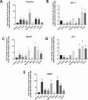
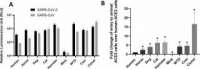
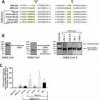
Zabiegala, Kim, Chang
BMC Vet Res (2025) 21 (1), 377 DOI: 10.1186/s12917-025-04822-9
Cited by 1
AI Summary: OriGene products pCMV6-hDPP4 (#RC209466) and pCMV6-hTMPRSS2 (#RC208677) were used to express DPP4 and TMPRSS2 in HEK293T cells, enabling the study of how these proteins affect the entry of SARS-CoV-2 Omicron variant pseudoviruses.
Snippet: ned by transducing each in HEK293T cells expressing ACE2 or DPP4 with or without TMPRSS2. Briefly, one-day old HEK293T cells were transfected with pIRES-Neo-hACE2-FLAG [30] or pCMV6-hDPP4 (#RC209466, Origene, Rockville, MD) with or without pCMV6-hTMPRSS2 (#RC208677, Origene). The plasmid expressing Renilla luciferase, pRL-CMV (#E2231, Promega), was included as an expression control. The firefly lu
Distinct Roles for Sialoside and Protein Receptors in Coronavirus Infection
Qing, Hantak, Perlman et al
mBio (2020) 11 (1) DOI: 10.1128/mBio.02764-19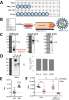
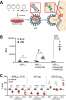
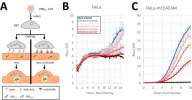
Qing, Hantak, Perlman et al
mBio (2020) 11 (1) DOI: 10.1128/mBio.02764-19
AI Summary: OriGene’s pCMV6-Entry-hDPP4FLAG plasmid was used in this study to express the human DPP4 protein receptor in target cells, enabling investigation of its role in coronavirus infection and cell entry.
Snippet: lasmids. Target cells were cotransfected with pDSP8-11 and the indicated S receptor-expressing plasmids. These plasmids included pCMV6-Entry-hDPP4FLAG (GenBank accession no. NM_001935;purchased from OriGene) and pcDNA3.1-hAPN (GenBank accession no. M22324;obtained from Fang Li). Indicated experiments included additional cotransfection of target cells with pCAGGS-TMPRSS2FLAG (44). At 6 h postt
Identification of residues controlling restriction versus enhancing activities of IFITM proteins on the entry of human coronaviruses
Zhao, Sehgal, Hou et al
J. Virol. (2017)
Zhao, Sehgal, Hou et al
J. Virol. (2017)
AI Summary: OriGene supplied the cDNA clones for ACE2, aminopeptidase N (APN), and dipeptidyl peptidase 4 (DPP4), which were essential for generating expression plasmids used to study how IFITM protein mutations affect the entry of various human coronaviruses in this paper.
Snippet: … ACE2, aminopeptidase N (APN), and dipeptidyl peptidase 4 (DPP4) cDNA clones were obtained from Origene and cloned into a pcDNA3 vector (Invitrogen) to yield plasmids pcDNA3/ACE2, pcDNA3/APN, and pcDNA3/DDP4, respectively (66). … The various viral en;;(ACE2), aminopeptidase N (APN), and dipeptidyl peptidase-4 (DPP4) cDNA clones were 386 obtained from Origene, and cloned into a pcDNA3 vector (Invitrogen) to yield plasmid pcDNA3 387 /ACE2, pcDNA3 /APN and pcDNA3/DDP4, respectively (66). 388 389
Lipidation increases antiviral activities of coronavirus fusion-inhibiting peptides
Park, Gallagher
Virology (2017) 511, 9-18 DOI: 10.1016/j.virol.2017.07.033
Park, Gallagher
Virology (2017) 511, 9-18 DOI: 10.1016/j.virol.2017.07.033
The tetraspanin CD9 facilitates MERS-coronavirus entry by scaffolding host cell receptors and proteases
Earnest, Hantak, Li et al
PLoS Pathog. (2017) 13 (7), e1006546 DOI: 10.1371/journal.ppat.1006546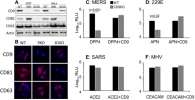
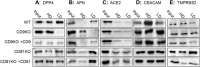
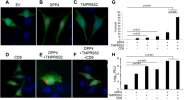
Earnest, Hantak, Li et al
PLoS Pathog. (2017) 13 (7), e1006546 DOI: 10.1371/journal.ppat.1006546
AI Summary: OriGene’s pCMV6-Entry-hDPP4 plasmid was used to express human DPP4 in experimental models, enabling the study of how CD9 scaffolds host cell receptors and proteases to facilitate efficient MERS-coronavirus entry.
Snippet: C-terminal FLAG-tagged human DPP4 plasmid pCMV6-Entry-hDPP4 (NCBI Reference Sequence NM_001935) was purchased from OriGene
Proteolytic processing of Middle East respiratory syndrome coronavirus spikes expands virus tropism
Park, Li, Barlan et al
PNAS (2016) 113 (43), 12262-12267 DOI: 10.1073/pnas.1608147113
Park, Li, Barlan et al
PNAS (2016) 113 (43), 12262-12267 DOI: 10.1073/pnas.1608147113
AI Summary: OriGene contributed to this study by providing the pCMV6-Entry-hDPP4-flag plasmid, which was used to express the human DPP4 receptor essential for analyzing MERS-CoV spike protein function.
Snippet: All constructs were confirmed by Sanger sequencing. Plasmids encoding C-terminal flagtagged hDPP4 (GenBank accession no. NM_001935, pCMV6- Entry-hDPP4-flag) were purchased from OriGene
Showing 1-6 of 8 papers.
Powered by BizGenius
*Delivery time may vary from web posted schedule. Occasional delays may occur due to unforeseen
complexities in the preparation of your product. International customers may expect an additional 1-2 weeks
in shipping.
Related Products
- Price:
- Actual Price:
Welcome to OriGene AI!
I'm your AI-powered guide to everything OriGene.
Ask me anything:
- Product specs
- Ordering help
- Technical questions
- How to find exactly what your experiment needs
Prefer a live agent? Connect with us by clicking the green chat icon, as seen in the image below or email our team at custsupport@origene.com.
