
CARD12 (NLRC4) (NM_021209) Human Tagged ORF Clone
- TrueORF®
SKU
RC206757
NLRC4 (Myc-DDK-tagged)-Human NLR family, CARD domain containing 4 (NLRC4), transcript variant 1

$891.00
In Stock*
Specifications
| Product Data | |
| Type | Human Tagged ORF Clone |
|---|---|
| Target Symbol | CARD12 |
| Synonyms | AIFEC; CARD12; CLAN; CLAN1; CLANA; CLANB; CLANC; CLAND; CLR2.1; FCAS4; IPAF |
| Vector | pCMV6-Entry |
| E. coli Selection | Kanamycin (25 ug/mL) |
| Mammalian Cell Selection | Neomycin |
| Restriction Sites |
SgfI-MluI Cloning Scheme for this gene
|
Plasmid Map

|
| ACCN | NM_021209 |
| ORF Size | 3072 bp |
| OTI Disclaimer | The molecular sequence of this clone aligns with the gene accession number as a point of reference only. However, individual transcript sequences of the same gene can differ through naturally occurring variations (e.g. polymorphisms), each with its own valid existence. This clone is substantially in agreement with the reference, but a complete review of all prevailing variants is recommended prior to use. More info |
| OTI Annotation | This clone was engineered to express the complete ORF with an expression tag. Expression varies depending on the nature of the gene. |
| Components | The ORF clone is ion-exchange column purified and shipped in a 2D barcoded Matrix tube containing 10ug of transfection-ready, dried plasmid DNA (reconstitute with 100 ul of water). |
| Reconstitution Method | 1. Centrifuge at 5,000xg for 5min. 2. Carefully open the tube and add 100ul of sterile water to dissolve the DNA. 3. Close the tube and incubate for 10 minutes at room temperature. 4. Briefly vortex the tube and then do a quick spin (less than 5000xg) to concentrate the liquid at the bottom. 5. Store the suspended plasmid at -20°C. The DNA is stable for at least one year from date of shipping when stored at -20°C. |
| Note | Plasmids are not sterile. For experiments where strict sterility is required, filtration with 0.22um filter is required. |
| Shipping | Ambient |
| Reference Data | |
| RefSeq | NM_021209.4 |
| RefSeq Size | 3385 bp |
| RefSeq ORF | 3075 bp |
| Locus ID | 58484 |
| UniProt ID | Q9NPP4 |
| Cytogenetics | 2p22.3 |
| Domains | LRR |
| Protein Pathways | NOD-like receptor signaling pathway |
| MW | 116.2 kDa |
| Summary | This gene encodes a member of the caspase recruitment domain-containing NLR family. Family members play essential roles in innate immune response to a wide range of pathogenic organisms, tissue damage and other cellular stresses. Mutations in this gene result in autoinflammation with infantile enterocolitis. Alternative splicing results in multiple transcript variants. provided by RefSeq, Oct 2014 |
Reviews


Documents
| Product Manuals |
| FAQs |
| SDS |
Resources
"NM_021209" in other vectors (6)
| SKU | Description | Size | Price | |
|---|---|---|---|---|
| RC206757L1 | Lenti ORF clone of Human NLR family, CARD domain containing 4 (NLRC4), transcript variant 1, Myc-DDK-tagged | 10 ug |
$1,191.00
|
|
| RC206757L2 | Lenti ORF clone of Human NLR family, CARD domain containing 4 (NLRC4), transcript variant 1, mGFP tagged | 10 ug |
$1,191.00
|
|
| RC206757L3 | Lenti ORF clone of Human NLR family, CARD domain containing 4 (NLRC4), transcript variant 1, Myc-DDK-tagged | 10 ug |
$1,191.00
|
|
| RC206757L4 | Lenti ORF clone of Human NLR family, CARD domain containing 4 (NLRC4), transcript variant 1, mGFP tagged | 10 ug |
$1,191.00
|
|
| RG206757 | NLRC4 (tGFP-tagged) - Human NLR family, CARD domain containing 4 (NLRC4), transcript variant 1 | 10 ug |
$789.00
$1,091.00
|
|
| SC118775 | NLRC4 (untagged)-Human NLR family, CARD domain containing 4 (NLRC4), transcript variant 1 | 10 ug |
$892.00
|
|
Citations
Caspase-1 interdomain linker cleavage is required for pyroptosis
Ball, Taabazuing, Griswold et al
Life Sci Alliance (2020) 3 (3) DOI: 10.26508/lsa.202000664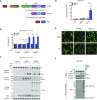
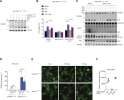
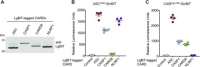
Ball, Taabazuing, Griswold et al
Life Sci Alliance (2020) 3 (3) DOI: 10.26508/lsa.202000664
Cited by 144
AI Summary: OriGene contributed to this study by providing the NLRC4 plasmid (RC206757), which was used to investigate the role of inflammasome components in pyroptosis.
Snippet: t transfection or lentiviral infection of cells were shuttled into modified pLEX_307 vectors (Addgene) using Gateway technology (Thermo Fisher Scientific). A plasmid encoding NLRC4 was purchased from Origene (RC206757) and a construct encoding residues 1–328 was cloned into the Gateway system. A pLEX_307 vector containing mRFP was used for transfection controls. Point mutations were generated us
Mitochondrial Ca(2+)-dependent NLRP3 activation exacerbates the Pseudomonas aeruginosa-driven inflammatory response in cystic fibrosis
Rimessi, Bezzerri, Patergnani et al
Nat Commun (2015) 6, 6201 DOI: 10.1038/ncomms7201
Rimessi, Bezzerri, Patergnani et al
Nat Commun (2015) 6, 6201 DOI: 10.1038/ncomms7201
Cited by 160
AI Summary: OriGene’s pCMV6-Myc-NLRC4 plasmid (RC206757) was used for transient overexpression experiments to investigate inflammasome activation in the study.
Showing 1-2 of 2 papers.
Powered by BizGenius
*Delivery time may vary from web posted schedule. Occasional delays may occur due to unforeseen
complexities in the preparation of your product. International customers may expect an additional 1-2 weeks
in shipping.
Related Products
- Price:
- Actual Price:
Welcome to OriGene AI!
I'm your AI-powered guide to everything OriGene.
Ask me anything:
- Product specs
- Ordering help
- Technical questions
- How to find exactly what your experiment needs
Prefer a live agent? Connect with us by clicking the green chat icon, as seen in the image below or email our team at custsupport@origene.com.
