
AXL (NM_021913) Human Tagged ORF Clone


$819.00
In Stock*
Specifications
| Product Data | |
| Type | Human Tagged ORF Clone |
|---|---|
| Target Symbol | AXL |
| Synonyms | ARK; JTK11; Tyro7; UFO |
| Vector | pCMV6-Entry |
| E. coli Selection | Kanamycin (25 ug/mL) |
| Mammalian Cell Selection | Neomycin |
| Sequence Data | |
| Chromatograms |
Chromatograms
 Sequencher program is needed, download here |
| Restriction Sites |
SgfI-MluI Cloning Scheme for this gene
|
Plasmid Map

|
| ACCN | NM_021913 |
| ORF Size | 2682 bp |
| OTI Disclaimer | The molecular sequence of this clone aligns with the gene accession number as a point of reference only. However, individual transcript sequences of the same gene can differ through naturally occurring variations (e.g. polymorphisms), each with its own valid existence. This clone is substantially in agreement with the reference, but a complete review of all prevailing variants is recommended prior to use. More info |
| OTI Annotation | This clone was engineered to express the complete ORF with an expression tag. Expression varies depending on the nature of the gene. |
| Components | The ORF clone is ion-exchange column purified and shipped in a 2D barcoded Matrix tube containing 10ug of transfection-ready, dried plasmid DNA (reconstitute with 100 ul of water). |
| Reconstitution Method | 1. Centrifuge at 5,000xg for 5min. 2. Carefully open the tube and add 100ul of sterile water to dissolve the DNA. 3. Close the tube and incubate for 10 minutes at room temperature. 4. Briefly vortex the tube and then do a quick spin (less than 5000xg) to concentrate the liquid at the bottom. 5. Store the suspended plasmid at -20°C. The DNA is stable for at least one year from date of shipping when stored at -20°C. |
| Note | Plasmids are not sterile. For experiments where strict sterility is required, filtration with 0.22um filter is required. |
| Shipping | Ambient |
| Reference Data | |
| RefSeq | NM_021913.5 |
| RefSeq Size | 5014 bp |
| RefSeq ORF | 2685 bp |
| Locus ID | 558 |
| UniProt ID | P30530 |
| Cytogenetics | 19q13.2 |
| Protein Families | Druggable Genome, Protein Kinase, Transmembrane |
| MW | 98.2 kDa |
| Summary | The protein encoded by this gene is a member of the Tyro3-Axl-Mer (TAM) receptor tyrosine kinase subfamily. The encoded protein possesses an extracellular domain which is composed of two immunoglobulin-like motifs at the N-terminal, followed by two fibronectin type-III motifs. It transduces signals from the extracellular matrix into the cytoplasm by binding to the vitamin K-dependent protein growth arrest-specific 6 (Gas6). This gene may be involved in several cellular functions including growth, migration, aggregation and anti-inflammation in multiple cell types. Alternative splicing results in multiple transcript variants of this gene. provided by RefSeq, Jul 2013 |
Reviews


Documents
| Product Manuals |
| FAQs |
| SDS |
Resources
"NM_021913" in other vectors (8)
| SKU | Description | Size | Price | |
|---|---|---|---|---|
| RC206431L1 | Lenti ORF clone of Human AXL receptor tyrosine kinase (AXL), transcript variant 1, Myc-DDK-tagged | 10 ug |
$1,119.00
|
|
| RC206431L2 | Lenti ORF clone of Human AXL receptor tyrosine kinase (AXL), transcript variant 1, mGFP tagged | 10 ug |
$1,119.00
|
|
| RC206431L3 | Lenti ORF clone of Human AXL receptor tyrosine kinase (AXL), transcript variant 1, Myc-DDK-tagged | 10 ug |
$1,119.00
|
|
| RC206431L4 | Lenti ORF clone of Human AXL receptor tyrosine kinase (AXL), transcript variant 1, mGFP tagged | 10 ug |
$1,119.00
|
|
| RC600072 | AXL (DDK-His-tagged)-Extra Cellular Domain Clone of Homo sapiens AXL receptor tyrosine kinase, transcript variant 1, Signal peptide (1-25) plus EC domain (26-451) | 10 ug |
$289.00
$457.00
|
|
| RG206431 | AXL (tGFP-tagged) - Human AXL receptor tyrosine kinase (AXL), transcript variant 1 | 10 ug |
$789.00
$1,019.00
|
|
| SC112559 | AXL (untagged)-Human AXL receptor tyrosine kinase (AXL), transcript variant 1 | 10 ug |
$819.00
|
|
| SC323559 | AXL (untagged)-Kinase deficient mutant (K567M) of Human AXL receptor tyrosine kinase (AXL), transcript variant 1 | 10 ug |
$819.00
|
|
Citations
TYRO3 agonist as a novel therapy for glomerular disease
Zhong, Cai, Fu et al
JCI Insight (2022) 8 (1) DOI: 10.1172/jci.insight.165207
Zhong, Cai, Fu et al
JCI Insight (2022) 8 (1) DOI: 10.1172/jci.insight.165207
Cited by 11
AI Summary: OriGene’s overexpression plasmids for Mer (RC600074) and Axl (RC206431) were used to generate podocyte cell lines stably expressing these TAM receptors, enabling the study to assess the selectivity and efficacy of the novel TYRO3 agonist in comparison to related receptors.
Snippet: …While the roles of MER and AXL in these cancer processes have been well described, less is known about the roles of TYRO3. In addition, many stud;Overexpression plasmids of Mer and Axl (Origene Techonlogies, Inc. # RC600074 and # RC206431, respectively) were subcloned into a lentivector construct, similarly as described for TYRO3 (17), and podocytes with stable expression of each TAM receptor were selected using blasticidin
AXL Inactivation Inhibits Mesothelioma Growth and Migration via Regulation of p53 Expression
Song, Wang, Lu et al
Cancers (Basel) (2020) 12 (10) DOI: 10.3390/cancers12102757
Song, Wang, Lu et al
Cancers (Basel) (2020) 12 (10) DOI: 10.3390/cancers12102757
Cited by 21
AI Summary: OriGene's AXL and p53 expression plasmids were used in this study to investigate how manipulating AXL and p53 levels affects mesothelioma cell growth, migration, and the regulatory feedback between AXL and p53.
Snippet: … Our previous reports implicate AXL overexpression, activation, and regulation of downstream intermediates including PI3K/AKT/mTOR and RAF/MAPK in mesothelioma tumorigenesis [11,12]. AXL also has tumorigenic roles in carcinomas. For example, AXL regulation of miR-374a and miR-548b conferred drug resistance to EGFR inhibitors such as gefitinib in non-small cell;The Bio-Rad iScriptTM cDNA synthesis Kit and iQ SYBR green supermix were obtained from Bio-Rad Laboratories (Hercules, CA, USA). Lentiviral shRNA constructs were from The RNAi Consortium (TRC, Cambridge, MA, USA), and included AXL: GCTGTGAAGACGATGAAGATT;and p53: CTTCGACTATCTCAAACTCCT. AXL and p53 expression plasmid was purchased from Origene Technologies, Inc. … The luciferase reporters of luc-p53 (−2.4 kb) promoter has been described previously [40,41]. …
ATP-binding cassette member B5 (ABCB5) promotes tumor cell invasiveness in human colorectal cancer
Guo, Grimmig, Gonzalez et al
J. Biol. Chem. (2018) 293 (28), 11166-11178 DOI: 10.1074/jbc.RA118.003187
Guo, Grimmig, Gonzalez et al
J. Biol. Chem. (2018) 293 (28), 11166-11178 DOI: 10.1074/jbc.RA118.003187
Hepatitis C Virus Driven AXL Expression Suppresses the Hepatic Type I Interferon Response
Read, Tay, Shahidi et al
PLoS ONE (2015) 10 (8), e0136227 DOI: 10.1371/journal.pone.0136227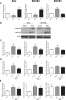
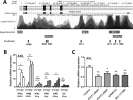
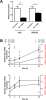
Read, Tay, Shahidi et al
PLoS ONE (2015) 10 (8), e0136227 DOI: 10.1371/journal.pone.0136227
Cited by 24
AI Summary: OriGene’s pCMV6-AXL ORF plasmid was used to generate Huh-7 cells overexpressing AXL, enabling the authors to study how increased AXL expression affects the hepatic interferon response during hepatitis C virus infection.
Snippet: A stable polyclonal Huh-7 cell line overexpressing AXL was established by transfecting the pCMV6-AXL ORF plasmid (Origene) with Fugene HD (Promega) according to the manufacturers protocol, and selecting with G418 (Life Technologies). ... Cite SaveSaving
The E3 ligase Cbl-b and TAM receptors regulate cancer metastasis via natural killer cells
Paolino, Choidas, Wallner et al
Nature (2014)
Paolino, Choidas, Wallner et al
Nature (2014)
Cited by 459
An epithelial-mesenchymal transition gene signature predicts resistance to EGFR and PI3K inhibitors and identifies Axl as a therapeutic target for overcoming EGFR inhibitor resistance
Byers, Diao, Wang et al
Clin Cancer Res (2013) 19 (1), 279-90 DOI: 10.1158/1078-0432.CCR-12-1558

Byers, Diao, Wang et al
Clin Cancer Res (2013) 19 (1), 279-90 DOI: 10.1158/1078-0432.CCR-12-1558
AI Summary: In this study, OriGene products—specifically the Axl (TA800632) and GAPDH (TA802519) antibodies—were used for protein detection in immunoblotting experiments to assess Axl expression and loading controls, contributing to the identification of Axl as a therapeutic target in EGFR inhibitor-resistant non-small cell lung cancer.
Showing 1-6 of 6 papers.
Powered by BizGenius
*Delivery time may vary from web posted schedule. Occasional delays may occur due to unforeseen
complexities in the preparation of your product. International customers may expect an additional 1-2 weeks
in shipping.
Related Products
- Price:
- Actual Price:
Welcome to OriGene AI!
I'm your AI-powered guide to everything OriGene.
Ask me anything:
- Product specs
- Ordering help
- Technical questions
- How to find exactly what your experiment needs
Prefer a live agent? Connect with us by clicking the green chat icon, as seen in the image below or email our team at custsupport@origene.com.
