
PLK3 (NM_004073) Human Tagged ORF Clone

$902.00
In Stock*
Specifications
| Product Data | |
| Type | Human Tagged ORF Clone |
|---|---|
| Target Symbol | PLK3 |
| Synonyms | CNK; FNK; PLK-3; PRK |
| Vector | pCMV6-Entry |
| E. coli Selection | Kanamycin (25 ug/mL) |
| Mammalian Cell Selection | Neomycin |
| Sequence Data | |
| Restriction Sites |
SgfI-MluI Cloning Scheme for this gene
|
Plasmid Map

|
| ACCN | NM_004073 |
| ORF Size | 1938 bp |
| OTI Disclaimer | Due to the inherent nature of this plasmid, standard methods to replicate additional amounts of DNA in E. coli are highly likely to result in mutations and/or rearrangements. Therefore, OriGene does not guarantee the capability to replicate this plasmid DNA. Additional amounts of DNA can be purchased from OriGene with batch-specific, full-sequence verification at a reduced cost. Please contact our customer care team at custsupport@origene.com or by calling 301.340.3188 option 3 for pricing and delivery. The molecular sequence of this clone aligns with the gene accession number as a point of reference only. However, individual transcript sequences of the same gene can differ through naturally occurring variations (e.g. polymorphisms), each with its own valid existence. This clone is substantially in agreement with the reference, but a complete review of all prevailing variants is recommended prior to use. More info |
| OTI Annotation | This clone was engineered to express the complete ORF with an expression tag. Expression varies depending on the nature of the gene. |
| Components | The ORF clone is ion-exchange column purified and shipped in a 2D barcoded Matrix tube containing 10ug of transfection-ready, dried plasmid DNA (reconstitute with 100 ul of water). |
| Reconstitution Method | 1. Centrifuge at 5,000xg for 5min. 2. Carefully open the tube and add 100ul of sterile water to dissolve the DNA. 3. Close the tube and incubate for 10 minutes at room temperature. 4. Briefly vortex the tube and then do a quick spin (less than 5000xg) to concentrate the liquid at the bottom. 5. Store the suspended plasmid at -20°C. The DNA is stable for at least one year from date of shipping when stored at -20°C. |
| Note | Plasmids are not sterile. For experiments where strict sterility is required, filtration with 0.22um filter is required. |
| Shipping | Ambient |
| Reference Data | |
| RefSeq | NM_004073.4 |
| RefSeq Size | 2369 bp |
| RefSeq ORF | 1941 bp |
| Locus ID | 1263 |
| UniProt ID | Q9H4B4 |
| Cytogenetics | 1p34.1 |
| Domains | pkinase, POLO_box, S_TKc, TyrKc |
| Protein Families | Druggable Genome, Protein Kinase |
| MW | 71.6 kDa |
| Summary | The protein encoded by this gene is a member of the highly conserved polo-like kinase family of serine/threonine kinases. Members of this family are characterized by an amino-terminal kinase domain and a carboxy-terminal bipartite polo box domain that functions as a substrate-binding motif and a cellular localization signal. Polo-like kinases are important regulators of cell cycle progression. This gene has also been implicated in stress responses and double-strand break repair. In human cell lines, this protein is reported to associate with centrosomes in a microtubule-dependent manner, and during mitosis, the protein becomes localized to the mitotic apparatus. Expression of a kinase-defective mutant results in abnormal cell morphology caused by changes in microtubule dynamics and mitotic arrest followed by apoptosis. provided by RefSeq, Sep 2015 |
Reviews


Documents
| Product Manuals |
| FAQs |
| SDS |
Resources
"NM_004073" in other vectors (7)
| SKU | Description | Size | Price | |
|---|---|---|---|---|
| RC203352L1 | Lenti-ORF clone of PLK3 (Myc-DDK-tagged)-Human polo-like kinase 3 (PLK3) | 10 ug |
$1,202.00
|
|
| RC203352L2 | Lenti-ORF clone of PLK3 (mGFP-tagged)-Human polo-like kinase 3 (PLK3) | 10 ug |
$1,202.00
|
|
| RC203352L3 | Lenti-ORF clone of PLK3 (Myc-DDK-tagged)-Human polo-like kinase 3 (PLK3) | 10 ug |
$1,202.00
|
|
| RC203352L4 | Lenti-ORF clone of PLK3 (mGFP-tagged)-Human polo-like kinase 3 (PLK3) | 10 ug |
$1,202.00
|
|
| RG203352 | PLK3 (tGFP-tagged) - Human polo-like kinase 3 (PLK3) | 10 ug |
$1,102.00
|
|
| SC117577 | PLK3 (untagged)-Human polo-like kinase 3 (PLK3) | 10 ug |
$903.00
|
|
| SC323648 | PLK3 (untagged)-Kinase deficient mutant (K91M) of Human polo-like kinase 3 (Drosophila) (PLK3) | 10 ug |
$903.00
|
|
Citations
Novel tools to quantify total, phospho-Ser129 and aggregated alpha-synuclein in the mouse brain
Trist, Wright, Rangel et al
NPJ Parkinsons Dis (2024) 10 (1), 217 DOI: 10.1038/s41531-024-00830-y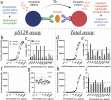
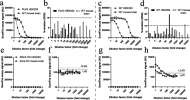
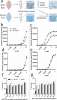
Trist, Wright, Rangel et al
NPJ Parkinsons Dis (2024) 10 (1), 217 DOI: 10.1038/s41531-024-00830-y
Cited by 9
AI Summary: OriGene's Myc-DDK-tagged human PLK3 plasmid (Cat# RC203352) was used to generate PLK3-HEK293 cells for transfection experiments, supporting the study's investigation into α-synuclein phosphorylation and aggregation in mouse brain models.
Snippet: (#ab255449) and α-synuclein KO (#ab255433) HEK293 cells were obtained from Abcam, while PLK3-HEK293 cells were produced by transfection of WT HEK293 cells with Myc-DDK-tagged human PLK3 (# RC203352, OriGene, MA, USA). All experimental procedures conducted on these cell lines were approved by the University of Sydney Institutional Biosafety Committee (#21E012). For transfection experiments, plasm
Phosphorylation of synucleins by members of the Polo-like kinase family
Mbefo, Paleologou, Boucharaba et al
J Biol Chem (2010) 285 (4), 2807-22 DOI: 10.1074/jbc.M109.081950
Mbefo, Paleologou, Boucharaba et al
J Biol Chem (2010) 285 (4), 2807-22 DOI: 10.1074/jbc.M109.081950
Showing 1-2 of 2 papers.
Powered by BizGenius
*Delivery time may vary from web posted schedule. Occasional delays may occur due to unforeseen
complexities in the preparation of your product. International customers may expect an additional 1-2 weeks
in shipping.
Related Products
- Price:
- Actual Price:
Welcome to OriGene AI!
I'm your AI-powered guide to everything OriGene.
Ask me anything:
- Product specs
- Ordering help
- Technical questions
- How to find exactly what your experiment needs
Prefer a live agent? Connect with us by clicking the green chat icon, as seen in the image below or email our team at custsupport@origene.com.
