
Tmem173 (NM_028261) Mouse Tagged ORF Clone
- TrueORF®
SKU
MR227544
Tmem173 (Myc-DDK-tagged) - Mouse transmembrane protein 173 (Tmem173), nuclear gene encoding mitochondrial protein

$686.00
In Stock*
Specifications
| Product Data | |
| Type | Mouse Tagged ORF Clone |
|---|---|
| Target Symbol | Tmem173 |
| Synonyms | 2610307O08Rik; ERIS; Mita; MPYS; STING |
| Vector | pCMV6-Entry |
| E. coli Selection | Kanamycin (25 ug/mL) |
| Mammalian Cell Selection | Neomycin |
| Sequence Data | |
| Chromatograms |
Chromatograms
 Sequencher program is needed, download here |
| Restriction Sites |
SgfI-MluI Cloning Scheme for this gene
|
Plasmid Map

|
| ACCN | NM_028261 |
| ORF Size | 1134 bp |
| OTI Disclaimer | Due to the inherent nature of this plasmid, standard methods to replicate additional amounts of DNA in E. coli are highly likely to result in mutations and/or rearrangements. Therefore, OriGene does not guarantee the capability to replicate this plasmid DNA. Additional amounts of DNA can be purchased from OriGene with batch-specific, full-sequence verification at a reduced cost. Please contact our customer care team at custsupport@origene.com or by calling 301.340.3188 option 3 for pricing and delivery. The molecular sequence of this clone aligns with the gene accession number as a point of reference only. However, individual transcript sequences of the same gene can differ through naturally occurring variations (e.g. polymorphisms), each with its own valid existence. This clone is substantially in agreement with the reference, but a complete review of all prevailing variants is recommended prior to use. More info |
| OTI Annotation | This clone was engineered to express the complete ORF with an expression tag. Expression varies depending on the nature of the gene. |
| Components | The ORF clone is ion-exchange column purified and shipped in a 2D barcoded Matrix tube containing 10ug of transfection-ready, dried plasmid DNA (reconstitute with 100 ul of water). |
| Reconstitution Method | 1. Centrifuge at 5,000xg for 5min. 2. Carefully open the tube and add 100ul of sterile water to dissolve the DNA. 3. Close the tube and incubate for 10 minutes at room temperature. 4. Briefly vortex the tube and then do a quick spin (less than 5000xg) to concentrate the liquid at the bottom. 5. Store the suspended plasmid at -20°C. The DNA is stable for at least one year from date of shipping when stored at -20°C. |
| Note | Plasmids are not sterile. For experiments where strict sterility is required, filtration with 0.22um filter is required. |
| Shipping | Ambient |
| Reference Data | |
| RefSeq | NM_028261.1, NP_082537.1 |
| RefSeq Size | 2302 bp |
| RefSeq ORF | 1137 bp |
| Locus ID | 72512 |
| UniProt ID | Q3TBT3 |
| Cytogenetics | 18 |
| MW | 43.3 kDa |
| Summary | Facilitator of innate immune signaling that acts as a sensor of cytosolic DNA from bacteria and viruses and promotes the production of type I interferon (IFN-alpha and IFN-beta) (PubMed:18818105, PubMed:19433799, PubMed:19776740, PubMed:26229117, PubMed:26669264). Innate immune response is triggered in response to non-CpG double-stranded DNA from viruses and bacteria delivered to the cytoplasm (PubMed:18818105, PubMed:19433799, PubMed:19776740, PubMed:26229117, PubMed:26669264). Acts by binding cyclic dinucleotides: recognizes and binds cyclic di-GMP (c-di-GMP), a second messenger produced by bacteria, and cyclic GMP-AMP (cGAMP), a messenger produced by CGAS in response to DNA virus in the cytosol (PubMed:21947006, PubMed:23722158, PubMed:23258412, PubMed:23519410, PubMed:23910378). Upon binding of c-di-GMP or cGAMP, TMEM173/STING oligomerizes, translocates from the endoplasmic reticulum and is phosphorylated by TBK1 on the pLxIS motif, leading to recruitment and subsequent activation of the transcription factor IRF3 to induce expression of type I interferon and exert a potent anti-viral state (PubMed:25636800). In addition to promote the production of type I interferons, plays a direct role in autophagy (PubMed:30568238). Following cGAMP-binding, TMEM173/STING buds from the endoplasmic reticulum into COPII vesicles, which then form the endoplasmic reticulum-Golgi intermediate compartment (ERGIC) (By similarity). The ERGIC serves as the membrane source for WIPI2 recruitment and LC3 lipidation, leading to formation of autophagosomes that target cytosolic DNA or DNA viruses for degradation by the lysosome (By similarity). The autophagy- and interferon-inducing activities can be uncoupled and autophagy induction is independent of TBK1 phosphorylation (By similarity). Autophagy is also triggered upon infection by bacteria: following c-di-GMP-binding, which is produced by live Gram-positive bacteria, promotes reticulophagy (PubMed:29056340). Exhibits 2',3' phosphodiester linkage-specific ligand recognition: can bind both 2'-3' linked cGAMP (2'-3'-cGAMP) and 3'-3' linked cGAMP but is preferentially activated by 2'-3' linked cGAMP (PubMed:26300263). The preference for 2'-3'-cGAMP, compared to other linkage isomers is probably due to the ligand itself, whichs adopts an organized free-ligand conformation that resembles the TMEM173/STING-bound conformation and pays low energy costs in changing into the active conformation (By similarity). May be involved in translocon function, the translocon possibly being able to influence the induction of type I interferons (By similarity). May be involved in transduction of apoptotic signals via its association with the major histocompatibility complex class II (MHC-II) (PubMed:18559423).UniProtKB/Swiss-Prot Function |
Reviews


Documents
| Product Manuals |
| FAQs |
| SDS |
Resources
"NM_028261" in other vectors (6)
| SKU | Description | Size | Price | |
|---|---|---|---|---|
| MC211337 | Tmem173 (untagged) - Mouse transmembrane protein 173 (Tmem173), nuclear gene encoding mitochondrial protein, (10ug) | 10 ug |
$686.00
|
|
| MG227544 | Tmem173 (tGFP-tagged) - Mouse transmembrane protein 173 (Tmem173) nuclear gene encoding mitochondrial protein, (10ug) | 10 ug |
$886.00
|
|
| MR227544L1 | Lenti ORF clone of Tmem173 (Myc-DDK-tagged) - Mouse transmembrane protein 173 (Tmem173), nuclear gene encoding mitochondrial protein | 10 ug |
$986.00
|
|
| MR227544L2 | Lenti ORF clone of Tmem173 (mGFP-tagged) - Mouse transmembrane protein 173 (Tmem173), nuclear gene encoding mitochondrial protein | 10 ug |
$986.00
|
|
| MR227544L3 | Lenti ORF clone of Tmem173 (Myc-DDK-tagged) - Mouse transmembrane protein 173 (Tmem173), nuclear gene encoding mitochondrial protein | 10 ug |
$986.00
|
|
| MR227544L4 | Lenti ORF clone of Tmem173 (mGFP-tagged) - Mouse transmembrane protein 173 (Tmem173), nuclear gene encoding mitochondrial protein | 10 ug |
$986.00
|
|
Citations
In vitro STING Activation with the cGAMP-STINGΔTM Signaling Complex
He, Hong, Irvine et al
Bio Protoc (2021) 11 (3), e3905 DOI: 10.21769/BioProtoc.3905
He, Hong, Irvine et al
Bio Protoc (2021) 11 (3), e3905 DOI: 10.21769/BioProtoc.3905
Cited by 5
In vitro STING Activation with the cGAMP-STINGΔTM Signaling Complex
He, Hong, Irvine et al
BIO-PROTOCOL (2021) 11 (3) DOI: 10.21769/bioprotoc.3905
He, Hong, Irvine et al
BIO-PROTOCOL (2021) 11 (3) DOI: 10.21769/bioprotoc.3905
Cited by 5
TRIM29 negatively controls antiviral immune response through targeting STING for degradation
Li, Lin, Tong et al
Cell Discov (2018) 4, 13 DOI: 10.1038/s41421-018-0010-9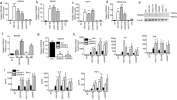
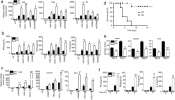
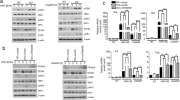
Li, Lin, Tong et al
Cell Discov (2018) 4, 13 DOI: 10.1038/s41421-018-0010-9
AI Summary: OriGene products, specifically the Myc-Flag-tagged TRIM29 plasmid and the pCDH-CMV-EF1-cop GFP expression vector, were used to express and study TRIM29 and its mutants, enabling investigation of TRIM29’s role as a negative regulator of antiviral immune responses in this study.
Snippet: … Plasmids Myc-Flag-tagged TRIM29 were from OriGene, different truncate TRIM29 mutants were cloned using the same vector, and mTRIM29 was cloned into pCDH-CMV-EF1-cop green fluorescent protein (GFP) (from OriGene) expression vector prepared for;... … Plasmids Myc-Flag-tagged TRIM29 were from OriGene, different truncate TRIM29 mutants were cloned using the same vector, and mTRIM29 was cloned into pCDH-CMV-EF1-cop green fluorescent protein (GFP) (from OriGene) expression vector prepared for
Cytoplasmic chromatin triggers inflammation in senescence and cancer
Dou, Ghosh, Vizioli et al
Nature (2017) 550 (7676), 402-406 DOI: 10.1038/nature24050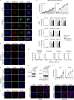
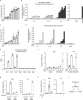
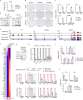
Dou, Ghosh, Vizioli et al
Nature (2017) 550 (7676), 402-406 DOI: 10.1038/nature24050
AI Summary: OriGene’s Mouse Sting cDNA was used in this study to generate expression constructs for investigating the role of the cGAS-STING pathway in inflammation during senescence and cancer.
Snippet: Mouse Sting cDNA was purchased from Origene and was cloned into the NRas/IRES/luciferase vector. All constructs were verified by DNA sequencing. For in vivo luciferase imaging, luciferin was intraperitoneally injected to mice at 150 mg/kg body weight. The mice were anesthetized using isoflurane and imaged under an IVIS Spectrum imager every minute for a duration of 15 min. Images with peak signals...
Showing 1-4 of 4 papers.
Powered by BizGenius
*Delivery time may vary from web posted schedule. Occasional delays may occur due to unforeseen
complexities in the preparation of your product. International customers may expect an additional 1-2 weeks
in shipping.
Related Products
- Price:
- Actual Price:
Welcome to OriGene AI!
I'm your AI-powered guide to everything OriGene.
Ask me anything:
- Product specs
- Ordering help
- Technical questions
- How to find exactly what your experiment needs
Prefer a live agent? Connect with us by clicking the green chat icon, as seen in the image below or email our team at custsupport@origene.com.
