
Pparg (NM_011146) Mouse Tagged ORF Clone
- TrueORF®
SKU
MR208132
Pparg (Myc-DDK-tagged) - Mouse peroxisome proliferator activated receptor gamma (Pparg), transcript variant 2

$289.00
$470.00
In Stock*
Specifications
| Product Data | |
| Type | Mouse Tagged ORF Clone |
|---|---|
| Target Symbol | Pparg |
| Synonyms | Nr1; Nr1c3; PPA; PPAR; Ppar-; PPAR-gamma; PPAR-gamma2; PPARgamma; PPARgamma2 |
| Vector | pCMV6-Entry |
| E. coli Selection | Kanamycin (25 ug/mL) |
| Mammalian Cell Selection | Neomycin |
| Sequence Data | |
| Restriction Sites |
SgfI-MluI Cloning Scheme for this gene
|
Plasmid Map

|
| ACCN | NM_011146 |
| ORF Size | 1515 bp |
| OTI Disclaimer | The molecular sequence of this clone aligns with the gene accession number as a point of reference only. However, individual transcript sequences of the same gene can differ through naturally occurring variations (e.g. polymorphisms), each with its own valid existence. This clone is substantially in agreement with the reference, but a complete review of all prevailing variants is recommended prior to use. More info |
| OTI Annotation | This clone was engineered to express the complete ORF with an expression tag. Expression varies depending on the nature of the gene. |
| Components | The ORF clone is ion-exchange column purified and shipped in a 2D barcoded Matrix tube containing 10ug of transfection-ready, dried plasmid DNA (reconstitute with 100 ul of water). |
| Reconstitution Method | 1. Centrifuge at 5,000xg for 5min. 2. Carefully open the tube and add 100ul of sterile water to dissolve the DNA. 3. Close the tube and incubate for 10 minutes at room temperature. 4. Briefly vortex the tube and then do a quick spin (less than 5000xg) to concentrate the liquid at the bottom. 5. Store the suspended plasmid at -20°C. The DNA is stable for at least one year from date of shipping when stored at -20°C. |
| Note | Plasmids are not sterile. For experiments where strict sterility is required, filtration with 0.22um filter is required. |
| Shipping | Ambient |
| Reference Data | |
| RefSeq | NM_011146.3 |
| RefSeq Size | 1780 bp |
| RefSeq ORF | 1518 bp |
| Locus ID | 19016 |
| UniProt ID | P37238 |
| Cytogenetics | 6 53.41 cM |
| MW | 58 kDa |
| Summary | This gene encodes a nuclear receptor protein belonging to the peroxisome proliferator-activated receptor (Ppar) family. The encoded protein is a ligand-activated transcription factor that is involved in the regulation of adipocyte differentiation and glucose homeostasis. The encoded protein forms a heterodimer with retinoid X receptors and binds to DNA motifs termed "peroxisome proliferator response elements" to either activate or inhibit gene expression. Mice lacking the encoded protein die at an embryonic stage due to severe defects in placental vascularization. When the embryos lacking this gene are supplemented with healthy placentas, the mutants survive to term, but succumb to lipodystrophy and multiple hemorrhages. Alternative splicing results in multiple transcript variants encoding different isoforms. provided by RefSeq, Apr 2015 |
Reviews


Documents
| Product Manuals |
| FAQs |
| SDS |
Resources
"NM_011146" in other vectors (4)
| SKU | Description | Size | Price | |
|---|---|---|---|---|
| MC201042 | Pparg (untagged) - Mouse peroxisome proliferator activated receptor gamma (Pparg), transcript variant 2, (10ug) | 10 ug |
$471.00
|
|
| MG208132 | Pparg (tGFP-tagged) - Mouse peroxisome proliferator activated receptor gamma (Pparg) | 10 ug |
$489.00
$670.00
|
|
| MR208132L3 | Lenti ORF clone of Pparg (Myc-DDK-tagged) - Mouse peroxisome proliferator activated receptor gamma (Pparg), transcript variant 2 | 10 ug |
$770.00
|
|
| MR208132L4 | Lenti ORF clone of Pparg (mGFP-tagged) - Mouse peroxisome proliferator activated receptor gamma (Pparg), transcript variant 2 | 10 ug |
$770.00
|
|
Citations
All-trans retinoic acid suppresses systemic inflammation induced by severe fever with thrombocytopenia syndrome virus in mice
Yu, Wu, Yin et al
Nat Microbiol (2026) 11 (8), 2279-2293 DOI: 10.1038/s41564-026-02411-6
Yu, Wu, Yin et al
Nat Microbiol (2026) 11 (8), 2279-2293 DOI: 10.1038/s41564-026-02411-6
AI Summary: OriGene products, specifically the mouse PPARγ-LBD (variant 2; MR208132) and PPARβ/δ-LBD (MR207001) expression plasmids, were used in co-transfection experiments to investigate the molecular mechanisms by which all-trans retinoic acid modulates inflammatory signaling in SFTSV-infected cells.
Snippet: HEK293T cells seeded in 24-well plates (70–80% confluency) were co-transfected with expression plasmids encoding mouse PPARγ-LBD (variant 2;MR208132, OriGene) or PPARβ/δ-LBD (MR207001, OriGene), along with the PPRE‑driven firefly luciferase reporter54 (consisting of the nucleotide sequence 5
DNMT3a promotes osteoblast differentiation and alleviates osteoporosis via the PPARγ/SCD1/GLUT1 axis
Lu, Wang, Wu et al
Epigenomics (2022) 14 (12), 777-792 DOI: 10.2217/epi-2021-0391
Lu, Wang, Wu et al
Epigenomics (2022) 14 (12), 777-792 DOI: 10.2217/epi-2021-0391
Cited by 15
AI Summary: OriGene products, specifically the lentiviral particles pCMV6-Entry, pCMV6-PPARγ (MR208132), pCMV6-DNMT3a (MC200622), and pCMV6-SCD1 (MR225893), were used to manipulate gene expression in osteoblast cells, enabling the study of DNMT3a, PPARγ, and SCD1 roles in osteoblast differentiation and osteoporosis.
Snippet: 549V), and subsequently transduced with pCMV6-Entry, PCMV6-PPARγ (MR208132), PCMV6-DNMT3a (MC200622) or PCMV6-SCD1 (MR225893). All lentivirus particles were obtained from OriGene Technologies (MD, USA). After transduction, the cells were treated with 400 μg/ml G418 for 4 days [18] or with 5 μg/ml puromycin for 7 days [19]
Inactivation of SERCA2 Cys674 accelerates aortic aneurysms by suppressing PPARγ
Que, Shu, Wang et al
Br J Pharmacol (2021) 178 (11), 2305-2323 DOI: 10.1111/bph.15411
Que, Shu, Wang et al
Br J Pharmacol (2021) 178 (11), 2305-2323 DOI: 10.1111/bph.15411
Cited by 19
AI Summary: In this study, OriGene’s PPARγ2 expression plasmid (Cat# RC211674) and SERCA2 expression plasmid (Cat# RC201070) were used to investigate the molecular mechanisms by which SERCA2 Cys674 inactivation accelerates aortic aneurysm formation, specifically by enabling overexpression experiments to assess the role of PPARγ and SERCA2 in smooth muscle cell phenotypic modulation.
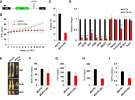
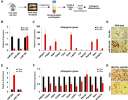
miR-26 suppresses adipocyte progenitor differentiation and fat production by targeting Fbxl19
Acharya, Berry, Zhang et al
Genes Dev (2019) 33 (19-20), 1367-1380 DOI: 10.1101/gad.328955.119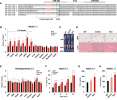
Acharya, Berry, Zhang et al
Genes Dev (2019) 33 (19-20), 1367-1380 DOI: 10.1101/gad.328955.119
Cited by 67
AI Summary: In this study, OriGene products, specifically the Fbxl19 cDNA clone (Cat# MR206481) and Fbxl19 shRNA plasmids (Cat# TL502733), were used to manipulate Fbxl19 expression levels in adipocyte progenitor cells, enabling the authors to demonstrate that miR-26 regulates fat production by targeting Fbxl19.
Showing 1-4 of 4 papers.
Powered by BizGenius
*Delivery time may vary from web posted schedule. Occasional delays may occur due to unforeseen
complexities in the preparation of your product. International customers may expect an additional 1-2 weeks
in shipping.
Related Products
- Price:
- Actual Price:
Welcome to OriGene AI!
I'm your AI-powered guide to everything OriGene.
Ask me anything:
- Product specs
- Ordering help
- Technical questions
- How to find exactly what your experiment needs
Prefer a live agent? Connect with us by clicking the green chat icon, as seen in the image below or email our team at custsupport@origene.com.
