
E Cadherin (CDH1) Mouse Monoclonal Antibody [Clone ID: UMAB184]


Specifications
| Product Data | |
| Clone Name | UMAB184 |
|---|---|
| Application | 10k-ChIP, FC, IF, IHC, WB |
| Recommended Dilution | WB 1:500 IHC 1:50 IF 1:50 FC 1:50 |
| Reactivity | Human |
| Antibody Host | Mouse |
| Isotype | IgG1 |
| Clonality | Monoclonal |
| Immunogen | The extracellular domain of human CDH1 (NP_004351) produced in human cells. |
| Buffer | PBS (pH 7.3) containing 1% BSA, 50% glycerol and 0.02% sodium azide |
| Concentration | 0.5~1.0 mg/ml (Lot Dependent) |
| Purification | Purified from mouse ascites fluids or tissue culture supernatant by affinity chromatography (protein A/G) |
| Conjugation | Unconjugated |
| Storage | Store at -20°C as received. |
| Stability | Stable for 12 months from date of receipt. |
| Shipping | Blue Ice |
| Predicted Protein Size | 94.8 kDa |
| Gene Name | cadherin 1 |
| Database Link | |
| Background | This gene is a classical cadherin from the cadherin superfamily. The encoded protein is a calcium dependent cell-cell adhesion glycoprotein comprised of five extracellular cadherin repeats, a transmembrane region and a highly conserved cytoplasmic tail. Mutations in this gene are correlated with gastric, breast, colorectal, thyroid and ovarian cancer. Loss of function is thought to contribute to progression in cancer by increasing proliferation, invasion, and/or metastasis. The ectodomain of this protein mediates bacterial adhesion to mammalian cells and the cytoplasmic domain is required for internalization. Identified transcript variants arise from mutation at consensus splice sites. provided by RefSeq, Jul 2008 |
| Synonyms | Arc-1; CD324; CDHE; ECAD; LCAM; UVO |
| Reference Data | |
| Protein Categories | Cancer: Endocrine, Cancer: Gastrointestinal, Cancer: Gynecologic, Cancer: Head and Neck, CD Markers, Membrane Proteins |
| Protein Families | Druggable Genome, ES Cell Differentiation/IPS, Transmembrane |
| Protein Pathways | Adherens junction, Bladder cancer, Cell adhesion molecules (CAMs), Endometrial cancer, Melanoma, Pathogenic Escherichia coli infection, Pathways in cancer, Thyroid cancer |
Reviews


Documents
| Product Manuals |
| FAQs |
| SDS |
Resources
Other "UMAB184" antibodies (2)
| SKU | Description | Size | Price | |
|---|---|---|---|---|
| UM800076CF | Carrier-free (BSA/glycerol-free) CDH1 mouse monoclonal antibody,clone UMAB184 | 100 ug |
$680.00
|
|
| UM870076 | CDH1 mouse monoclonal antibody,clone UMAB184 | 30 ul |
$224.00
|
|
Citations
Intrauterine hCG application increases expression of endothelial cell-cell adhesion molecules in human
Bienert, Habib, Buck et al
Arch Gynecol Obstet (2021)
Bienert, Habib, Buck et al
Arch Gynecol Obstet (2021)
Cited by 11
AI Summary: OriGene’s mouse anti-human E-Cadherin antibody was used in this study to identify and analyze epithelial cell populations in endometrial tissue, contributing to the assessment of cell-type specific responses to intrauterine hCG application.
Snippet: Antibodies for the epithelial cell cluster were mouse anti-human E-Cadherin as primary antibody (Origene) with the secondary antibody FITC goat anti-mouse (BD Bioscience) and rabbit anti-human Desmocollin 2 as the primary antibody (Progen) with the secondary;- Antibodies for the epithelial cell cluster were mouse anti-human E-Cadherin as primary antibody (Origene) with the secondary antibody FI...
ATF5 involved in radioresistance in nasopharyngeal carcinoma by promoting epithelial-to-mesenchymal phenotype transition
Shuai, Fan, Zhong et al
Eur Arch Otorhinolaryngol (2020)
Shuai, Fan, Zhong et al
Eur Arch Otorhinolaryngol (2020)
Cited by 9
AI Summary: OriGene products, specifically the mouse monoclonal anti-E-cadherin and rabbit monoclonal anti-N-cadherin antibodies, were used to assess changes in epithelial and mesenchymal marker expression, helping to elucidate the role of ATF5 in promoting epithelial-to-mesenchymal transition and radioresistance in nasopharyngeal carcinoma cells.
Snippet: Cells were then incubated overnight at 4 °C with the following antibodies: rabbit monoclonal anti-ATF5 (Abcam, 1:200 dilution, Massachusetts, US), mouse monoclonal anti-E-cadherin (Origene, 1:200 dilution, Rockville, US), rabbit monoclonal anti-N-cadherin (Ori
Cathepsin B defines leader cells during the collective invasion of salivary adenoid cystic carcinoma
Wu, Li, Wang et al
Int J Oncol (2019) 54 (4), 1233-1244 DOI: 10.3892/ijo.2019.4722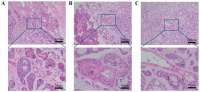
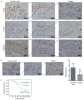
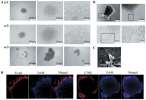
Wu, Li, Wang et al
Int J Oncol (2019) 54 (4), 1233-1244 DOI: 10.3892/ijo.2019.4722
Cited by 36
AI Summary: OriGene products contributed to this study by providing the CTSB-specific siRNA (OriGene, SR307305) used to knock down Cathepsin B expression in SACC-83 cells, enabling the researchers to investigate the role of CTSB in cell migration, invasion, and leader cell formation.
Cathepsin B defines leader cells during the collective invasion of salivary adenoid cystic carcinoma
Wu, Li, Wang et al
Int J Oncol (2019)
Wu, Li, Wang et al
Int J Oncol (2019)
AI Summary: OriGene products, specifically the rabbit anti-E-cadherin (UM870076), mouse anti-N-cadherin (UM500023), and rabbit anti-vimentin antibodies, were used in this study to detect key proteins involved in cell adhesion and epithelial-mesenchymal transition, helping to elucidate the role of Cathepsin B in collective invasion of salivary adenoid cystic carcinoma.
Macrophages significantly enhance wound healing in a vascularized skin model
Kreimendahl, Marquardt, Apel et al
J Biomed Mater Res A (2019)
Kreimendahl, Marquardt, Apel et al
J Biomed Mater Res A (2019)
AI Summary: Based on the provided abstract and snippet, there is no direct mention of any OriGene products or their contribution to the study "Macrophages significantly enhance wound healing in a vascularized skin model," and thus no OriGene products can be summarized as having contributed to this paper.
Snippet: stained by applying a rabbit anti-human pan-cytokeratin primary antibody (1:100;Acris Antibodies) and an Alexa Fluor 488 goat anti-rabbit IgG secondary antibody (1:400, Thermo using a rabbit anti-human collagen IV primary antibody (1:100, Acris Antibodies) labelled
Prediction model of lymphovascular invasion based on clinicopathological factors in Chinese patients with invasive breast cancer
Shen, Wu, Xiao et al
Medicine (Baltimore) (2018) 97 (43), e12973 DOI: 10.1097/MD.0000000000012973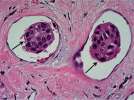
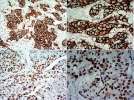
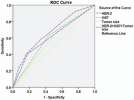
Shen, Wu, Xiao et al
Medicine (Baltimore) (2018) 97 (43), e12973 DOI: 10.1097/MD.0000000000012973
Cited by 18
AI Summary: OriGene products, specifically the anti-HER-2 antibody (TA808229), anti-Ki67 antibody (TA500294), and anti-P53 antibody (TA802901), were used for immunohistochemical detection of protein expression in breast cancer tissue samples, contributing to the evaluation of clinicopathological risk factors for lymphovascular invasion in this study.
Showing 1-6 of 9 papers.
Powered by BizGenius
*Delivery time may vary from web posted schedule. Occasional delays may occur due to unforeseen
complexities in the preparation of your product. International customers may expect an additional 1-2 weeks
in shipping.
Related Products
- Price:
- Actual Price:
Welcome to OriGene AI!
I'm your AI-powered guide to everything OriGene.
Ask me anything:
- Product specs
- Ordering help
- Technical questions
- How to find exactly what your experiment needs
Prefer a live agent? Connect with us by clicking the green chat icon, as seen in the image below or email our team at custsupport@origene.com.
