
ADAR1 (ADAR) (NM_001025107) Human Recombinant Protein

SKU
TP319761M
Recombinant protein of human adenosine deaminase, RNA-specific (ADAR), transcript variant 4, 100 µg

$2,950.00
5 Days*
Specifications
| Product Data | |
| Species | Human |
|---|---|
| Expression Host | HEK293 |
| Expression cDNA Clone or AA Sequence | |
| Tag | C-Myc/DDK |
| Predicted MW | 103.5 kDa |
| Concentration | >0.1 µg/µL as determined by microplate BCA method |
| Purity | > 80% as determined by SDS-PAGE and Coomassie blue staining |
| Buffer | 25 mM Tris-HCl, 100 mM glycine, pH 7.3, 10% glycerol |
| Preparation | Recombinant protein was captured through anti-DDK affinity column followed by conventional chromatography steps. |
| Note | For testing in cell culture applications, please filter before use. Note that you may experience some loss of protein during the filtration process. |
| Storage | Store at -80°C. |
| Stability | Stable for 12 months from the date of receipt of the product under proper storage and handling conditions. Avoid repeated freeze-thaw cycles. |
| Shipping | Dry Ice |
| Reference Data | |
| RefSeq | NP_001020278 |
| Locus ID | 103 |
| UniProt ID | P55265 |
| Cytogenetics | 1q21.3 |
| RefSeq Size | 6532 |
| RefSeq ORF | 2793 |
| Synonyms | ADAR1; AGS6; DRADA; DSH; DSRAD; G1P1; IFI-4; IFI4; K88DSRBP; P136 |
| Summary | This gene encodes the enzyme responsible for RNA editing by site-specific deamination of adenosines. This enzyme destabilizes double-stranded RNA through conversion of adenosine to inosine. Mutations in this gene have been associated with dyschromatosis symmetrica hereditaria. Alternative splicing results in multiple transcript variants. provided by RefSeq, Jul 2010 |
| Protein Categories | Immune system diseases, Intracellular Proteins |
| Protein Families | Druggable Genome |
| Protein Pathways | Cytosolic DNA-sensing pathway |
Reviews


Documents
| FAQs |
| SDS |
Resources
| Recombinant Protein Resources |
Citations
A conserved long-range RNA interaction in SARS-CoV-2 recruits ADAR1 to enhance virus proliferation
Yang, DeFalco, Wang et al
bioRxiv (2025)
Yang, DeFalco, Wang et al
bioRxiv (2025)
A multicellular star-shaped actin network underpins epithelial organization and connectivity
Barai, Soleilhac, Xi et al
Nat Commun (2025) 16 (1), 6201 DOI: 10.1038/s41467-025-61438-1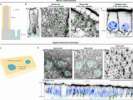
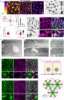
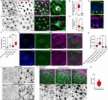
Barai, Soleilhac, Xi et al
Nat Commun (2025) 16 (1), 6201 DOI: 10.1038/s41467-025-61438-1
Cited by 13
AI Summary: In this study, OriGene's ADAR1 protein (TP319761M) was used in binding assays to investigate molecular interactions relevant to the organization and stability of epithelial actin networks.
Snippet: 467 The assay was performed using agarose gel as previously described39 with some 468 modifications. Twenty five nanomole of folded RNA was incubated with increasing 469 concentration (0 to 1.25 μM) of ADAR1 protein (TP319761M, Origene), SARS-CoV-2 470 nucleocapsid (N)
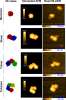
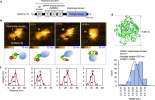
High-speed atomic force microscopy and 3D modeling reveal the structural dynamics of ADAR1 complexes
Biyani, Isogai, Sharma et al
Nat Commun (2025) 16 (1), 4757 DOI: 10.1038/s41467-025-59987-6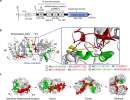
Biyani, Isogai, Sharma et al
Nat Commun (2025) 16 (1), 4757 DOI: 10.1038/s41467-025-59987-6
Cited by 3
AI Summary: OriGene's Human Recombinant ADAR Protein (NM_001025107) was used in this study to investigate the structural dynamics and oligomerization of ADAR1 complexes, enabling detailed analysis of its interactions and function.
Snippet: ion may, therefore, be a valuable addition to therapeutic approaches for diseases associated with aberrant RNA editing. MethodsMaterials Human Recombinant ADAR Protein NM_001025107 was purchased from OriGene (Rockville, MD, USA). StriptMAX Thermo T7 Transcription Kit and ReverTra Ace were purchased from Toyobo (Japan). NucleoSpin Gel and PCR Clean-up Kit, Gflex DNA polymerase, DNase I, and RNa
AKT-dependent phosphorylation of the adenosine deaminases ADAR-1 and -2 inhibits deaminase activity
Bavelloni, Focaccia, Piazzi et al
FASEB J. (2019)
Bavelloni, Focaccia, Piazzi et al
FASEB J. (2019)
AI Summary: OriGene’s recombinant human ADAR1p110 protein (TP319761) was used in in vitro kinase assays to investigate AKT-mediated phosphorylation and its inhibitory effect on ADAR deaminase activity in this study.
Snippet: … THE JOURNAL • RESEARCH • www.fasebj.org AKT-dependent phosphorylation of the adenosine deaminases ADAR-1 and -2 inhibits deaminase activity Alberto Bavelloni,*,1 Enrico Focaccia,*, ,1 Manuela Piazzi,*, ,1 Mirco Raffini,* Valeriana Cesarini, ‡;Recombinant human (rh) AKT1 (A16-10G), AKT2 (A17-10G), or AKT3 (A18-10G) (0.5 mg, rhAKT;SignalChem, Richmond, BC, Canada) was used to phosphorylate rhADAR1p110 (0.5 mg, TP319761;Origene Technologies, Rockville, MD, USA) or rhADAR2 (0.5 mg, H00000104-P01;Abnova, Taipei, Taiwan) in an in vitro AKT kinase reaction containing 20 mM Tris-HCl, pH 7.5, 10 mM MgCl2, 10 mM MnCl2, 1 mM DTT, 200mM ATP, and 5 mCi g-[32P]-ATP (or alternatively in the absence of g-[32P]- ATP, 400 mM ATP) for 2 h at 30°C
The double-domain cytidine deaminase APOBEC3G is a cellular site-specific RNA editing enzyme
Sharma, Patnaik, Taggart et al
Sci Rep (2016) 6, 39100 DOI: 10.1038/srep39100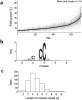
Sharma, Patnaik, Taggart et al
Sci Rep (2016) 6, 39100 DOI: 10.1038/srep39100
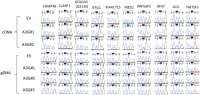
AI Summary: OriGene contributed to this study by providing the full-length Myc-DDK tagged wild-type APOBEC3G protein, which was used to investigate APOBEC3G's RNA editing activity.
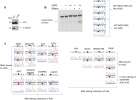
Snippet: Unlike A3A 30 , we were unable to express the full length WT A3G protein in E. coli . Therefore, we purchased full length Myc-DDK tagged WT A3G protein from Origene (Rockville, MD) that was expressed in 293T cells and purified via affin- ity chromatography on anti-DDK column (Fig. 3a)
Showing 1-5 of 5 papers.
Powered by BizGenius
*Delivery time may vary from web posted schedule. Occasional delays may occur due to unforeseen
complexities in the preparation of your product. International customers may expect an additional 1-2 weeks
in shipping.
Related Products
- Price:
- Actual Price:
Welcome to OriGene AI!
I'm your AI-powered guide to everything OriGene.
Ask me anything:
- Product specs
- Ordering help
- Technical questions
- How to find exactly what your experiment needs
Prefer a live agent? Connect with us by clicking the green chat icon, as seen in the image below or email our team at custsupport@origene.com.
