
pEX-C-His Bacterial Expression Vector

$670.00
In Stock*
Specifications
| Product Data | |
| C-Tag | His |
|---|---|
| E. coli Selection | Ampicillin (100 ug/mL) |
| Features | This vector is for E.coli expression.
|
| Download Vector Sequence | |
| Schematic of the multiple cloning sites |

|
| Shipping | Blue Ice |
Reviews


Documents
Resources
Citations
Small molecules inhibitors of the heterogeneous ribonuclear protein A18 (hnRNP A18): a regulator of protein translation and an immune checkpoint
Solano-Gonzalez, Coburn, Yu et al
Nucleic Acids Res (2021)
Solano-Gonzalez, Coburn, Yu et al
Nucleic Acids Res (2021)
Cited by 17
Rhenium N-heterocyclic carbene complexes block growth of aggressive cancers by inhibiting FGFR- and SRC-mediated signalling
Domenichini, Casari, Simpson et al
J Exp Clin Cancer Res (2020) 39 (1), 276 DOI: 10.1186/s13046-020-01777-7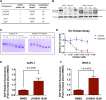
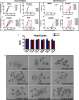
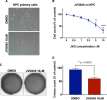
Domenichini, Casari, Simpson et al
J Exp Clin Cancer Res (2020) 39 (1), 276 DOI: 10.1186/s13046-020-01777-7
Cited by 27
AI Summary: OriGene’s pEX-Src-C-His plasmid was used to express recombinant Src protein, which was essential for studying the inhibitory effects of rhenium complexes on Src-mediated cancer signalling in this research.
Snippet: Recombinant Src was expressed in BL21-AI Escherichia coli (Thermo) containing the pEX-Src-C-His (Origene, Blue Heron Biotech) and purified in a modified procedure as previously described [30]
Annexin A7 is required for ESCRT III-mediated plasma membrane repair
Sønder, Boye, Tölle et al
Sci Rep (2019) 9 (1), 6726 DOI: 10.1038/s41598-019-43143-4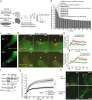
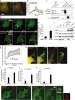
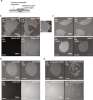
Sønder, Boye, Tölle et al
Sci Rep (2019) 9 (1), 6726 DOI: 10.1038/s41598-019-43143-4
AI Summary: OriGene's tGFP antibody (TA150041) was used for immunoprecipitation of tagged proteins, enabling the authors to study protein interactions involved in plasma membrane repair.
Snippet: … Proteins were immunoprecipitated from whole cell lysate using 3 µg antibody (tGFP, TA150041, Origene) coupled to protein A agarose beads (Millipore) or using RFP-Trap agarose beads (Chromotek) for View as HTML;... … Proteins were immunoprecipitated from whole cell lysate using 3 µg antibody (tGFP, TA150041, Origene) coupled to protein A agarose beads (Millipore) or using RFP-Trap agarose beads (Chromotek) for o/n at 4 °C according to the manufacturer’s instructions. …
Cloning, expression, and purification of the recombinant pro-apoptotic dominant-negative survivin T34A-C84A protein in Escherichia coli
Tsai, Chang, Sarvagalla et al
Protein Expr. Purif. (2019) 160, 73-83 DOI: 10.1016/j.pep.2019.04.003
Tsai, Chang, Sarvagalla et al
Protein Expr. Purif. (2019) 160, 73-83 DOI: 10.1016/j.pep.2019.04.003
AI Summary: OriGene’s pCMV6-AC-GFP/hSurvivin plasmid DNA (cat# RG205935) was used as the template for generating survivin mutants in this study, enabling the cloning and production of the recombinant pro-apoptotic survivin T34A-C84A protein.
Snippet: The pCMV6-AC-GFP/hSurvivin plasmid DNA (OriGene, cat# RG205935) was used as the SOE-PCR template for the generation of T34A-dNSur (contains an A-to-G substitution at nucleotide 100 that changes the threonine residue at amino acid 34 to an alanine) and;
Direct cysteine sulfenylation drives activation of the Src kinase
Heppner, Dustin, Liao et al
Nat Commun (2018) 9 (1), 4522 DOI: 10.1038/s41467-018-06790-1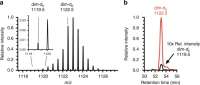
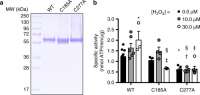
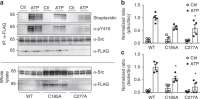
Heppner, Dustin, Liao et al
Nat Commun (2018) 9 (1), 4522 DOI: 10.1038/s41467-018-06790-1
AI Summary: OriGene's pEX-Src-C-His plasmid was used to express recombinant Src and its variants in E. coli, enabling the biochemical studies that revealed how cysteine sulfenylation activates Src kinase.
Snippet: fer exciting new directions for drug discovery. Methods Src expression and purification Recombinant Src and variants were expressed in BL21-AI Escherichia coli (Thermo) containing the pEX-Src-C-His (Origene, Blue Heron Biotech) and purified in a modified procedure as previously described60 (see Supplementary methods for complete details). Mass spectrometry Recombinant Src (~20 µg in dimedone
A Study of the Activity of Recombinant Mn-Superoxide Dismutase in the Presence of Gold and Silver Nanoparticles
Pudlarz, Ranoszek-Soliwoda, Czechowska et al
Appl. Biochem. Biotechnol. (2018)
Pudlarz, Ranoszek-Soliwoda, Czechowska et al
Appl. Biochem. Biotechnol. (2018)
AI Summary: OriGene's pEX-C-His plasmid was used as a cloning vector to express recombinant human Mn-superoxide dismutase with a His-tag, enabling efficient protein purification for the study.
Snippet: reverse), given in italics. The resulting amplified DNA fragments (690 bp) were digested with appropriate restriction enzymes (HindIII and MluI) and cloned into pEX-C-His (OriGene) under T7 promoter. The resulting plasmid
Showing 1-6 of 9 papers.
Powered by BizGenius
*Delivery time may vary from web posted schedule. Occasional delays may occur due to unforeseen
complexities in the preparation of your product. International customers may expect an additional 1-2 weeks
in shipping.
Related Products
- Price:
- Actual Price:
Welcome to OriGene AI!
I'm your AI-powered guide to everything OriGene.
Ask me anything:
- Product specs
- Ordering help
- Technical questions
- How to find exactly what your experiment needs
Prefer a live agent? Connect with us by clicking the green chat icon, as seen in the image below or email our team at custsupport@origene.com.
