
TissueScan, Mouse Normal cDNA Array
SKU
MNRT101
36 samples covering all major mouse normal and embryonic tissues. Available in 2, 5, 10 identical plates.

$600.00
In Stock*
Specifications
| Product Data | |
| TissueScan Type | Normal Tissue |
|---|---|
| Array Name | Mouse Normal cDNA Array |
| Diagnosis Category | Normal |
| Tissue | Multiple |
| Shipping | Ambient |
| Description | 36 samples covering all major mouse normal and embryonic tissues. Available in 2, 5, 10 identical plates. |
Reviews


Documents
| Product Manuals |
| FAQs |
| SDS |
Citations
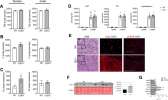
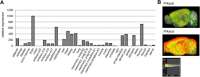
The Catalytic Subunit β of PKA Affects Energy Balance and Catecholaminergic Activity
London, Noguchi, Springer et al
J Endocr Soc (2019) 3 (5), 1062-1078 DOI: 10.1210/js.2019-00029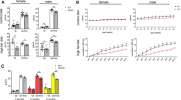
London, Noguchi, Springer et al
J Endocr Soc (2019) 3 (5), 1062-1078 DOI: 10.1210/js.2019-00029
AI Summary: OriGene’s Mouse Normal Tissue qPCR Array (catalog no. MNRT101) was used to analyze Prkacb and Gapdh gene expression across various normal mouse tissues in this study.
Snippet: For qRT-PCR tissue array, primers for Prkacb and Gapdh were used on two separate 96-well plates for the analysis of normal (WT) mouse tissues, according to the manufacturer’s instructions (catalog no. MNRT101;OriGene, Rockville, MD)
Mono-ADP-Ribosylhydrolase MACROD2 Is Dispensable for Murine Responses to Metabolic and Genotoxic Insults
Lo Re, Mazza, Vinciguerra
Front Genet (2018) 9, 654 DOI: 10.3389/fgene.2018.00654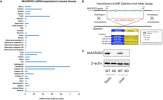
Lo Re, Mazza, Vinciguerra
Front Genet (2018) 9, 654 DOI: 10.3389/fgene.2018.00654
AI Summary: In this study, OriGene products including the anti-MACROD2 antibody (TA326106) and MACROD2 cDNA clone (MR207959) were used to assess MACROD2 expression and function, supporting the investigation of MACROD2's dispensability in murine metabolic and genotoxic stress responses.
CRISPR whole-genome screening identifies new necroptosis regulators and RIPK1 alternative splicing
Callow, Watanabe, Wickliffe et al
Cell Death Dis (2018) 9 (3), 261 DOI: 10.1038/s41419-018-0301-y
Callow, Watanabe, Wickliffe et al
Cell Death Dis (2018) 9 (3), 261 DOI: 10.1038/s41419-018-0301-y
AI Summary: OriGene’s human cDNA arrays (HMRT104 and HBRT101) and mouse cDNA arrays (MDRT101 and MNRT101) were used in this study to survey tissue mRNA expression by RT-qPCR, enabling the authors to assess gene expression profiles relevant to necroptosis regulation.
Snippet: … Tissue mRNA expression was surveyed using human cDNA arrays (HMRT104 and HBRT101, OriGene) and mouse cDNA arrays (MDRT101 and MNRT101, OriGene) by RT-qPCR according to the manufacturer’s instructions. …Tissue mRNA expression was surveyed using human cDNA arrays (HMRT104 and HBRT101, OriGene) and mouse cDNA arrays (MDRT101 and MNRT101, OriGene) by RT-qPCR according to the manufacturer’s instructions. …
Activation of neurotensin receptor 1 facilitates neuronal excitability and spatial learning and memory in the entorhinal cortex: beneficial actions in an Alzheimer's disease model
Xiao, Cilz, Kurada et al
J. Neurosci. (2014) 34 (20), 7027-42 DOI: 10.1523/JNEUROSCI.0408-14.2014
Xiao, Cilz, Kurada et al
J. Neurosci. (2014) 34 (20), 7027-42 DOI: 10.1523/JNEUROSCI.0408-14.2014
AI Summary: OriGene provided the TREK-2 cDNA construct (NM_021161, subcloned into the pCMV6-XL4 vector), which was used to study the molecular mechanisms by which neurotensin modulates neuronal excitability in the entorhinal cortex.
Snippet: cDNA constructs coding for TREK-2 (NM_021161, subcloned into the pCMV6-XL4 vector) were purchased from Origene. An empty pEGFP N-3 GFP fusion protein vector (GenBank accession number U57609) was purchased from Clontech. ... Cite SaveSaving
A genetically engineered ovarian cancer mouse model based on fallopian tube transformation mimics human high-grade serous carcinoma development
Sherman-Baust, Kuhn, Valle et al
J. Pathol. (2014)
Sherman-Baust, Kuhn, Valle et al
J. Pathol. (2014)
Cited by 137
AI Summary: OriGene’s normal mouse cDNA panel (MNRT101) was used in this study to provide reference cDNA for gene expression analyses, supporting the characterization of molecular changes in the engineered ovarian cancer mouse model.
Snippet: (Invitrogen). Reverse Transcription of 1 μg of total RNA was performed using Taqman Reverse Transcription (Invitrogen). A normal mouse cDNA panel was also used (MNRT 101, OriGene). Primers were designed to amplify the mouse oviductal glycoprotein 1 gene ... Cite SaveSaving
TRIM14 is a mitochondrial adaptor that facilitates retinoic acid-inducible gene-I-like receptor-mediated innate immune response
Zhou, Jia, Xue et al
Proc Natl Acad Sci U S A (2014) 111 (2), E245-54 DOI: 10.1073/pnas.1316941111
Zhou, Jia, Xue et al
Proc Natl Acad Sci U S A (2014) 111 (2), E245-54 DOI: 10.1073/pnas.1316941111
Cited by 137
AI Summary: In this paper, OriGene products—specifically, the TRIM14 expression plasmid (RC208706) and TRIM14 shRNA (TL312073)—were used to manipulate TRIM14 levels in cells, enabling the authors to investigate TRIM14’s role in the MAVS-mediated innate immune response.
Showing 1-6 of 10 papers.
Powered by BizGenius
*Delivery time may vary from web posted schedule. Occasional delays may occur due to unforeseen
complexities in the preparation of your product. International customers may expect an additional 1-2 weeks
in shipping.
Related Products
- Price:
- Actual Price:
Welcome to OriGene AI!
I'm your AI-powered guide to everything OriGene.
Ask me anything:
- Product specs
- Ordering help
- Technical questions
- How to find exactly what your experiment needs
Prefer a live agent? Connect with us by clicking the green chat icon, as seen in the image below or email our team at custsupport@origene.com.
