
TissueScan, Cancer Survey cDNA Array 384 - I

$2,120.00
In Stock*
Specifications
Reviews


Documents
| Product Manuals |
| FAQs |
| SDS |
Citations
The long non-coding RNA GHSROS reprograms prostate cancer cell lines toward a more aggressive phenotype
Thomas, Jeffery, Gahete et al
PeerJ (2021) 9, e10280 DOI: 10.7717/peerj.10280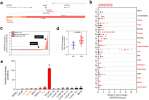
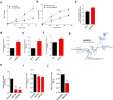
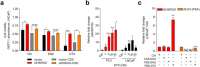
Thomas, Jeffery, Gahete et al
PeerJ (2021) 9, e10280 DOI: 10.7717/peerj.10280
Cited by 9
AI Summary: In this study, OriGene products, specifically the GHSROS expression plasmid (RC208374) and control vector (PS100001), were used to generate prostate cancer cell lines overexpressing GHSROS, enabling the authors to assess the functional role of this lncRNA in promoting aggressive cancer phenotypes.
Kallikrein family proteases KLK6 and KLK7 are potential early detection and diagnostic biomarkers for serous and papillary serous ovarian cancer subtypes
Tamir, Jag, Sarojini et al
J Ovarian Res (2014) 7 (1), 109 DOI: 10.1186/PREACCEPT-1736656869122663
Tamir, Jag, Sarojini et al
J Ovarian Res (2014) 7 (1), 109 DOI: 10.1186/PREACCEPT-1736656869122663
AI Summary: OriGene’s TissueScan Cancer Survey Panel and OVC Panel I-IV were used for expression screening and validation of KLK6 and KLK7 biomarkers in various cancer types and ovarian cancer subtypes, supporting the identification of these genes as potential early detection markers for ovarian cancer.
Snippet: Poor quality specimens that produced no meaningful values after 40 cycles of qPCR were not included in the data processing steps. The TissueScan Cancer Survey Panel and OVC Panel I-IV (both from OriGene, Rockville, MD) were used as described by the manufacturer ... Cite SaveSaving
Conserved oncogenic behavior of the FAM83 family regulates MAPK signaling in human cancer
Cipriano, Miskimen, Bryson et al
Mol Cancer Res (2014) 12 (8), 1156-65 DOI: 10.1158/1541-7786.MCR-13-0289

Cipriano, Miskimen, Bryson et al
Mol Cancer Res (2014) 12 (8), 1156-65 DOI: 10.1158/1541-7786.MCR-13-0289
AI Summary: OriGene’s TissueScan Cancer Survey Panel PCR array was used in this study to assess the expression levels of FAM83 family members across multiple human tumor types, contributing to the finding that several FAM83 proteins are frequently overexpressed in diverse cancers and are involved in MAPK signaling regulation.
TACC3 deregulates the DNA damage response and confers sensitivity to radiation and PARP inhibition
Ha, Kim, Petersson et al
Oncogene (2014)
Ha, Kim, Petersson et al
Oncogene (2014)
Cited by 24
AI Summary: OriGene’s TissueScan Cancer Survey cDNA array 96-I was used in this study to analyze TACC3 expression across 96 tissue samples from various solid tumors, facilitating the investigation of TACC3’s role in genomic instability and cancer sensitivity to radiation and PARP inhibition.
Snippet: TissueScan qPCR array. The human TissueScan Cancer Survey cDNA array 96-I (OriGene Technologies Inc, Rockville, MD, USA) consisted of 96 tissues from eight solid tumors (breast, colon, kidney, liver, lung, ovary, prostate and thyroid). ... Cite SaveSaving
Expression of polycomb targets predicts breast cancer prognosis
Jene-Sanz, Váraljai, Vilkova et al
Mol. Cell. Biol. (2013) 33 (19), 3951-61 DOI: 10.1128/MCB.00426-13
Jene-Sanz, Váraljai, Vilkova et al
Mol. Cell. Biol. (2013) 33 (19), 3951-61 DOI: 10.1128/MCB.00426-13
AI Summary: OriGene’s TissueScan Cancer Survey qPCR panel 384-1 (CSRT102) was used to analyze gene expression in breast ductal carcinoma samples, enabling the study’s investigation of EZH2 target gene expression and its correlation with breast cancer prognosis.
Snippet: isolated from breast ductal carcinomas were analyzed from the TissueScan Cancer Survey tissue quantitative PCR (qPCR) panel 384-1 (CSRT102;OriGene). ... 1.8 μg of the sample RNA was used for first-strand cDNA synthesis using the Superscript Vilo kit (Life Technologies).
FAM83B mediates EGFR- and RAS-driven oncogenic transformation
Cipriano, Graham, Miskimen et al
J. Clin. Invest. (2012) 122 (9), 3197-210 DOI: 10.1172/JCI60517
Cipriano, Graham, Miskimen et al
J. Clin. Invest. (2012) 122 (9), 3197-210 DOI: 10.1172/JCI60517
Cited by 5
AI Summary: OriGene's TissueScan Cancer Survey Panel 384-I was used to analyze FAM83B expression across 381 tissue samples from 17 different cancer types, helping to establish the association between elevated FAM83B levels and various cancers in the study.
Snippet: TissueScan Cancer Survey Panel 384—I, composed of 381 tissues covering 17 different cancers (Origene);
Showing 1-6 of 10 papers.
Powered by BizGenius
*Delivery time may vary from web posted schedule. Occasional delays may occur due to unforeseen
complexities in the preparation of your product. International customers may expect an additional 1-2 weeks
in shipping.
Related Products
- Price:
- Actual Price:
Welcome to OriGene AI!
I'm your AI-powered guide to everything OriGene.
Ask me anything:
- Product specs
- Ordering help
- Technical questions
- How to find exactly what your experiment needs
Prefer a live agent? Connect with us by clicking the green chat icon, as seen in the image below or email our team at custsupport@origene.com.
