
Mtor Mouse shRNA Plasmid (Locus ID 56717)
SKU
TL503251
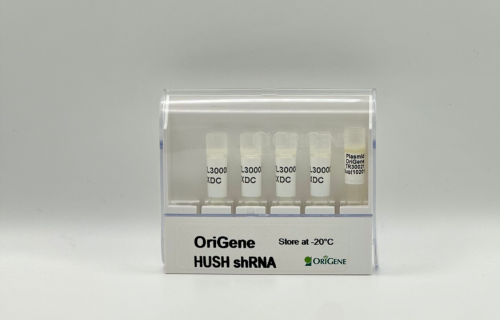
Mtor - Mouse, 4 unique 29mer shRNA constructs in lentiviral GFP vector, 5µg of each construct provided
$1,013.00
In Stock*
Specifications
| Product Data | |
| Locus ID | 56717 |
|---|---|
| Synonyms | 2610315D21Rik; AI327068; flat; FRAP; Frap1; FRAP2; RAFT1; RAPT1 |
| Vector | pGFP-C-shLenti |
| E. coli Selection | Chloramphenicol (34 ug/ml) |
| Mammalian Cell Selection | Puromycin |
| Format | Lentiviral plasmids |
| Components | Mtor - Mouse, 4 unique 29mer shRNA constructs in lentiviral GFP vector(Gene ID = 56717). 5µg purified plasmid DNA per construct29-mer scrambled shRNA cassette in pGFP-C-shLenti Vector, TR30021, included for free. |
| RefSeq | BC112904, NM_020009, NM_020009.1, NM_020009.2, BC021454, BC043920 |
| UniProt ID | Q9JLN9 |
| Summary | Serine/threonine protein kinase which is a central regulator of cellular metabolism, growth and survival in response to hormones, growth factors, nutrients, energy and stress signals (PubMed:15467718, PubMed:15545625, PubMed:16221682, PubMed:16915281, PubMed:16962653, PubMed:18046414, PubMed:19440205, PubMed:21659604). MTOR directly or indirectly regulates the phosphorylation of at least 800 proteins (PubMed:15467718, PubMed:15545625, PubMed:16221682, PubMed:16915281, PubMed:16962653, PubMed:18046414, PubMed:19440205, PubMed:21659604). Functions as part of 2 structurally and functionally distinct signaling complexes mTORC1 and mTORC2 (mTOR complex 1 and 2) (PubMed:15467718, PubMed:16962653, PubMed:21659604). Activated mTORC1 up-regulates protein synthesis by phosphorylating key regulators of mRNA translation and ribosome synthesis (By similarity). This includes phosphorylation of EIF4EBP1 and release of its inhibition toward the elongation initiation factor 4E (eiF4E) (By similarity). Moreover, phosphorylates and activates RPS6KB1 and RPS6KB2 that promote protein synthesis by modulating the activity of their downstream targets including ribosomal protein S6, eukaryotic translation initiation factor EIF4B, and the inhibitor of translation initiation PDCD4 (By similarity). Stimulates the pyrimidine biosynthesis pathway, both by acute regulation through RPS6KB1-mediated phosphorylation of the biosynthetic enzyme CAD, and delayed regulation, through transcriptional enhancement of the pentose phosphate pathway which produces 5-phosphoribosyl-1-pyrophosphate (PRPP), an allosteric activator of CAD at a later step in synthesis, this function is dependent on the mTORC1 complex (By similarity). Regulates ribosome synthesis by activating RNA polymerase III-dependent transcription through phosphorylation and inhibition of MAF1 an RNA polymerase III-repressor (By similarity). In parallel to protein synthesis, also regulates lipid synthesis through SREBF1/SREBP1 and LPIN1 (PubMed:11792863). To maintain energy homeostasis mTORC1 may also regulate mitochondrial biogenesis through regulation of PPARGC1A (PubMed:18046414). mTORC1 also negatively regulates autophagy through phosphorylation of ULK1 (PubMed:21258367). Under nutrient sufficiency, phosphorylates ULK1 at 'Ser-758', disrupting the interaction with AMPK and preventing activation of ULK1 (PubMed:21258367). Also prevents autophagy through phosphorylation of the autophagy inhibitor DAP (By similarity). Also prevents autophagy by phosphorylating RUBCNL/Pacer under nutrient-rich conditions (By similarity). mTORC1 exerts a feedback control on upstream growth factor signaling that includes phosphorylation and activation of GRB10 a INSR-dependent signaling suppressor (PubMed:21659604). Among other potential targets mTORC1 may phosphorylate CLIP1 and regulate microtubules (By similarity). As part of the mTORC2 complex MTOR may regulate other cellular processes including survival and organization of the cytoskeleton (By similarity). Plays a critical role in the phosphorylation at 'Ser-473' of AKT1, a pro-survival effector of phosphoinositide 3-kinase, facilitating its activation by PDK1 (By similarity). mTORC2 may regulate the actin cytoskeleton, through phosphorylation of PRKCA, PXN and activation of the Rho-type guanine nucleotide exchange factors RHOA and RAC1A or RAC1B (By similarity). mTORC2 also regulates the phosphorylation of SGK1 at 'Ser-422' (By similarity). Regulates osteoclastogenesis by adjusting the expression of CEBPB isoforms (PubMed:19440205). Plays an important regulatory role in the circadian clock function; regulates period length and rhythm amplitude of the suprachiasmatic nucleus (SCN) and liver clocks (PubMed:29750810).UniProtKB/Swiss-Prot Function |
| shRNA Design | These shRNA constructs were designed against multiple splice variants at this gene locus. To be certain that your variant of interest is targeted, please contact techsupport@origene.com. If you need a special design or shRNA sequence, please utilize our custom shRNA service. |
| Storage | Store at -20°C |
| Shipping | Ambient |
Reviews


Documents
Resources
Citations
*Delivery time may vary from web posted schedule. Occasional delays may occur due to unforeseen
complexities in the preparation of your product. International customers may expect an additional 1-2 weeks
in shipping.
Related Products
- Price:
- Actual Price:
Welcome to OriGene AI!
I'm your AI-powered guide to everything OriGene.
Ask me anything:
- Product specs
- Ordering help
- Technical questions
- How to find exactly what your experiment needs
Prefer a live agent? Connect with us by clicking the green chat icon, as seen in the image below or email our team at custsupport@origene.com.
