
Foxk1 Mouse shRNA Plasmid (Locus ID 17425)
SKU
TL501358
Foxk1 - Mouse, 4 unique 29mer shRNA constructs in lentiviral GFP vector, 5µg of each construct provided
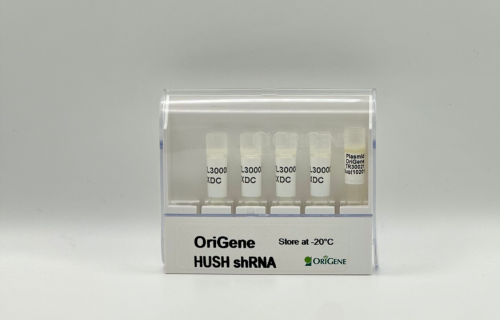
$1,013.00
2 Weeks*
Specifications
| Product Data | |
| Locus ID | 17425 |
|---|---|
| Synonyms | Mnf, AI463295, A630048H08Rik, C330006K01Rik |
| Vector | pGFP-C-shLenti |
| E. coli Selection | Chloramphenicol (34 ug/ml) |
| Mammalian Cell Selection | Puromycin |
| Format | Lentiviral plasmids |
| Components | Foxk1 - Mouse, 4 unique 29mer shRNA constructs in lentiviral GFP vector(Gene ID = 17425). 5µg purified plasmid DNA per construct29-mer scrambled shRNA cassette in pGFP-C-shLenti Vector, TR30021, included for free. |
| RefSeq | NM_010812, NM_199068, NM_199068.1, NM_199068.2, BC002273, BC060238, BC156273 |
| UniProt ID | P42128 |
| Summary | Transcriptional regulator involved in different processes such as glucose metabolism, aerobic glycolysis, muscle cell differentiation and autophagy (PubMed:25402684, PubMed:29861159, PubMed:30700909). Recognizes and binds the forkhead DNA sequence motif (5'-GTAAACA-3') and can both act as a transcription activator or repressor, depending on the context (PubMed:25402684, PubMed:29861159, PubMed:30700909). Together with FOXK2, acts as a key regulator of metabolic reprogramming towards aerobic glycolysis, a process in which glucose is converted to lactate in the presence of oxygen (PubMed:30700909). Acts by promoting expression of enzymes for glycolysis (such as hexokinase-2 (HK2), phosphofructokinase, pyruvate kinase (PKLR) and lactate dehydrogenase), while suppressing further oxidation of pyruvate in the mitochondria by up-regulating pyruvate dehydrogenase kinases PDK1 and PDK4 (PubMed:30700909). Probably plays a role in gluconeogenesis during overnight fasting, when lactate from white adipose tissue and muscle is the main substrate (PubMed:30700909). Involved in mTORC1-mediated metabolic reprogramming: in response to mTORC1 signaling, translocates into the nucleus and regulates the expression of genes associated with glycolysis and downstream anabolic pathways, such as HIF1A, thereby regulating glucose metabolism (PubMed:29861159). Together with FOXK2, acts as a negative regulator of autophagy in skeletal muscle: in response to starvation, enters the nucleus, binds the promoters of autophagy genes and represses their expression, preventing proteolysis of skeletal muscle proteins (PubMed:25402684). Acts as a transcriptional regulator of the myogenic progenitor cell population in skeletal muscle (PubMed:8007964, PubMed:9271401, PubMed:12446708, PubMed:22956541). Binds to the upstream enhancer region (CCAC box) of myoglobin (MB) gene, regulating the myogenic progenitor cell population (PubMed:8007964, PubMed:9271401). Promotes muscle progenitor cell proliferation by repressing the transcriptional activity of FOXO4, thereby inhibiting myogenic differentiation (PubMed:12446708, PubMed:22956541). Involved in remodeling processes of adult muscles that occur in response to physiological stimuli (PubMed:9271401, PubMed:22956541). Required to correct temporal orchestration of molecular and cellular events necessary for muscle repair (PubMed:10792059). Represses myogenic differentiation by inhibiting MEFC activity (PubMed:22956541). Positively regulates Wnt/beta-catenin signaling by translocating DVL into the nucleus (By similarity). Reduces virus replication, probably by binding the interferon stimulated response element (ISRE) to promote antiviral gene expression (By similarity).UniProtKB/Swiss-Prot Function |
| shRNA Design | These shRNA constructs were designed against multiple splice variants at this gene locus. To be certain that your variant of interest is targeted, please contact techsupport@origene.com. If you need a special design or shRNA sequence, please utilize our custom shRNA service. |
| Storage | Store at -20°C |
| Shipping | Ambient |
Reviews


Documents
Resources
Citations
FOXK1 and FOXK2 regulate aerobic glycolysis
Sukonina, Ma, Zhang et al
Nature (2019) 566 (7743), 279-283 DOI: 10.1038/s41586-019-0900-5
Sukonina, Ma, Zhang et al
Nature (2019) 566 (7743), 279-283 DOI: 10.1038/s41586-019-0900-5
AI Summary: OriGene’s pRS vector was used to clone shRNAs for stable knockdown of mouse Foxk1 and Foxk2, enabling the authors to study the functional effects of reducing these genes on cellular metabolism.
Snippet: Full-length human FOXK1 (NM_001037165.1) and FOXK2 (NM_004514.3) with C-terminal triple Flag-tag (3×Flag) were created in pcDNA3.1/Hygro(+)vector and subcloned into retroviral pBabe-puro, pRetroXTRE3G and lentiviral p156RRLsinPPTCAG-PRE or pLVXpuro vectors for constitutive or doxycycline-inducible expression of proteins. For stable knockdown of mouse Foxk1 and Foxk2, two independent shRNAs for each gene were cloned into a retroviral pRS vector (OriGene)
Showing 1-1 of 1 papers.
Powered by BizGenius
*Delivery time may vary from web posted schedule. Occasional delays may occur due to unforeseen
complexities in the preparation of your product. International customers may expect an additional 1-2 weeks
in shipping.
Related Products
- Price:
- Actual Price:
Welcome to OriGene AI!
I'm your AI-powered guide to everything OriGene.
Ask me anything:
- Product specs
- Ordering help
- Technical questions
- How to find exactly what your experiment needs
Prefer a live agent? Connect with us by clicking the green chat icon, as seen in the image below or email our team at custsupport@origene.com.
