
PTEN Human shRNA Plasmid Kit (Locus ID 5728)
SKU
TL320498
PTEN - Human, 4 unique 29mer shRNA constructs in lentiviral GFP vector, 5µg of each construct provided

$1,013.00
In Stock*
Specifications
| Product Data | |
| Locus ID | 5728 |
|---|---|
| Synonyms | 10q23del; BZS; CWS1; DEC; GLM2; MHAM; MMAC1; PTEN1; PTENbeta; TEP1 |
| Vector | pGFP-C-shLenti |
| E. coli Selection | Chloramphenicol (34 ug/ml) |
| Mammalian Cell Selection | Puromycin |
| Format | Lentiviral plasmids |
| Components | PTEN - Human, 4 unique 29mer shRNA constructs in lentiviral GFP vector(Gene ID = 5728). 5µg purified plasmid DNA per construct29-mer scrambled shRNA cassette in pGFP-C-shLenti Vector, TR30021, included for free. |
| RefSeq | NM_000314, NM_001304717, NM_001304718, NM_000314.1, NM_000314.2, NM_000314.3, NM_000314.4, NM_000314.5, NM_000314.6, BC005821, NM_000314.7 |
| UniProt ID | P60484 |
| Summary | This gene was identified as a tumor suppressor that is mutated in a large number of cancers at high frequency. The protein encoded by this gene is a phosphatidylinositol-3,4,5-trisphosphate 3-phosphatase. It contains a tensin like domain as well as a catalytic domain similar to that of the dual specificity protein tyrosine phosphatases. Unlike most of the protein tyrosine phosphatases, this protein preferentially dephosphorylates phosphoinositide substrates. It negatively regulates intracellular levels of phosphatidylinositol-3,4,5-trisphosphate in cells and functions as a tumor suppressor by negatively regulating AKT/PKB signaling pathway. The use of a non-canonical (CUG) upstream initiation site produces a longer isoform that initiates translation with a leucine, and is thought to be preferentially associated with the mitochondrial inner membrane. This longer isoform may help regulate energy metabolism in the mitochondria. A pseudogene of this gene is found on chromosome 9. Alternative splicing and the use of multiple translation start codons results in multiple transcript variants encoding different isoforms. provided by RefSeq, Feb 2015 |
| shRNA Design | These shRNA constructs were designed against multiple splice variants at this gene locus. To be certain that your variant of interest is targeted, please contact techsupport@origene.com. If you need a special design or shRNA sequence, please utilize our custom shRNA service. |
| Storage | Store at -20°C |
| Shipping | Ambient |
Reviews


Documents
Resources
Citations
mTORC2-Nav1.2 signaling drives early hyperexcitability in Alzheimer's disease mouse model
Dvorak, Noebels
Channels (Austin) (2026) 20 (1), 2687246 DOI: 10.1080/19336950.2026.2687246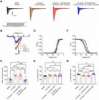
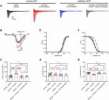
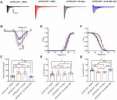
Dvorak, Noebels
Channels (Austin) (2026) 20 (1), 2687246 DOI: 10.1080/19336950.2026.2687246
AI Summary: OriGene products, specifically the Rictor shRNA construct with GFP reporter (catalog number TG307650) and a control shRNA with GFP reporter, were used in this study to selectively knock down Rictor expression and investigate the role of mTORC2 signaling in neuronal hyperexcitability in an Alzheimer's disease mouse model.
Snippet: and has a GFP reporter was purchased from OriGene (Rockville, MD, USA;catalog and has a GFP reporter was purchased from Origene (Catalog number TL320498), as;ercially available and previously validated [43] short hairpin that selectively and efficiently knocks down Rictor and has a GFP reporter was purchased from OriGene (Rockville, MD, USA;catalog number TG307650), as well as a control short hairpin with a GFP reporter. To knockdown PTEN, a commercially available and previously validated [;- and has a GFP reporter was purchased from OriGene (Rockville, MD, USA
PTEN is a predictive biomarker of trastuzumab resistance and prognostic factor in HER2-overexpressing gastroesophageal adenocarcinoma
Yokoyama, Hisamori, Deguchi et al
Sci Rep (2021) 11 (1), 9013 DOI: 10.1038/s41598-021-88331-3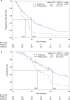
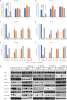
Yokoyama, Hisamori, Deguchi et al
Sci Rep (2021) 11 (1), 9013 DOI: 10.1038/s41598-021-88331-3
Cited by 17
AI Summary: OriGene products contributed to this study by providing the PTEN shRNA (OriGene, TL309007) used for PTEN knockdown in HER2-GEA cell lines, enabling the investigation of PTEN’s role in trastuzumab resistance.
PTEN is a Predictive Biomarker of Trastuzumab Resistance and Prognostic Factor in HER2-overexpressing Gastroesophageal Adenocarcinoma
Yokoyama, Hisamori, Deguchi et al
Scientific Reports (2021) 11 (1) DOI: 10.1038/s41598-021-88331-3
Yokoyama, Hisamori, Deguchi et al
Scientific Reports (2021) 11 (1) DOI: 10.1038/s41598-021-88331-3
Cited by 17
Clinical and functional characterization of CXCR1/CXCR2 biology in the relapse and radiotherapy resistance of primary PTEN-deficient prostate carcinoma
Armstrong, Coulter, Ong et al
NAR Cancer (2020) 2 (3), zcaa012 DOI: 10.1093/narcan/zcaa012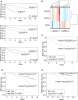
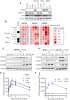
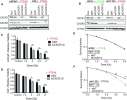
Armstrong, Coulter, Ong et al
NAR Cancer (2020) 2 (3), zcaa012 DOI: 10.1093/narcan/zcaa012
Cited by 20
AI Summary: In this study, OriGene’s CXCR1 (RC210727) and CXCR2 (RC211216) overexpression plasmids were used to functionally characterize the role of these chemokine receptors in PTEN-deficient prostate cancer models, helping to demonstrate their contribution to radiotherapy resistance and disease progression.
PPARgamma agonists sensitize PTEN-deficient resistant lung cancer cells to EGFR tyrosine kinase inhibitors by inducing autophagy
To, Wu, Loong
Eur. J. Pharmacol. (2018) 823, 19-26 DOI: 10.1016/j.ejphar.2018.01.036
To, Wu, Loong
Eur. J. Pharmacol. (2018) 823, 19-26 DOI: 10.1016/j.ejphar.2018.01.036
AI Summary: OriGene contributed to this study by providing the shRNA plasmid for PTEN, which was used to generate PTEN-deficient lung cancer cell models for investigating mechanisms of drug resistance and the effects of PPARγ agonists.
Snippet: The ATG5 Silencer Pre-designed siRNA and Silencer Negative Control siRNA were purchased from Ambion (Austin, TX, USA). The shRNA plasmid for PTEN was obtained from OriGene (Rockville, MD, USA). 2.2. Cell culture
Showing 1-5 of 5 papers.
Powered by BizGenius
*Delivery time may vary from web posted schedule. Occasional delays may occur due to unforeseen
complexities in the preparation of your product. International customers may expect an additional 1-2 weeks
in shipping.
Related Products
- Price:
- Actual Price:
Welcome to OriGene AI!
I'm your AI-powered guide to everything OriGene.
Ask me anything:
- Product specs
- Ordering help
- Technical questions
- How to find exactly what your experiment needs
Prefer a live agent? Connect with us by clicking the green chat icon, as seen in the image below or email our team at custsupport@origene.com.
