
Tnfaip3 Mouse shRNA Plasmid (Locus ID 21929)
SKU
TG502299
Tnfaip3 - Mouse, 4 unique 29mer shRNA constructs in retroviral GFP vector, 5µg of each construct provided

$883.00
In Stock*
Specifications
| Product Data | |
| Locus ID | 21929 |
|---|---|
| Synonyms | A20; Tnfip3 |
| Vector | pGFP-V-RS |
| E. coli Selection | Kanamycin |
| Mammalian Cell Selection | Puromycin |
| Format | Retroviral plasmids |
| Components | Tnfaip3 - Mouse, 4 unique 29mer shRNA constructs in retroviral GFP vector(Gene ID = 21929). 5µg purified plasmid DNA per construct29-mer scrambled shRNA cassette in pGFP-V-RS Vector, TR30013, included for free. |
| RefSeq | BC054806, BC060221, NM_001166402, NM_009397, NM_009397.1, NM_009397.2, NM_009397.3, NM_001166402.1, BC032257, BC050259 |
| UniProt ID | Q60769 |
| Summary | Ubiquitin-editing enzyme that contains both ubiquitin ligase and deubiquitinase activities. Involved in immune and inflammatory responses signaled by cytokines, such as TNF-alpha and IL-1 beta, or pathogens via Toll-like receptors (TLRs) through terminating NF-kappa-B activity. Essential component of a ubiquitin-editing protein complex, comprising also RNF11, ITCH and TAX1BP1, that ensures the transient nature of inflammatory signaling pathways. In cooperation with TAX1BP1 promotes disassembly of E2-E3 ubiquitin protein ligase complexes in IL-1R and TNFR-1 pathways; affected are at least E3 ligases TRAF6, TRAF2 and BIRC2, and E2 ubiquitin-conjugating enzymes UBE2N and UBE2D3. In cooperation with TAX1BP1 promotes ubiquitination of UBE2N and proteasomal degradation of UBE2N and UBE2D3. Upon TNF stimulation, deubiquitinates 'Lys-63'-polyubiquitin chains on RIPK1 and catalyzes the formation of 'Lys-48'-polyubiquitin chains. This leads to RIPK1 proteasomal degradation and consequently termination of the TNF- or LPS-mediated activation of NF-kappa-B. Deubiquitinates TRAF6 probably acting on 'Lys-63'-linked polyubiquitin. Upon T-cell receptor (TCR)-mediated T-cell activation, deubiquitinates 'Lys-63'-polyubiquitin chains on MALT1 thereby mediating disassociation of the CBM (CARD11:BCL10:MALT1) and IKK complexes and preventing sustained IKK activation. Deubiquitinates NEMO/IKBKG; the function is facilitated by TNIP1 and leads to inhibition of NF-kappa-B activation. Upon stimulation by bacterial peptidoglycans, probably deubiquitinates RIPK2. Can also inhibit I-kappa-B-kinase (IKK) through a non-catalytic mechanism which involves polyubiquitin; polyubiquitin promotes association with IKBKG and prevents IKK MAP3K7-mediated phosphorylation. Targets TRAF2 for lysosomal degradation. In vitro able to deubiquitinate 'Lys-11'-, 'Lys-48'- and 'Lys-63' polyubiquitin chains. Inhibitor of programmed cell death. Has a role in the function of the lymphoid system. Required for LPS-induced production of proinflammatory cytokines and IFN beta in LPS-tolerized macrophages.UniProtKB/Swiss-Prot Function |
| shRNA Design | These shRNA constructs were designed against multiple splice variants at this gene locus. To be certain that your variant of interest is targeted, please contact techsupport@origene.com. If you need a special design or shRNA sequence, please utilize our custom shRNA service. |
| Storage | Store at -20°C |
| Shipping | Ambient |
Reviews


Documents
Resources
Citations
Downregulation of A20 Expression Increases the Immune Response and Apoptosis and Reduces Virus Production in Cells Infected by the Human Respiratory Syncytial Virus
Martín-Vicente, González-Sanz, Cuesta et al
Vaccines (Basel) (2020) 8 (1) DOI: 10.3390/vaccines8010100
Martín-Vicente, González-Sanz, Cuesta et al
Vaccines (Basel) (2020) 8 (1) DOI: 10.3390/vaccines8010100
Cited by 24
TNFAIP3 maintains intestinal barrier function and supports epithelial cell tight junctions
Kolodziej, Lodolce, Chang et al
PLoS ONE (2011) 6 (10), e26352 DOI: 10.1371/journal.pone.0026352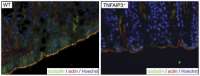
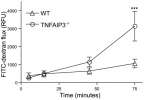
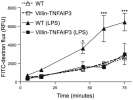
Kolodziej, Lodolce, Chang et al
PLoS ONE (2011) 6 (10), e26352 DOI: 10.1371/journal.pone.0026352
Cited by 75
AI Summary: OriGene products contributed to this study by providing the human TNFAIP3 cDNA clone (OriGene, SC322595) used for overexpression experiments in cultured intestinal epithelial cells to assess the role of TNFAIP3 in regulating tight junction dynamics and barrier function.
Showing 1-2 of 2 papers.
Powered by BizGenius
*Delivery time may vary from web posted schedule. Occasional delays may occur due to unforeseen
complexities in the preparation of your product. International customers may expect an additional 1-2 weeks
in shipping.
Related Products
- Price:
- Actual Price:
Welcome to OriGene AI!
I'm your AI-powered guide to everything OriGene.
Ask me anything:
- Product specs
- Ordering help
- Technical questions
- How to find exactly what your experiment needs
Prefer a live agent? Connect with us by clicking the green chat icon, as seen in the image below or email our team at custsupport@origene.com.
