
pGFP-V-RS shRNA Vector

$670.00
In Stock*
Specifications
| Product Data | |
| Control Type | Negative |
|---|---|
| Fluorescent Label | GFP |
| Mammalian Cell Selection | Puromycin |
| Viral Packaging | Retroviral |
| Features |
|
| Download Vector Sequence | |
| Components | 1 vial of 5 ug lyophilized pGFP-V-RS shRNA cloning vector |
| Quality Control | This vector was sequence verified and functionally validated. |
| Storage | Store the vector DNA at -20°C. |
| Stability | Vector DNA is stable for at least one year from date of receipt when stored at -20°C. |
| Shipping | Blue Ice |
Reviews


Documents
| Product Manuals |
| FAQs |
| SDS |
Resources
Citations
Abnormal purinergic signaling contributes to development of renal cysts in autosomal dominant polycystic kidney disease
Ivanov, Wu, Crocetti et al
Purinergic Signal (2026) 22 (1), 9 DOI: 10.1007/s11302-025-10127-1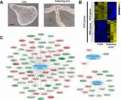
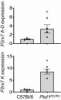
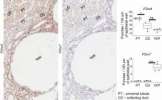
Ivanov, Wu, Crocetti et al
Purinergic Signal (2026) 22 (1), 9 DOI: 10.1007/s11302-025-10127-1
Cited by 1
AI Summary: OriGene’s mPanx1 and mGFP cDNA plasmids were used to transfect cells for patch-clamp experiments, enabling the study of pannexin-1-dependent currents and their role in renal cyst development.
Snippet: ype="bibr" rid="CR31">31]. Briefly, 0.5 µg mPanx1 and 0.5 µg mGFP cDNA plasmids were transfected into the cells, seeded onto glass chips with Lipofectamine 3000 (#MR206795, #TR30007, Origene, and #L3000-008, Invitrogen). One to three days later, currents were acquired and subsequently analyzed with an Axopatch 200B amplifier (Axon Instruments, CA, USA) and Bessel filter LPF-8 at 2
Mosaic expression of SLC35A2 pathogenetic variants impairs neuronal migration and dendritogenesis in the developing cortex
Falace, Corbières, Silvagnoli et al
Hum Mol Genet (2025)
Falace, Corbières, Silvagnoli et al
Hum Mol Genet (2025)
Cited by 3
AI Summary: OriGene products contributed to this study by providing shRNA targeting Rattus norvegicus Slc35a2 mRNA and a scramble control, both cloned into the pGFP-V-RS vector (TR30007), which were used to investigate the effects of SLC35A2 gene silencing on neuronal development.
Snippet: We purchased sh-RNA targeting the coding sequence of Rattus norvegicus Slc35a2 mRNA (NM_005660.3) and scramble control cloned into pGFP-V-RS vector (TR30007) from Origene
Aquaporin 5 expression regulates MDA-MB-231 spheroid multicellular invasion
Smith, Hengen, Abraham et al
Am J Physiol Cell Physiol (2025)
Smith, Hengen, Abraham et al
Am J Physiol Cell Physiol (2025)
Cited by 1
Snippet: 107 Scrambled control, AQP5 knockdown, and AQP5 overexpression vectors were purchased from 108 OriGene (TR30007, TL314710V, and RC206069L4V, respectively)
Aquaporin 5 transfer via MDA-MB-231 cell extracellular vesicles increases recipient endothelial cell invasion
Smith, Moses, Brandon et al
Biochem Biophys Res Commun (2025) 777, 152257 DOI: 10.1016/j.bbrc.2025.152257
Smith, Moses, Brandon et al
Biochem Biophys Res Commun (2025) 777, 152257 DOI: 10.1016/j.bbrc.2025.152257
Cited by 1
AI Summary: OriGene products—including the scrambled control vector (TR30007), AQP5 knockdown vector (TL314710V), and AQP5 overexpression vector (RC206069L4V)—were used to generate MDA-MB-231 cell lines with varying AQP5 expression, enabling the study of AQP5’s transfer via extracellular vesicles and its impact on endothelial cell invasion.
Snippet: MDA-MB-231 cells with stably overexpressed or knocked down AQP5 were established. Scrambled control, AQP5 knockdown, and AQP5 overexpression vectors were purchased from OriGene (TR30007, TL314710V, RC206069L4V, respectively)
Next-Generation Point-of-Care Cancer Detection: Bioelectronic Mapping of the Malignancy Spectrum
Habli
Thesis (2025)
Habli
Thesis (2025)
AI Summary: OriGene Technologies' shRNA constructs targeting Cx43 (cat#: TR30007) were used in this study to knock down Cx43 expression and investigate its role in cancer detection assays.
Snippet: he puromycin resistance gene and an inserted shRNA (one of four different constructs) directed against Cx43 (OriGene Technologies, cat#: TR30007, Rockville, MD, USA) using the Lipofectamine 2000 reagent (Invitrogen, Carlsbad, CA, USA) according to the manufacturer’s instructions. The transf
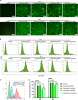
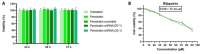
Intracellular delivery of antiviral shRNA using penetratin-based complexes effectively inhibits respiratory syncytial virus replication and host cell apoptosis
Faghirabadi, Abuei, Malekzadeh et al
Virol J (2024) 21 (1), 235 DOI: 10.1186/s12985-024-02519-3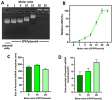
Faghirabadi, Abuei, Malekzadeh et al
Virol J (2024) 21 (1), 235 DOI: 10.1186/s12985-024-02519-3
Cited by 9
AI Summary: OriGene’s pGFP-V-RS expression vector (CAT#: TR30007) was used to clone and express the antiviral shRNA targeting the RSV F gene, enabling effective intracellular delivery and gene silencing in the study.
Snippet: CTATCTTAGT-TCAAGAGGC-ACTAAGATAGCCTTTGCTGACTGCACTGC) was synthesized. For expression in mammalian cells, the synthetic shRNA sequence was inserted into the pGFP-V-RS expression vector (CAT#: TR30007, OriGene Technologies, USA) after digestion with BamHI and HindIII, and ligated using T4 DNA ligase (Thermo Fisher Scientific, Waltham, MA, USA). This vector contains a U6 promoter for driving shRNA ex
Showing 1-6 of 35 papers.
Powered by BizGenius
*Delivery time may vary from web posted schedule. Occasional delays may occur due to unforeseen
complexities in the preparation of your product. International customers may expect an additional 1-2 weeks
in shipping.
Related Products
- Price:
- Actual Price:
Welcome to OriGene AI!
I'm your AI-powered guide to everything OriGene.
Ask me anything:
- Product specs
- Ordering help
- Technical questions
- How to find exactly what your experiment needs
Prefer a live agent? Connect with us by clicking the green chat icon, as seen in the image below or email our team at custsupport@origene.com.
