
Pdcd1 (NM_008798) Mouse Recombinant Protein
SKU
TP527347
Purified recombinant protein of Mouse programmed cell death 1 (Pdcd1), with C-terminal MYC/DDK tag, expressed in HEK293T cells, 20ug

$1,020.00
4 Weeks*
Specifications
| Product Data | |
| Species | Mouse |
|---|---|
| Expression Host | HEK293 |
| Expression cDNA Clone or AA Sequence | |
| Tag | C-MYC/DDK |
| Predicted MW | 31.8 kDa |
| Concentration | >0.05 µg/µL as determined by microplate BCA method |
| Purity | > 80% as determined by SDS-PAGE and Coomassie blue staining |
| Buffer | 25 mM Tris-HCl, 100 mM glycine, pH 7.3, 10% glycerol |
| Note | For testing in cell culture applications, please filter before use. Note that you may experience some loss of protein during the filtration process. |
| Storage | Store at -80°C after receiving vials. |
| Stability | Stable for 12 months from the date of receipt of the product under proper storage and handling conditions. Avoid repeated freeze-thaw cycles. |
| Shipping | Dry Ice |
| Reference Data | |
| RefSeq | NP_032824 |
| Locus ID | 18566 |
| UniProt ID | Q02242 |
| Cytogenetics | 1 D |
| RefSeq Size | 1972 |
| RefSeq ORF | 867 |
| Synonyms | Ly101; PD-1; Pdc1 |
| Summary | Inhibitory receptor on antigen activated T-cells that plays a critical role in induction and maintenance of immune tolerance to self (PubMed:10485649, PubMed:11698646, PubMed:11209085, PubMed:21300912). Delivers inhibitory signals upon binding to ligands, such as CD274/PDCD1L1 and CD273/PDCD1LG2 (PubMed:11015443, PubMed:11224527, PubMed:22641383, PubMed:18287011, PubMed:18641123). Following T-cell receptor (TCR) engagement, PDCD1 associates with CD3-TCR in the immunological synapse and directly inhibits T-cell activation (PubMed:22641383). Suppresses T-cell activation through the recruitment of PTPN11/SHP-2: following ligand-binding, PDCD1 is phosphorylated within the ITSM motif, leading to the recruitment of the protein tyrosine phosphatase PTPN11/SHP-2 that mediates dephosphorylation of key TCR proximal signaling molecules, such as ZAP70, PRKCQ/PKCtheta and CD247/CD3zeta (PubMed:11698646, PubMed:22641383). The PDCD1-mediated inhibitory pathway is exploited by tumors to attenuate anti-tumor immunity and facilitate tumor survival (By similarity).UniProtKB/Swiss-Prot Function |
| Protein Categories | ADC Targets, Allergies and autoimmune diseases, CD Markers, Intracellular Proteins, Membrane Proteins, Nervous system Diseases |
Reviews


Documents
| FAQs |
| SDS |
Resources
| Recombinant Protein Resources |
Other "Pdcd1" proteins (2)
| SKU | Description | Size | Price | |
|---|---|---|---|---|
| TP700257 | Purified recombinant protein of mouse programmed cell death 1 (PD-1 / PDCD1), with C-terminal DDK/His tag, expressed in human cells, 20 µg | 20 ug |
$900.00
|
|
| TP700258 | Purified recombinant protein of mouse programmed cell death 1 (PD-1 / PDCD1), with C-terminal Fc tag, expressed in human cells, 20 µg | 20 ug |
$900.00
|
|
Citations
When killers become thieves: Trogocytosed PD-1 inhibits NK cells in cancer
Hasim, Marotel, Hodgins et al
Sci Adv (2022) 8 (15), eabj3286 DOI: 10.1126/sciadv.abj3286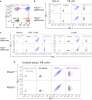
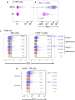
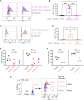
Hasim, Marotel, Hodgins et al
Sci Adv (2022) 8 (15), eabj3286 DOI: 10.1126/sciadv.abj3286
Cited by 105
AI Summary: OriGene products, specifically the mouse Pdcd1 open reading frame (catalog number NM_008798) and the lentiviral vector (catalog number PS100071), were used to generate PD-1–GFP fusion proteins, enabling the study of PD-1 transfer and function in immune cells within the research.
Snippet: …To generate PD-1–GFP fusion protein, the full-length open reading frame of mouse Pdcd1 (Origene Technologies Inc., Rockland, MD, USA;catalog number NM_008798) was subcloned as an Sgf I/Mlu I fragment into the corresponding sites of a lentiviral vector (Origene, catalog number PS100071);To generate PD-1–GFP fusion protein, the full-length open reading frame of mouse Pdcd1 (Origene Technologies Inc., Rockland, MD, USA;catalog number NM_008798) was subcloned as an Sgf I/Mlu I fragment into the corresponding sites of a lentiviral vector (Origene, catalog number PS100071) such that cells transduced with the resulting
Showing 1-1 of 1 papers.
Powered by BizGenius
*Delivery time may vary from web posted schedule. Occasional delays may occur due to unforeseen
complexities in the preparation of your product. International customers may expect an additional 1-2 weeks
in shipping.
Related Products
- Price:
- Actual Price:
Welcome to OriGene AI!
I'm your AI-powered guide to everything OriGene.
Ask me anything:
- Product specs
- Ordering help
- Technical questions
- How to find exactly what your experiment needs
Prefer a live agent? Connect with us by clicking the green chat icon, as seen in the image below or email our team at custsupport@origene.com.
