
p21 (CDKN1A) (NM_078467) Human Recombinant Protein

SKU
TP301765
Recombinant protein of human cyclin-dependent kinase inhibitor 1A (p21, Cip1) (CDKN1A), transcript variant 2, 20 µg

$737.00
In Stock*
Specifications
| Product Data | |
| Species | Human |
|---|---|
| Expression Host | HEK293 |
| Expression cDNA Clone or AA Sequence | |
| Tag | C-Myc/DDK |
| Predicted MW | 17.9 kDa |
| Concentration | >0.05 µg/µL as determined by microplate BCA method |
| Purity | > 80% as determined by SDS-PAGE and Coomassie blue staining |
| Buffer | 25 mM Tris-HCl, 100 mM glycine, pH 7.3, 10% glycerol |
| Preparation | Recombinant protein was captured through anti-DDK affinity column followed by conventional chromatography steps. |
| Note | For testing in cell culture applications, please filter before use. Note that you may experience some loss of protein during the filtration process. |
| Storage | Store at -80°C. |
| Stability | Stable for 12 months from the date of receipt of the product under proper storage and handling conditions. Avoid repeated freeze-thaw cycles. |
| Shipping | Dry Ice |
| Reference Data | |
| RefSeq | NP_510867 |
| Locus ID | 1026 |
| UniProt ID | P38936 |
| Cytogenetics | 6p21.2 |
| RefSeq Size | 2122 |
| RefSeq ORF | 492 |
| Synonyms | CAP20; CDKN1; CIP1; MDA-6; P21; p21CIP1; SDI1; WAF1 |
| Summary | This gene encodes a potent cyclin-dependent kinase inhibitor. The encoded protein binds to and inhibits the activity of cyclin-cyclin-dependent kinase2 or -cyclin-dependent kinase4 complexes, and thus functions as a regulator of cell cycle progression at G1. The expression of this gene is tightly controlled by the tumor suppressor protein p53, through which this protein mediates the p53-dependent cell cycle G1 phase arrest in response to a variety of stress stimuli. This protein can interact with proliferating cell nuclear antigen, a DNA polymerase accessory factor, and plays a regulatory role in S phase DNA replication and DNA damage repair. This protein was reported to be specifically cleaved by CASP3-like caspases, which thus leads to a dramatic activation of cyclin-dependent kinase2, and may be instrumental in the execution of apoptosis following caspase activation. Mice that lack this gene have the ability to regenerate damaged or missing tissue. Multiple alternatively spliced variants have been found for this gene. provided by RefSeq, Sep 2015 |
| Protein Categories | Cancer: Gynecologic, Growth Factors, Intracellular Proteins |
| Protein Families | Druggable Genome |
| Protein Pathways | Bladder cancer, Cell cycle, Chronic myeloid leukemia, ErbB signaling pathway, Glioma, Melanoma, p53 signaling pathway, Pathways in cancer, Prostate cancer |
Reviews


Documents
| FAQs |
| SDS |
Resources
| Recombinant Protein Resources |
Other "p21" proteins (3)
| SKU | Description | Size | Price | |
|---|---|---|---|---|
| PH301765 | CDKN1A MS Standard C13 and N15-labeled recombinant protein (NP_510867) | 10 ug |
$3,360.00
|
|
| LC409213 | Lyophilized CDKN1A HEK293T cell transient overexpression lysate (as WB positive control) | 20 ug |
$206.00
|
|
| LY409213 | Transient overexpression lysate of cyclin-dependent kinase inhibitor 1A (p21, Cip1) (CDKN1A), transcript variant 2 (as WB positive control) | 100 ug |
$436.00
|
|
Citations
Chemoproteomics-enabled discovery of covalent RNF114-based degraders that mimic natural product function
Luo, Spradlin, Boike et al
Cell Chem Biol (2021)
Luo, Spradlin, Boike et al
Cell Chem Biol (2021)
Cited by 188
AI Summary: OriGene contributed Myc-Flag-RNF114 human recombinant protein (Cat# TP309752) and recombinant human cyclin-dependent kinase inhibitor 1A protein (Cat# TP301765) to this study, which were used to investigate and validate the activity of synthetic RNF114-based recruiter molecules for targeted protein degradation.
A cmap-enabled gene expression signature-matching approach identifies small-molecule inducers of accelerated cell senescence
Wu, Pepowski, Takahashi et al
BMC Genomics (2019) 20 (1), 290 DOI: 10.1186/s12864-019-5653-x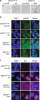
Wu, Pepowski, Takahashi et al
BMC Genomics (2019) 20 (1), 290 DOI: 10.1186/s12864-019-5653-x
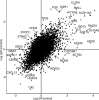
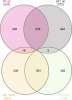
AI Summary: OriGene’s wild-type CDKN1A open reading frame (p21, OriGene NM_078467) was used to ectopically express p21 in MCF7 cells, enabling the study of gene expression changes and senescence phenotypes induced by p21 overexpression.
Snippet: To express p21 in MCF7-FUCCI, the wild-type (WT) CDKN1A open reading frame (p21, Origene NM_078467) [28] from human cDNA was PCR amplified with primers 5′CGACGGATCCATGTCAGAACCGGCTGGGGATGTCCGTCAG3′ and 5 Cached
Cyclin-dependent kinase 8 mediates chemotherapy-induced tumor-promoting paracrine activities
Porter, Farmaki, Altilia et al
Proc Natl Acad Sci U S A (2012) 109 (34), 13799-804 DOI: 10.1073/pnas.1206906109
Porter, Farmaki, Altilia et al
Proc Natl Acad Sci U S A (2012) 109 (34), 13799-804 DOI: 10.1073/pnas.1206906109
Cited by 178
AI Summary: In this paper, OriGene products—specifically the CDK8 (RC200744) and CDK19 (RC217889) expression plasmids—were used to study the roles of these kinases in chemotherapy-induced tumor-promoting activities, enabling the authors to dissect the molecular mechanisms by which CDK8 and CDK19 contribute to the paracrine effects observed after chemotherapy.
Human pituitary tumor-transforming gene 1 overexpression reinforces oncogene-induced senescence through CXCR2/p21 signaling in breast cancer cells
Ruan, Liao, Lua et al
Breast Cancer Res. (2012) 14 (4), R106 DOI: 10.1186/bcr3226
Ruan, Liao, Lua et al
Breast Cancer Res. (2012) 14 (4), R106 DOI: 10.1186/bcr3226
Cited by 36
AI Summary: OriGene products contributed to this study by providing the CXCR2 expression plasmid and specific shRNA reagents targeting p53 (TI379448, TI379451) and p21 (TI321870, TI321871), which were essential for manipulating gene expression to investigate the molecular mechanisms of hPTTG1-induced senescence in breast cancer cells.
KLF4 inhibition of lung cancer cell invasion by suppression of SPARC expression
Zhou, Hofstetter, He et al
Cancer Biol Ther (2010) 9 (7), 507-13 DOI: 10.4161/cbt.9.7.11106

Zhou, Hofstetter, He et al
Cancer Biol Ther (2010) 9 (7), 507-13 DOI: 10.4161/cbt.9.7.11106
Cited by 79
AI Summary: In this study, OriGene products—specifically the human KLF4 cDNA clone (OriGene, SC118164) and human SPARC cDNA clone (OriGene, SC31928)—were used to ectopically express KLF4 and SPARC in lung cancer cell lines, enabling the authors to investigate how KLF4 suppresses lung cancer cell invasion by downregulating SPARC expression.
Showing 1-5 of 5 papers.
Powered by BizGenius
*Delivery time may vary from web posted schedule. Occasional delays may occur due to unforeseen
complexities in the preparation of your product. International customers may expect an additional 1-2 weeks
in shipping.
Related Products
- Price:
- Actual Price:
Welcome to OriGene AI!
I'm your AI-powered guide to everything OriGene.
Ask me anything:
- Product specs
- Ordering help
- Technical questions
- How to find exactly what your experiment needs
Prefer a live agent? Connect with us by clicking the green chat icon, as seen in the image below or email our team at custsupport@origene.com.
