
CYP24A1 Human qPCR Primer Pair (NM_000782)

$150.00
3 Days*
Specifications
| Product Data | |
| Locus ID | 1591 |
|---|---|
| Forward Sequence | GCTTCTCCAGAAGAATGCAGGG |
| Reverse Sequence | CAGACCTTGGTGTTGAGGCTCT |
| ACCN | NM_000782, NM_000782.1, NM_000782.2, NM_000782.3, NM_000782.4, BC109083, BC109084, BI491491, BM928702, BU662901, NM_000782.5 |
| UniProt ID | Q07973 |
| Synonyms | CP24; CYP24; HCAI; HCINF1; P450-CC24 |
| Components | 1 vial of lyophilized qSTAR qPCR primer mix (1 nmol each primer, sufficient for 200 reactions). Before use, reconstitute the primer mix in 200 µl dH2O to make a final concentration of 10 µM. |
| Quality Control | The primer mix has been tested to generate satisfactory qPCR data on ABI 7900HT by using the following PCR program: Stage 1: Activation: 50 °C for 2 min; Stage 2: pre-soak:95 °C for 10 min; Stage 3: Denaturation: 95 °C for 15 sec, Annealing: 60°C for 1 min; Stage 4: Melting curve: 95°C for 15 sec, 60°C for 15 sec, 95°C for 15 sec. |
| Storage | Store at -20°C. |
| Stability | The primer mix is stable for one year from date of shipping. |
| Shipping | Ambient |
Reviews


Documents
| Product Manuals |
| FAQs |
Resources
Citations
Inhibition of HAS2 and hyaluronic acid production by 1,25-Dihydroxyvitamin D3 in breast cancer
Narvaez, LaPorta, Robilotto et al
Oncotarget (2020) 11 (30), 2889-2905 DOI: 10.18632/oncotarget.27587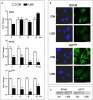
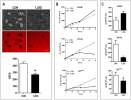
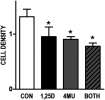
Narvaez, LaPorta, Robilotto et al
Oncotarget (2020) 11 (30), 2889-2905 DOI: 10.18632/oncotarget.27587
Cited by 16
AI Summary: In this study, OriGene products including the HAS2 (OriGene, Cat# NM_005328) and SNAIL (OriGene, Cat# SC119922) expression plasmids were used to manipulate gene expression in breast cancer cell models, enabling the authors to investigate how 1,25-Dihydroxyvitamin D3 regulates HAS2 expression and hyaluronic acid production.
Snippet: … Although the vitamin D receptor (VDR), a ligand dependent transcription factor, is required for growth regulation by vitamin D, the specific target genes that trigger these effects are unknown. Genomic profiling of murine mammary tumor cells with differential VDR expression identified 35 transcripts that were altered by the 1,25D3-VDR complex including Hyaluronan Synthase-2 (Has2). Here we confirmed that 1,25D3 reduces both HAS2 gene expression and hyaluronic acid (HA) synthesis in multiple models of breast cancer. … HAS2 expression and HA production are elevated in immortalized human mammary epithelial cells induced to undergo epithelial-mesenchymal transition (EMT) through stable expression of TGFβ, SNAIL or TWIST and in those expressing oncogenic H-RASV12, indicating that deregulation of HA production may be an early and frequent event in breast tumorigenesis. 1,25D3 also reduces HA secretion and acts additively with an HA synthesis inhibitor to slow growth of cells expressing TGFβ, SNAIL and TWIST. Analysis of mammary gland and tumors from Vdr knockout mice suggest that loss of VDR is associated with enhanced HAS2 expression and HA production in vivo. These data define a novel role for 1,25D3 and the VDR in control of HA synthesis in epithelial tissues that likely contributes to its anti-cancer actions
CYP24A1-induced vitamin D insufficiency promotes breast cancer growth
Osanai, Lee
Oncol. Rep. (2016)
Osanai, Lee
Oncol. Rep. (2016)
Cited by 48
Gene Signatures of 1,25-Dihydroxyvitamin D3 Exposure in Normal and Transformed Mammary Cells
Simmons, Beaudin, Narvaez et al
J. Cell. Biochem. (2015)
Simmons, Beaudin, Narvaez et al
J. Cell. Biochem. (2015)
Cited by 37
AI Summary: OriGene contributed primer sequences, as specified in Supplemental Table 2, which were used for gene expression analysis by qPCR to validate the effects of 1,25-dihydroxyvitamin D3 on target genes in mammary cell lines.
Snippet: Sequence Detection System (Applied Biosystems, Foster City, CA). Primer sequences were obtained from Origene and are listed in Supplemental Table 2. Data were calculated by the ΔΔCt method and normalized against 18S expression. ... Cite SaveSaving
Showing 1-3 of 3 papers.
Powered by BizGenius
*Delivery time may vary from web posted schedule. Occasional delays may occur due to unforeseen
complexities in the preparation of your product. International customers may expect an additional 1-2 weeks
in shipping.
Related Products
- Price:
- Actual Price:
Welcome to OriGene AI!
I'm your AI-powered guide to everything OriGene.
Ask me anything:
- Product specs
- Ordering help
- Technical questions
- How to find exactly what your experiment needs
Prefer a live agent? Connect with us by clicking the green chat icon, as seen in the image below or email our team at custsupport@origene.com.
