
PD-L1 (CD274) Human qPCR Template Standard (NM_014143)

$410.00
3 Days*
Specifications
| Product Data | |
| Recommended Application | Plasmid of exact quantity for transcript copy number calculation |
|---|---|
| ACCN | NM_014143 |
| UniProt ID | Q9NZQ7 |
| Synonyms | B7-H; B7H1; hPD-L1; PD-L1; PDCD1L1; PDCD1LG1; PDL1 |
| Components | 1 vial of lyophilized SybGREEN qPCR primer mix (1 nmol each primer, sufficient for 200 reactions) 1 vial lyophilized Gene Specific qPCR template standard: 50 X 10^7 copies, double-stranded DNA 1 vial containing 1 mL 10x PCR template standard dilution buffer |
| Quality Control | The kit has been tested to generate satisfactory qPCR data on ABI 7900HT |
| Storage | Store at -20°C. |
| Stability | The primer mix and template standard are stable for one year from date of shipping. |
| Shipping | Ambient |
Reviews


Documents
| Product Manuals |
| FAQs |
Resources
Citations
Hsp90 up-regulates PD-L1 to promote HPV-positive cervical cancer via HER2/PI3K/AKT pathway
Zeng, He, Li et al
Mol Med (2021) 27 (1), 130 DOI: 10.1186/s10020-021-00384-2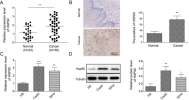
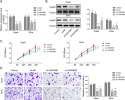
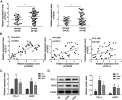
Zeng, He, Li et al
Mol Med (2021) 27 (1), 130 DOI: 10.1186/s10020-021-00384-2
Cited by 39
AI Summary: OriGene contributed to this study by providing the cDNA vector encoding human PD-L1, which was used to investigate the effects of PD-L1 overexpression in HPV16+ cervical cancer models.
Snippet: The cDNA vector encoding human PD-L1 and the negative control were from OriGene (Rockville, MD)
Control of PD-L1 expression by miR-140/142/340/383 and oncogenic activation of the OCT4-miR-18a pathway in cervical cancer
Dong, Xiong, Yu et al
Oncogene (2018)
Dong, Xiong, Yu et al
Oncogene (2018)
AI Summary: In this study, OriGene products—specifically the human PD-L1 shRNA plasmid (OriGene, #TF314508) and PD-L1 overexpression plasmid (OriGene, #RC213307)—were used to modulate PD-L1 expression in cervical cancer cells, enabling the authors to investigate the functional role and regulatory mechanisms of PD-L1 in cancer progression.
Showing 1-2 of 2 papers.
Powered by BizGenius
*Delivery time may vary from web posted schedule. Occasional delays may occur due to unforeseen
complexities in the preparation of your product. International customers may expect an additional 1-2 weeks
in shipping.
Related Products
- Price:
- Actual Price:
Welcome to OriGene AI!
I'm your AI-powered guide to everything OriGene.
Ask me anything:
- Product specs
- Ordering help
- Technical questions
- How to find exactly what your experiment needs
Prefer a live agent? Connect with us by clicking the green chat icon, as seen in the image below or email our team at custsupport@origene.com.
