
BCL2 Human qPCR Template Standard (BC027258)

$410.00
3 Days*
Specifications
| Product Data | |
| Recommended Application | Plasmid of exact quantity for transcript copy number calculation |
|---|---|
| ACCN | BC027258 |
| UniProt ID | P10415 |
| Synonyms | B-cell CLL/lymphoma 2; B-cell lymphoma protein 2; Bcl-2; OTTHUMP00000163680 |
| Components | 1 vial of lyophilized SybGREEN qPCR primer mix (1 nmol each primer, sufficient for 200 reactions) 1 vial lyophilized Gene Specific qPCR template standard: 50 X 10^7 copies, double-stranded DNA 1 vial containing 1 mL 10x PCR template standard dilution buffer |
| Quality Control | The kit has been tested to generate satisfactory qPCR data on ABI 7900HT |
| Storage | Store at -20°C. |
| Stability | The primer mix and template standard are stable for one year from date of shipping. |
| Shipping | Ambient |
Reviews


Documents
| Product Manuals |
| FAQs |
Resources
Citations
3-Bromopyruvic acid regulates glucose metabolism by targeting the c-Myc/TXNIP axis and induces mitochondria-mediated apoptosis in TNBC cells
Li, Pan, Liu et al
Exp Ther Med (2022) 24 (2), 520 DOI: 10.3892/etm.2022.11447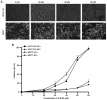
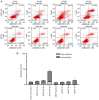
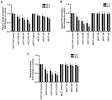
Li, Pan, Liu et al
Exp Ther Med (2022) 24 (2), 520 DOI: 10.3892/etm.2022.11447
Cited by 21
AI Summary: In this study, OriGene’s c-Myc antibody (TA802714) and TXNIP antibody (TA500494) were used for western blot analysis to assess the expression levels of key proteins involved in glucose metabolism and apoptosis in TNBC cells, helping demonstrate the molecular effects of 3-bromopyruvic acid treatment.
miR-185-5p response to usnic acid suppresses proliferation and regulating apoptosis in breast cancer cell by targeting Bcl2
Değerli, Torun, Cansaran-Duman
Biol. Res. (2020) 53 (1), 19 DOI: 10.1186/s40659-020-00285-4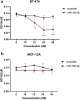
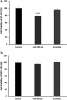
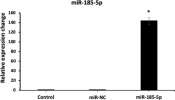
Değerli, Torun, Cansaran-Duman
Biol. Res. (2020) 53 (1), 19 DOI: 10.1186/s40659-020-00285-4
Cited by 36
AI Summary: OriGene’s luciferase reporter plasmid containing the 3′UTR of BCL2 was used to demonstrate that miR-185-5p directly targets BCL2 in breast cancer cells, helping to elucidate the mechanism by which miR-185-5p suppresses cell proliferation and induces apoptosis.
Snippet: the cells were co-transfected with miR-185-5p (Qia- gen, USA) and luciferase reporter plasmid containing 3′UTR of BCL2 (OriGene, USA) and transfected with luciferase reporter plasmid as a control group by using Lipofectamine 2000 (Thermo Fisher Scientific, USA;BT-474 cells (3 × 10⁴ cells/well) were seeded into a 96-well plate and cultured for 24 h. Subsequently, the cells were co-transfected with miR-185-5p (Qiagen, USA) and luciferase reporter plasmid containing 3′UTR of BCL2 (OriGene, USA) and transfected with luciferase reporter plasmid as a control group by using Lipofectamine 2000 (Thermo Fisher Scientific, USA) according to manufacturer’s protocol. …
FAM111B, a direct target of p53, promotes the malignant process of lung adenocarcinoma
Sun, Liu, Huang et al
Onco Targets Ther (2019) 12, 2829-2842 DOI: 10.2147/OTT.S190934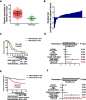
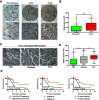
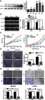
Sun, Liu, Huang et al
Onco Targets Ther (2019) 12, 2829-2842 DOI: 10.2147/OTT.S190934
AI Summary: OriGene’s BCL2 antibody (TA806639S) was used in this study to detect BCL2 protein levels by western blot, helping to elucidate the role of FAM111B in regulating apoptosis in lung adenocarcinoma cells.
Snippet: Then, membranes were washed by TBST 3 times and incubated overnight at 4°C with primary antibodies against FAM111B (PA5-58474;Invitrogen), BAG3 (AB47124;Abcam), BCL2 (TA806639S;Origene), β-actin (8H10D10;Cell Signaling Technology) at a 1:1,000
Inhibition of Bcl-2 potentiates AZD-2014-induced anti-head and neck squamous cell carcinoma cell activity
Li, Cui
Biochem. Biophys. Res. Commun. (2016)
Li, Cui
Biochem. Biophys. Res. Commun. (2016)
Cited by 12
AI Summary: OriGene contributed Bcl-2 shRNA lentiviruses (Bcl-2-shRNA-a and Bcl-2-shRNA-b) used to knock down Bcl-2 expression in SQ20B cells, enabling the study of Bcl-2’s role in resistance to AZD-2014 in head and neck squamous cell carcinoma.
Snippet: Each non-overlapping Bcl-2-shRNA (“-a/-b”, both were designed by ORIGENE, Shanghai, China) lentivirus (10 μl/ml) was added to SQ20B cells for 24 h. Afterwards, cells were cultured in fresh medium, and were subjected to puromycin (2.5 μg/ml, Sigma) selection ... Cite SaveSaving
Phospho-ΔNp63α is a key regulator of the cisplatin-induced microRNAome in cancer cells
Huang, Chuang, Hao et al
Cell Death Differ. (2011) 18 (7), 1220-30 DOI: 10.1038/cdd.2010.188
Huang, Chuang, Hao et al
Cell Death Differ. (2011) 18 (7), 1220-30 DOI: 10.1038/cdd.2010.188
Cited by 106
BCL2 inhibits cell adhesion, spreading, and motility by enhancing actin polymerization
Ke, Parron, Reece et al
Cell Res (2010) 20 (4), 458-69 DOI: 10.1038/cr.2010.21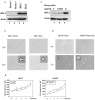
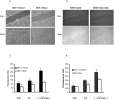
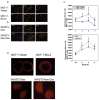
Ke, Parron, Reece et al
Cell Res (2010) 20 (4), 458-69 DOI: 10.1038/cr.2010.21
Cited by 45
AI Summary: OriGene products, specifically the BCL2 cDNA (Cat# SC1195) and BCL2 shRNA (Cat# TL309409), were used in this study to manipulate BCL2 expression levels in cell lines, enabling the authors to investigate the effects of BCL2 on cell adhesion, spreading, and motility.
Showing 1-6 of 6 papers.
Powered by BizGenius
*Delivery time may vary from web posted schedule. Occasional delays may occur due to unforeseen
complexities in the preparation of your product. International customers may expect an additional 1-2 weeks
in shipping.
Related Products
- Price:
- Actual Price:
Welcome to OriGene AI!
I'm your AI-powered guide to everything OriGene.
Ask me anything:
- Product specs
- Ordering help
- Technical questions
- How to find exactly what your experiment needs
Prefer a live agent? Connect with us by clicking the green chat icon, as seen in the image below or email our team at custsupport@origene.com.
