
RTN4RL2 (NM_178570) Human Untagged Clone

$457.00
In Stock*
Specifications
| Product Data | |
| Type | Human Untagged Clone |
|---|---|
| Target Symbol | RTN4RL2 |
| Synonyms | NgR2; NGRH1 |
| Vector | pCMV6-Entry |
| E. coli Selection | Kanamycin (25 ug/mL) |
| Mammalian Cell Selection | Neomycin |
| Sequence Data | |
| Restriction Sites | SgfI-MluI | |
| ACCN | NM_178570 |
| Insert Size | 1263 bp |
| OTI Disclaimer | Our molecular clone sequence data has been matched to the reference identifier above as a point of reference. Note that the complete sequence of our molecular clones may differ from the sequence published for this corresponding reference, e.g., by representing an alternative RNA splicing form or single nucleotide polymorphism (SNP). |
| OTI Annotation | This TrueClone is provided through our Custom Cloning Process that includes sub-cloning into OriGene's pCMV6 vector and full sequencing to provide a non-variant match to the expected reference without frameshifts, and is delivered as lyophilized plasmid DNA. |
| Components | The ORF clone is ion-exchange column purified and shipped in a 2D barcoded Matrix tube containing 10ug of transfection-ready, dried plasmid DNA (reconstitute with 100 ul of water). |
| Reconstitution Method | 1. Centrifuge at 5,000xg for 5min. 2. Carefully open the tube and add 100ul of sterile water to dissolve the DNA. 3. Close the tube and incubate for 10 minutes at room temperature. 4. Briefly vortex the tube and then do a quick spin (less than 5000xg) to concentrate the liquid at the bottom. 5. Store the suspended plasmid at -20°C. The DNA is stable for at least one year from date of shipping when stored at -20°C. |
| Note | Plasmids are not sterile. For experiments where strict sterility is required, filtration with 0.22um filter is required. |
| Shipping | Ambient |
| Reference Data | |
| RefSeq | NM_178570.2 |
| RefSeq Size | 2220 bp |
| RefSeq ORF | 1263 bp |
| Locus ID | 349667 |
| UniProt ID | Q86UN3 |
| Cytogenetics | 11q12.1 |
| Protein Families | Druggable Genome |
| MW | 46.1 kDa |
| Summary | Cell surface receptor that plays a functionally redundant role in the inhibition of neurite outgrowth mediated by MAG (By similarity). Plays a functionally redundant role in postnatal brain development. Contributes to normal axon migration across the brain midline and normal formation of the corpus callosum. Does not seem to play a significant role in regulating axon regeneration in the adult central nervous system. Protects motoneurons against apoptosis; protection against apoptosis is probably mediated by MAG (By similarity). Like other family members, plays a role in restricting the number dendritic spines and the number of synapses that are formed during brain development (PubMed:22325200). Signaling mediates activation of Rho and downstream reorganization of the actin cytoskeleton (PubMed:22325200).UniProtKB/Swiss-Prot Function |
Reviews


Documents
| Product Manuals |
| FAQs |
| SDS |
Resources
"NM_178570" in other vectors (6)
| SKU | Description | Size | Price | |
|---|---|---|---|---|
| RC217072 | RTN4RL2 (Myc-DDK-tagged)-Human reticulon 4 receptor-like 2 (RTN4RL2) | 10 ug |
$289.00
$457.00
|
|
| RC217072L1 | Lenti ORF clone of Human reticulon 4 receptor-like 2 (RTN4RL2), Myc-DDK-tagged | 10 ug |
$757.00
|
|
| RC217072L2 | Lenti ORF clone of Human reticulon 4 receptor-like 2 (RTN4RL2), mGFP tagged | 10 ug |
$757.00
|
|
| RC217072L3 | Lenti ORF clone of Human reticulon 4 receptor-like 2 (RTN4RL2), Myc-DDK-tagged | 10 ug |
$757.00
|
|
| RC217072L4 | Lenti ORF clone of Human reticulon 4 receptor-like 2 (RTN4RL2), mGFP tagged | 10 ug |
$757.00
|
|
| RG217072 | RTN4RL2 (tGFP-tagged) - Human reticulon 4 receptor-like 2 (RTN4RL2) | 10 ug |
$489.00
$657.00
|
|
Citations
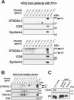
A novel sialylation pathway mediated by extracellular vesicles in aggressive prostate cancer
Bach, Hossain, Chaudhari et al
PLoS One (2025) 20 (9), e0329014 DOI: 10.1371/journal.pone.0329014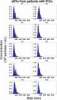
Bach, Hossain, Chaudhari et al
PLoS One (2025) 20 (9), e0329014 DOI: 10.1371/journal.pone.0329014
Cited by 4
AI Summary: OriGene products contributed to this study by providing the RTN4RL2 cDNA vector (SC310413) for Nogo-66 receptor homolog 2 (NgR2) expression and the empty vector control (PS100001), which were used to generate NgR2 and mock transfectant DU145 prostate cancer cells for functional analyses of extracellular vesicle-mediated sialylation.
Snippet: DU145 cells were transfected with a vector carrying RTN4RL2 cDNA, encoding for Nogo-66 receptor homolog 2 (NgR2) or an empty vector (Origene, SC310413 and PS100001, respectively), named as NgR2 transfectants or Mock DU145 cells, as previously described [28]. …
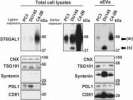
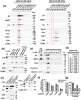
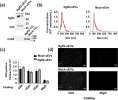
Expression of the αVβ3 integrin affects prostate cancer sEV cargo and density and promotes sEV pro-tumorigenic activity in vivo through a GPI-anchored receptor, NgR2
Verrillo, Quaglia, Shields et al
J Extracell Vesicles (2024) 13 (8), e12482 DOI: 10.1002/jev2.12482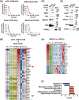
Verrillo, Quaglia, Shields et al
J Extracell Vesicles (2024) 13 (8), e12482 DOI: 10.1002/jev2.12482
Cited by 8
AI Summary: In this study, OriGene's pCMV6-Entry vector carrying RTN4RL2 (SC310413) and the empty vector (PS100001) were used to generate DU145 prostate cancer cell lines overexpressing NgR2 or as controls, enabling the authors to investigate the role of NgR2 in sEV cargo composition and pro-tumorigenic activity.
Snippet: Dharmacon/Horizon, VSC11707) and were selected using 2 μg/mL puromycin, as previously described (Quaglia et al., 2022). DU145 cells were transfected with a pCMV6‐Entry vector carrying RTN4RL2 (Origene, SC310413) or an empty vector (Origene, PS100001), designated as NgR2‐DU145 or Mock‐DU145 cells, as previously described (Quaglia et al., 2022). Briefly, cells were plated at 5 × 10⁵
Targeting the αVβ3/NgR2 pathway in neuroendocrine prostate cancer
Testa, Quaglia, Naranjo et al
Matrix Biol (2023) 124, 49-62 DOI: 10.1016/j.matbio.2023.11.003
Testa, Quaglia, Naranjo et al
Matrix Biol (2023) 124, 49-62 DOI: 10.1016/j.matbio.2023.11.003
Cited by 12
AI Summary: OriGene products pCMV6-Entry vector carrying RTN4RL2 (SC310413) and the empty vector (PS100001) were used to generate DU145 prostate cancer cell lines overexpressing NgR2 and control cells, enabling the study of NgR2's role in neuroendocrine prostate cancer progression.
Snippet: …DU145 cells were transfected with pCMV6-Entry vector carrying RTN4RL2 (DU145 NgR2 cells) (Origene, SC310413) or an empty vector (DU145 Mock cells) (Origene, PS100001) as previously described [34]. …DU145 cells were transfected with pCMV6-Entry vector carrying RTN4RL2 (DU145 NgR2 cells) (Origene, SC310413) or an empty vector (DU145 Mock cells) (Origene, PS100001) as previously described [34]
The NOGO receptor NgR2, a novel αVβ3 integrin effector, induces neuroendocrine differentiation in prostate cancer
Quaglia, Krishn, Sossey-Alaoui et al
Sci Rep (2022) 12 (1), 18879 DOI: 10.1038/s41598-022-21711-5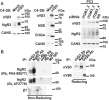
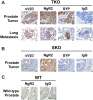
Quaglia, Krishn, Sossey-Alaoui et al
Sci Rep (2022) 12 (1), 18879 DOI: 10.1038/s41598-022-21711-5
Cited by 6
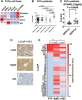
AI Summary: OriGene products pCMV6-Entry vector carrying RTN4RL2 (SC310413) and the empty vector control (PS100001) were used to transfect DU145 prostate cancer cells, enabling the study of NgR2’s role in neuroendocrine differentiation and cell behavior.
Snippet: a control, PC3 cells were transfected with a non-targeting scrambled control shRNA (SMARTvector, Dharmacon/Horizon, VSC11707). DU145 cells were transfected with pCMV6-Entry vector carrying RTN4RL2 (Origene, SC310413) or with the empty vector as a control (Origene, PS100001). … The next day, cells were washed with;- DU145 cells were transfected with pCMV6-Entry vector carrying RTN4RL2 (Origene, SC310413) or with the empty vector as a control (Origene, PS100001). …
Showing 1-4 of 4 papers.
Powered by BizGenius
*Delivery time may vary from web posted schedule. Occasional delays may occur due to unforeseen
complexities in the preparation of your product. International customers may expect an additional 1-2 weeks
in shipping.
Related Products
- Price:
- Actual Price:
Welcome to OriGene AI!
I'm your AI-powered guide to everything OriGene.
Ask me anything:
- Product specs
- Ordering help
- Technical questions
- How to find exactly what your experiment needs
Prefer a live agent? Connect with us by clicking the green chat icon, as seen in the image below or email our team at custsupport@origene.com.
