
COX2 (PTGS2) (NM_000963) Human Untagged Clone
SKU
SC128243
PTGS2 (untagged)-Human prostaglandin-endoperoxide synthase 2 (prostaglandin G/H synthase and cyclooxygenase) (PTGS2)

$844.00
In Stock*
Specifications
| Product Data | |
| Type | Human Untagged Clone |
|---|---|
| Target Symbol | COX2 |
| Synonyms | COX-2; COX2; GRIPGHS; hCox-2; PGG/HS; PGHS-2; PHS-2 |
| Vector | pCMV6-XL6 |
| E. coli Selection | Ampicillin (100 ug/mL) |
| Mammalian Cell Selection | None |
| Sequence Data | |
| Restriction Sites | NotI-NotI | |
| ACCN | NM_000963 |
| Insert Size | 4500 bp |
| OTI Disclaimer | Due to the inherent nature of this plasmid, standard methods to replicate additional amounts of DNA in E. coli are highly likely to result in mutations and/or rearrangements. Therefore, OriGene does not guarantee the capability to replicate this plasmid DNA. Additional amounts of DNA can be purchased from OriGene with batch-specific, full-sequence verification at a reduced cost. Please contact our customer care team at custsupport@origene.com or by calling 301.340.3188 option 3 for pricing and delivery. The molecular sequence of this clone aligns with the gene accession number as a point of reference only. However, individual transcript sequences of the same gene can differ through naturally occurring variations (e.g. polymorphisms), each with its own valid existence. This clone is substantially in agreement with the reference, but a complete review of all prevailing variants is recommended prior to use. More info |
| OTI Annotation | A TrueClone. |
| Components | The ORF clone is ion-exchange column purified and shipped in a 2D barcoded Matrix tube containing 10ug of transfection-ready, dried plasmid DNA (reconstitute with 100 ul of water). |
| Reconstitution Method | 1. Centrifuge at 5,000xg for 5min. 2. Carefully open the tube and add 100ul of sterile water to dissolve the DNA. 3. Close the tube and incubate for 10 minutes at room temperature. 4. Briefly vortex the tube and then do a quick spin (less than 5000xg) to concentrate the liquid at the bottom. 5. Store the suspended plasmid at -20°C. The DNA is stable for at least one year from date of shipping when stored at -20°C. |
| Note | Plasmids are not sterile. For experiments where strict sterility is required, filtration with 0.22um filter is required. |
| Shipping | Ambient |
| Reference Data | |
| RefSeq | NM_000963.1, NP_000954.1 |
| RefSeq Size | 4465 bp |
| RefSeq ORF | 1815 bp |
| Locus ID | 5743 |
| UniProt ID | P35354 |
| Cytogenetics | 1q31.1 |
| Domains | An_peroxidase, EGF |
| Protein Families | Druggable Genome |
| Protein Pathways | Arachidonic acid metabolism, Pathways in cancer, Small cell lung cancer, VEGF signaling pathway |
| Summary | Prostaglandin-endoperoxide synthase (PTGS), also known as cyclooxygenase, is the key enzyme in prostaglandin biosynthesis, and acts both as a dioxygenase and as a peroxidase. There are two isozymes of PTGS: a constitutive PTGS1 and an inducible PTGS2, which differ in their regulation of expression and tissue distribution. This gene encodes the inducible isozyme. It is regulated by specific stimulatory events, suggesting that it is responsible for the prostanoid biosynthesis involved in inflammation and mitogenesis. provided by RefSeq, Feb 2009 |
Reviews


Documents
| Product Manuals |
| FAQs |
| SDS |
Resources
"NM_000963" in other vectors (7)
| SKU | Description | Size | Price | |
|---|---|---|---|---|
| RC202245 | PTGS2 (Myc-DDK-tagged)-Human prostaglandin-endoperoxide synthase 2 (prostaglandin G/H synthase and cyclooxygenase) (PTGS2) | 10 ug |
$289.00
$843.00
|
|
| RC202245L1 | Lenti ORF clone of Human prostaglandin-endoperoxide synthase 2 (prostaglandin G/H synthase and cyclooxygenase) (PTGS2), Myc-DDK-tagged | 10 ug |
$1,143.00
|
|
| RC202245L2 | Lenti ORF clone of Human prostaglandin-endoperoxide synthase 2 (prostaglandin G/H synthase and cyclooxygenase) (PTGS2), mGFP tagged | 10 ug |
$1,143.00
|
|
| RC202245L3 | Lenti ORF clone of Human prostaglandin-endoperoxide synthase 2 (prostaglandin G/H synthase and cyclooxygenase) (PTGS2), Myc-DDK-tagged | 10 ug |
$1,143.00
|
|
| RC202245L4 | Lenti ORF clone of Human prostaglandin-endoperoxide synthase 2 (prostaglandin G/H synthase and cyclooxygenase) (PTGS2), mGFP tagged | 10 ug |
$1,143.00
|
|
| RG202245 | PTGS2 (tGFP-tagged) - Human prostaglandin-endoperoxide synthase 2 (prostaglandin G/H synthase and cyclooxygenase) (PTGS2) | 10 ug |
$489.00
$1,043.00
|
|
| SC323764 | PTGS2 (untagged)-Human prostaglandin-endoperoxide synthase 2 (prostaglandin G/H synthase and cyclooxygenase) (PTGS2) | 10 ug |
$844.00
|
|
Citations
Cross-species comparisons reveal resistance of human skeletal stem cells to inhibition by non-steroidal anti-inflammatory drugs
Goodnough, Ambrosi, Steininger et al
Front Endocrinol (Lausanne) (2022) 13, 924927 DOI: 10.3389/fendo.2022.924927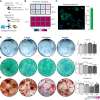
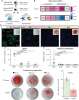
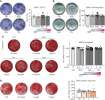
Goodnough, Ambrosi, Steininger et al
Front Endocrinol (Lausanne) (2022) 13, 924927 DOI: 10.3389/fendo.2022.924927
Cited by 9
AI Summary: OriGene’s PTGS2 plasmid (Cat# SC128243) was used to overexpress COX2 in human skeletal stem cells, enabling the authors to investigate the impact of COX2 upregulation on osteogenic differentiation and NSAID sensitivity.
Snippet: d in the figures (19–21). Lentiviral overexpression A lentivirus plasmid to overexpress COX2 with a dTomato tag was constructed using Gibson cloning of pHIV-dTomato (Addgene cat# 21374) and PTGS2 (Origene Cat#SC128243). HEK-293T cells were transfected using calcium phosphate transfection with VSV-G (addgene Cat #8454), psPAX2 (addgene Cat #12260), and either ZsGreen (addgene Cat#18121) or PTGS2
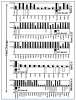
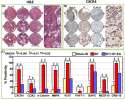
Hormophysa triquerta polyphenol, an elixir that deters CXCR4- and COX2-dependent dissemination destiny of treatment-resistant pancreatic cancer cells
Aravindan, Ramraj, Kandasamy et al
Oncotarget (2017) 8 (4), 5717-5734 DOI: 10.18632/oncotarget.13900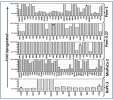
Aravindan, Ramraj, Kandasamy et al
Oncotarget (2017) 8 (4), 5717-5734 DOI: 10.18632/oncotarget.13900
Snippet: The plasmid constructs of COX-2 (untagged-Human prostaglandin-endoperoxide synthase 2, Origene) and CXCR4 (untagged-Human chemokine [C-X-C motif] receptor 4, Origene) were amplified and purified following the manufacturer's protocol
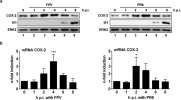
Influenza A viruses suppress cyclooxygenase-2 expression by affecting its mRNA stability
Dudek, Nitzsche, Ludwig et al
Sci Rep (2016) 6, 27275 DOI: 10.1038/srep27275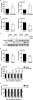
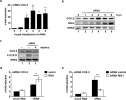
Dudek, Nitzsche, Ludwig et al
Sci Rep (2016) 6, 27275 DOI: 10.1038/srep27275
Cited by 34
AI Summary: OriGene’s pCMV-XL6-COX-2 plasmid was used in this study to overexpress COX-2 in A549 cells, enabling the researchers to investigate how influenza A virus infection affects COX-2 expression and mRNA stability.
Snippet: The plasmids pCMV-XL6-COX-2 (OriGene Technologies, USA), pCAGGS-Rig-I47, and the murine p3XFLAG-CMV-7.1-TTPcds62 were used for overexpression of the respective proteins in A549 cells. Corresponding empty vectors served as controls
P50-associated COX-2 extragenic RNA (PACER) overexpression promotes proliferation and metastasis of osteosarcoma cells by activating COX-2 gene
Qian, Yang, Li et al
Tumour Biol. (2015)
Qian, Yang, Li et al
Tumour Biol. (2015)
Cited by 55
AI Summary: OriGene contributed to this study by providing the COX-2 cDNA, which was used for COX-2 overexpression experiments to assess the role of COX-2 in osteosarcoma cell proliferation and invasion.
Snippet: were obtained. For COX-2 overex- pression, the COX-2 cDNA was purchase from OriGene (Rockville, MD) and inserted into Adeno-x-vector using the In-Fusion HD cloning system (Clontech, Mountain View, CA, USA). The recombinant ... Cite SaveSaving
SIRT6 Promotes COX-2 Expression and Acts as an Oncogene in Skin Cancer
Ming, Han, Zhao et al
Cancer Res. (2014) 74 (20), 5925-33 DOI: 10.1158/0008-5472.CAN-14-1308
Ming, Han, Zhao et al
Cancer Res. (2014) 74 (20), 5925-33 DOI: 10.1158/0008-5472.CAN-14-1308
Cyclooxygenase-2 enzyme induces the expression of the α-2,3-sialyltransferase-3 (ST3Gal-I) in breast cancer
Sproviero, Julien, Burford et al
J Biol Chem (2012) 287 (53), 44490-7 DOI: 10.1074/jbc.M112.427827
Sproviero, Julien, Burford et al
J Biol Chem (2012) 287 (53), 44490-7 DOI: 10.1074/jbc.M112.427827
AI Summary: In this study, OriGene products—specifically the COX-2 expression plasmid (OriGene, SC119825) and COX-2 siRNA (OriGene, SR304794)—were used to manipulate COX-2 levels in breast cancer cells, enabling the authors to demonstrate that COX-2 regulates the expression of the sialyltransferase ST3Gal-I.
Showing 1-6 of 7 papers.
Powered by BizGenius
*Delivery time may vary from web posted schedule. Occasional delays may occur due to unforeseen
complexities in the preparation of your product. International customers may expect an additional 1-2 weeks
in shipping.
Related Products
- Price:
- Actual Price:
Welcome to OriGene AI!
I'm your AI-powered guide to everything OriGene.
Ask me anything:
- Product specs
- Ordering help
- Technical questions
- How to find exactly what your experiment needs
Prefer a live agent? Connect with us by clicking the green chat icon, as seen in the image below or email our team at custsupport@origene.com.
