
TFEB (NM_007162) Human Untagged Clone

$686.00
In Stock*
Specifications
| Product Data | |
| Type | Human Untagged Clone |
|---|---|
| Target Symbol | TFEB |
| Synonyms | ALPHATFEB; BHLHE35; TCFEB |
| Vector | pCMV6-XL5 |
| E. coli Selection | Ampicillin (100 ug/mL) |
| Mammalian Cell Selection | None |
| Sequence Data | |
| Restriction Sites | Please inquire | |
| ACCN | NM_007162 |
| Insert Size | 2446 bp |
| OTI Disclaimer | Due to the inherent nature of this plasmid, standard methods to replicate additional amounts of DNA in E. coli are highly likely to result in mutations and/or rearrangements. Therefore, OriGene does not guarantee the capability to replicate this plasmid DNA. Additional amounts of DNA can be purchased from OriGene with batch-specific, full-sequence verification at a reduced cost. Please contact our customer care team at custsupport@origene.com or by calling 301.340.3188 option 3 for pricing and delivery. The molecular sequence of this clone aligns with the gene accession number as a point of reference only. However, individual transcript sequences of the same gene can differ through naturally occurring variations (e.g. polymorphisms), each with its own valid existence. This clone is substantially in agreement with the reference, but a complete review of all prevailing variants is recommended prior to use. More info |
| Components | The ORF clone is ion-exchange column purified and shipped in a 2D barcoded Matrix tube containing 10ug of transfection-ready, dried plasmid DNA (reconstitute with 100 ul of water). |
| Reconstitution Method | 1. Centrifuge at 5,000xg for 5min. 2. Carefully open the tube and add 100ul of sterile water to dissolve the DNA. 3. Close the tube and incubate for 10 minutes at room temperature. 4. Briefly vortex the tube and then do a quick spin (less than 5000xg) to concentrate the liquid at the bottom. 5. Store the suspended plasmid at -20°C. The DNA is stable for at least one year from date of shipping when stored at -20°C. |
| Note | Plasmids are not sterile. For experiments where strict sterility is required, filtration with 0.22um filter is required. |
| Shipping | Ambient |
| Reference Data | |
| RefSeq | NM_007162.1, NP_009093.1 |
| RefSeq Size | 2446 bp |
| RefSeq ORF | 1431 bp |
| Locus ID | 7942 |
| UniProt ID | P19484 |
| Cytogenetics | 6p21.1 |
| Protein Families | Druggable Genome, Transcription Factors |
| Summary | Transcription factor that specifically recognizes and binds E-box sequences (5'-CANNTG-3'). Efficient DNA-binding requires dimerization with itself or with another MiT/TFE family member such as TFE3 or MITF. In association with TFE3, activates the expression of CD40L in T-cells, thereby playing a role in T-cell-dependent antibody responses in activated CD4(+) T-cells and thymus-dependent humoral immunity. Specifically recognizes and binds the CLEAR-box sequence (5'-GTCACGTGAC-3') present in the regulatory region of many lysosomal genes, leading to activate their expression. It thereby plays a central role in expression of lysosomal genes. Acts as a positive regulator of autophagy by promoting expression of genes involved in autophagy. Specifically recognizes the gamma-E3 box, a subset of E-boxes, present in the heavy-chain immunoglobulin enhancer. Plays a role in the signal transduction processes required for normal vascularization of the placenta. Regulates lysosomal positioning in response to nutrient deprivation by promoting the expression of PIP4P1 (PubMed:29146937).UniProtKB/Swiss-Prot Function Transcript Variant: This variant (1) contains an alternate 5' sequence, which results in a downstream AUG start codon, compared to variant 2. The resulting isoform (1) has a shorter N-terminus, compared to isoform 2. Variants 1, 3 and 4 encode the same isoform 1. |
Reviews


Documents
| Product Manuals |
| FAQs |
| SDS |
Resources
"NM_007162" in other vectors (6)
| SKU | Description | Size | Price | |
|---|---|---|---|---|
| RC207153 | TFEB (Myc-DDK-tagged)-Human transcription factor EB (TFEB), transcript variant 1 | 10 ug |
$457.00
|
|
| RC207153L1 | Lenti ORF clone of Human transcription factor EB (TFEB), transcript variant 1, Myc-DDK-tagged | 10 ug |
$757.00
|
|
| RC207153L2 | Lenti ORF clone of Human transcription factor EB (TFEB), transcript variant 1, mGFP tagged | 10 ug |
$757.00
|
|
| RC207153L3 | Lenti ORF clone of Human transcription factor EB (TFEB), transcript variant 1, Myc-DDK-tagged | 10 ug |
$757.00
|
|
| RC207153L4 | Lenti ORF clone of Human transcription factor EB (TFEB), transcript variant 1, mGFP tagged | 10 ug |
$757.00
|
|
| RG207153 | TFEB (tGFP-tagged) - Human transcription factor EB (TFEB), transcript variant 1 | 10 ug |
$489.00
$657.00
|
|
Citations
Skeletal muscle TFEB signaling promotes central nervous system function and reduces neuroinflammation during aging and neurodegenerative disease
Matthews, Birnbaum, Gromova et al
Cell Rep (2023) 42 (11), 113436 DOI: 10.1016/j.celrep.2023.113436
Matthews, Birnbaum, Gromova et al
Cell Rep (2023) 42 (11), 113436 DOI: 10.1016/j.celrep.2023.113436
Cited by 43
TFEB inhibition induces melanoma shut-down by blocking the cell cycle and rewiring metabolism
Ariano, Costanza, Akman et al
Cell Death Dis (2023) 14 (5), 314 DOI: 10.1038/s41419-023-05828-7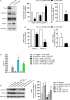
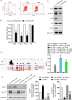
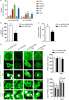
Ariano, Costanza, Akman et al
Cell Death Dis (2023) 14 (5), 314 DOI: 10.1038/s41419-023-05828-7
Cited by 20
AI Summary: OriGene’s TFEB-GFP-expressing construct (cod. SC122773) was used in this study to investigate the role of TFEB in melanoma cell proliferation and metabolism by enabling the expression and tracking of TFEB in experimental models.
Snippet: … The TCA cycle is also involved in tumour formation and progression not only through its metabolic activity but through the TCA metabolites that support epigenetic modifications or po;- The TFEB-GFP-expressing construct was created by cloning the TFEB coding sequence (OriGene, cod. SC122773) in a pAcGFP-C1 vector (BD Bioscience). …
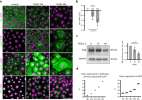
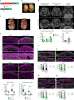
The TFEB-TGIF1 axis regulates EMT in mouse epicardial cells
Astanina, Doronzo, Corà et al
Nat Commun (2022) 13 (1), 5191 DOI: 10.1038/s41467-022-32855-3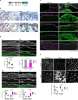
Astanina, Doronzo, Corà et al
Nat Commun (2022) 13 (1), 5191 DOI: 10.1038/s41467-022-32855-3
Cited by 21
AI Summary: OriGene’s TFEB cDNA (catalog number SC122773) was used as the template to generate the TFEBS142A mutant, enabling the study of TFEB’s role in regulating EMT in mouse epicardial cells.
Snippet: S, and treated with 10 ng/ml human TGFβ1 in DMEM containing 2% FCS for the indicated periods of time. Genetic manipulation and biological assays The TFEBS142A mutant was generated from TFEB cDNA (Origene, cod. SC122773) by inserting a single point mutation using the Phusion Site‐Directed Mutagenesis Kit. TFEBS142A was cloned into the pTRIPZ inducible vector, and lentivirus particles were pro
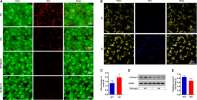
Lysosomal dysfunction of corneal fibroblasts underlies the pathogenesis of Granular Corneal Dystrophy Type 2 and can be rescued by TFEB
Choi, Woo, Kim
J Cell Mol Med (2020) 24 (18), 10343-10355 DOI: 10.1111/jcmm.15646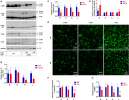
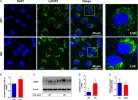
Choi, Woo, Kim
J Cell Mol Med (2020) 24 (18), 10343-10355 DOI: 10.1111/jcmm.15646
Cited by 15
AI Summary: In this study, OriGene products—including the CTSK (RC223795), CTSL (RC200117), and TFEB (RC208208) expression plasmids—were used to overexpress cathepsins and TFEB in corneal fibroblasts, enabling the researchers to demonstrate that restoring these proteins can rescue lysosomal dysfunction and promote clearance of mutant-TGFBIp in Granular Corneal Dystrophy Type 2 cells.
TFEB controls vascular development by regulating the proliferation of endothelial cells
Doronzo, Astanina, Corà et al
EMBO J. (2018)
Doronzo, Astanina, Corà et al
EMBO J. (2018)
AI Summary: OriGene’s TFEB cDNA (catalog number SC122773) was used as the template to generate the TFEBS142A mutant, enabling the study of TFEB’s role in endothelial cell proliferation and vascular development.
Snippet: d informed consent was obtained from each patient. Cells were tested for mycoplasma contamination by means of Venor GeM Mycoplasma Detection Kit. The _TFEBS142A_ mutant was generated from TFEB cDNA (Origene, cod. SC122773) by inserting a single point mutation using the Phusion Site‐Directed Mutagenesis Kit. TFEBS142A was cloned into the pTRIPZ inducible vector, and the transgene was induced by
PGC-1a Rescues Huntington’s Disease Proteotoxicity by Preventing Oxidative Stress and Promoting TFEB Function
Tsunemi, Ashe, Morrison et al
Science Translational Medicine (2012)
Tsunemi, Ashe, Morrison et al
Science Translational Medicine (2012)
AI Summary: In the paper "PGC-1a Rescues Huntington’s Disease Proteotoxicity by Preventing Oxidative Stress and Promoting TFEB Function," OriGene products such as the PGC-1a expression plasmid and TFEB shRNA lentiviral particles were used to modulate gene expression in cellular models, enabling the authors to investigate the roles of these factors in Huntington’s disease pathology.
Showing 1-6 of 6 papers.
Powered by BizGenius
*Delivery time may vary from web posted schedule. Occasional delays may occur due to unforeseen
complexities in the preparation of your product. International customers may expect an additional 1-2 weeks
in shipping.
Related Products
- Price:
- Actual Price:
Welcome to OriGene AI!
I'm your AI-powered guide to everything OriGene.
Ask me anything:
- Product specs
- Ordering help
- Technical questions
- How to find exactly what your experiment needs
Prefer a live agent? Connect with us by clicking the green chat icon, as seen in the image below or email our team at custsupport@origene.com.
