
BAP1 (NM_004656) Human Untagged Clone
SKU
SC117256
BAP1 (untagged)-Human BRCA1 associated protein-1 (ubiquitin carboxy-terminal hydrolase) (BAP1)

$1,002.00
In Stock*
Specifications
| Product Data | |
| Type | Human Untagged Clone |
|---|---|
| Target Symbol | BAP1 |
| Synonyms | hucep-6; HUCEP-13; UCHL2 |
| Vector | pCMV6-AC |
| E. coli Selection | Ampicillin (100 ug/mL) |
| Mammalian Cell Selection | Neomycin |
| Sequence Data | |
| Restriction Sites | NotI-NotI | |
| ACCN | NM_004656 |
| Insert Size | 3520 bp |
| OTI Disclaimer | Due to the inherent nature of this plasmid, standard methods to replicate additional amounts of DNA in E. coli are highly likely to result in mutations and/or rearrangements. Therefore, OriGene does not guarantee the capability to replicate this plasmid DNA. Additional amounts of DNA can be purchased from OriGene with batch-specific, full-sequence verification at a reduced cost. Please contact our customer care team at custsupport@origene.com or by calling 301.340.3188 option 3 for pricing and delivery. The molecular sequence of this clone aligns with the gene accession number as a point of reference only. However, individual transcript sequences of the same gene can differ through naturally occurring variations (e.g. polymorphisms), each with its own valid existence. This clone is substantially in agreement with the reference, but a complete review of all prevailing variants is recommended prior to use. More info |
| Components | The ORF clone is ion-exchange column purified and shipped in a 2D barcoded Matrix tube containing 10ug of transfection-ready, dried plasmid DNA (reconstitute with 100 ul of water). |
| Reconstitution Method | 1. Centrifuge at 5,000xg for 5min. 2. Carefully open the tube and add 100ul of sterile water to dissolve the DNA. 3. Close the tube and incubate for 10 minutes at room temperature. 4. Briefly vortex the tube and then do a quick spin (less than 5000xg) to concentrate the liquid at the bottom. 5. Store the suspended plasmid at -20°C. The DNA is stable for at least one year from date of shipping when stored at -20°C. |
| Note | Plasmids are not sterile. For experiments where strict sterility is required, filtration with 0.22um filter is required. |
| Shipping | Ambient |
| Reference Data | |
| RefSeq | NM_004656.2, NP_004647.1 |
| RefSeq Size | 3599 bp |
| RefSeq ORF | 2190 bp |
| Locus ID | 8314 |
| UniProt ID | Q92560 |
| Cytogenetics | 3p21.1 |
| Domains | Peptidase_C12 |
| Protein Families | Druggable Genome, Protease |
| Summary | This gene belongs to the ubiquitin C-terminal hydrolase subfamily of deubiquitinating enzymes that are involved in the removal of ubiquitin from proteins. The encoded enzyme binds to the breast cancer type 1 susceptibility protein (BRCA1) via the RING finger domain of the latter and acts as a tumor suppressor. In addition, the enzyme may be involved in regulation of transcription, regulation of cell cycle and growth, response to DNA damage and chromatin dynamics. Germline mutations in this gene may be associated with tumor predisposition syndrome (TPDS), which involves increased risk of cancers including malignant mesothelioma, uveal melanoma and cutaneous melanoma. provided by RefSeq, May 2013 |
Reviews


Documents
| Product Manuals |
| FAQs |
| SDS |
Resources
"NM_004656" in other vectors (7)
| SKU | Description | Size | Price | |
|---|---|---|---|---|
| RC200378 | BAP1 (Myc-DDK-tagged)-Human BRCA1 associated protein-1 (ubiquitin carboxy-terminal hydrolase) (BAP1) | 10 ug |
$1,001.00
|
|
| RC200378L1 | Lenti ORF clone of Human BRCA1 associated protein-1 (ubiquitin carboxy-terminal hydrolase) (BAP1), Myc-DDK-tagged | 10 ug |
$1,301.00
|
|
| RC200378L2 | Lenti ORF clone of Human BRCA1 associated protein-1 (ubiquitin carboxy-terminal hydrolase) (BAP1), mGFP tagged | 10 ug |
$1,301.00
|
|
| RC200378L3 | Lenti ORF clone of Human BRCA1 associated protein-1 (ubiquitin carboxy-terminal hydrolase) (BAP1), Myc-DDK-tagged | 10 ug |
$1,301.00
|
|
| RC200378L4 | Lenti ORF clone of Human BRCA1 associated protein-1 (ubiquitin carboxy-terminal hydrolase) (BAP1), mGFP tagged | 10 ug |
$1,301.00
|
|
| RG200378 | BAP1 (tGFP-tagged) - Human BRCA1 associated protein-1 (ubiquitin carboxy-terminal hydrolase) (BAP1) | 10 ug |
$1,201.00
|
|
| SC320669 | BAP1 (untagged)-Human BRCA1 associated protein-1 (ubiquitin carboxy-terminal hydrolase) (BAP1) | 10 ug |
$1,002.00
|
|
Citations
BAP1 and YY1 regulate expression of death receptors in malignant pleural mesothelioma
Ishii, Kolluri, Pennycuick et al
J Biol Chem (2021) 297 (5), 101223 DOI: 10.1016/j.jbc.2021.101223
Ishii, Kolluri, Pennycuick et al
J Biol Chem (2021) 297 (5), 101223 DOI: 10.1016/j.jbc.2021.101223
Cited by 12
AI Summary: OriGene's pCMV6-AC BAP1 plasmid (SC117256) was used as the source for full-length BAP1 cDNA, enabling the authors to study the effects of BAP1 overexpression and mutation on death receptor regulation in malignant pleural mesothelioma.
Snippet: oblotting was performed as described previously with anti-BAP1 antibody (sc-28383;Santa Cruz). Plasmids Full-length BAP1 complementary DNA was amplified by PCR from pCMV6-AC BAP1 plasmid (SC117256;Origene) and cloned into the lentiviral plasmid pCCL-CMV-flT vector. Vectors expressing BAP1-mutant constructs were generated by site-directed mutagenesis (E0554;New England Biolabs) of the pCCL-CMV
Loss of functional BAP1 augments sensitivity to TRAIL in cancer cells
Kolluri, Alifrangis, Kumar et al
Elife (2018) 7 DOI: 10.7554/eLife.30224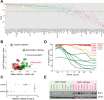
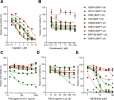
Kolluri, Alifrangis, Kumar et al
Elife (2018) 7 DOI: 10.7554/eLife.30224
AI Summary: OriGene’s pCMV6-AC BAP1 plasmid (SC117256) was used as the source of full-length BAP1 cDNA for generating expression constructs to study the role of BAP1 in cancer cell sensitivity to TRAIL.
Snippet: …BAP1 has emerged as a key driver of tumorigenesis in MM (Bueno et al., 2016). … While next-generation sequencing reve;Full-length BAP1 cDNA was amplified by PCR from pCMV6-AC BAP1 plasmid (Origene (Rockville, MD;SC117256) and cloned into the lentiviral plasmid pCCL-CMV-flT vector previously described (Yuan et al., 2015) in place of flT via BamHI and SalI sites, creating the BAP1 vector designated pCCL-CMV-BAP1. Vectors expressing mutant BAP1 constructs were generated by site-directed mutagenesis (New England Biolabs) of the pCCL-CMV-BAP1 vector. …
BAP1 dependent expression of long non-coding RNA NEAT-1 contributes to sensitivity to gemcitabine in cholangiocarcinoma
Parasramka, Yan, Wang et al
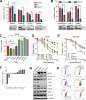
Mol. Cancer (2017) 16 (1), 22 DOI: 10.1186/s12943-017-0587-x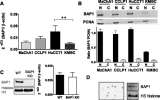
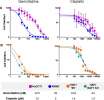
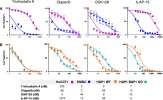
Parasramka, Yan, Wang et al
Mol. Cancer (2017) 16 (1), 22 DOI: 10.1186/s12943-017-0587-x
AI Summary: OriGene’s pCMV6-AC-BAP1 human cDNA clone plasmid was used to manipulate BAP1 expression in cholangiocarcinoma cells, enabling the study of its role in drug sensitivity and tumor behavior.
Snippet: After 6 h, the medium was replaced with the respective complete culture medium containing 10% serum and the cells were incubated for 48 h before further study. BAP1 human cDNA clone, pCMV6-AC-BAP1 plasmid was purchased from Origene Technologies, Rockville ... Cite SaveSaving
Cancer-associated ASXL1 mutations may act as gain-of-function mutations of the ASXL1-BAP1 complex
Balasubramani, Larjo, Bassein et al
Nat Commun (2015) 6, 7307 DOI: 10.1038/ncomms8307
Balasubramani, Larjo, Bassein et al
Nat Commun (2015) 6, 7307 DOI: 10.1038/ncomms8307
Cited by 198
Mechanisms of TRAIL resistance
Kumar
Thesis (2018)
Kumar
Thesis (2018)
Snippet: The BAP1 vector pCCL-CMV-BAP1 had previously been generated by K Kolluri by PCR amplification of BAP1 coding cDNA using a pCMV6-AC BAP1 plasmid (Origene-SC117256) as a template and subsequent insertion of the BAP1 cDNA into a lentiviral vector previously used in the laboratory, pCCLCMV-flT, in place of flT via BamHI and SalI restriction sites (Figure 2-1) [140]
Showing 1-5 of 5 papers.
Powered by BizGenius
*Delivery time may vary from web posted schedule. Occasional delays may occur due to unforeseen
complexities in the preparation of your product. International customers may expect an additional 1-2 weeks
in shipping.
Related Products
- Price:
- Actual Price:
Welcome to OriGene AI!
I'm your AI-powered guide to everything OriGene.
Ask me anything:
- Product specs
- Ordering help
- Technical questions
- How to find exactly what your experiment needs
Prefer a live agent? Connect with us by clicking the green chat icon, as seen in the image below or email our team at custsupport@origene.com.
