
CD63 (NM_001780) Human Tagged ORF Clone

$489.00
$500.00
In Stock*
Specifications
| Product Data | |
| Type | Human Tagged ORF Clone |
|---|---|
| Target Symbol | CD63 |
| Synonyms | LAMP-3; ME491; MLA1; OMA81H; TSPAN30 |
| Vector | pCMV6-AC-GFP |
| E. coli Selection | Ampicillin (100 ug/mL) |
| Mammalian Cell Selection | Neomycin |
| Sequence Data | |
| Restriction Sites |
SgfI-MluI Cloning Scheme for this gene
|
Plasmid Map

|
| ACCN | NM_001780 |
| ORF Size | 714 bp |
| OTI Disclaimer | The molecular sequence of this clone aligns with the gene accession number as a point of reference only. However, individual transcript sequences of the same gene can differ through naturally occurring variations (e.g. polymorphisms), each with its own valid existence. This clone is substantially in agreement with the reference, but a complete review of all prevailing variants is recommended prior to use. More info |
| OTI Annotation | This clone was engineered to express the complete ORF with an expression tag. Expression varies depending on the nature of the gene. |
| Components | The ORF clone is ion-exchange column purified and shipped in a 2D barcoded Matrix tube containing 10ug of transfection-ready, dried plasmid DNA (reconstitute with 100 ul of water). |
| Reconstitution Method | 1. Centrifuge at 5,000xg for 5min. 2. Carefully open the tube and add 100ul of sterile water to dissolve the DNA. 3. Close the tube and incubate for 10 minutes at room temperature. 4. Briefly vortex the tube and then do a quick spin (less than 5000xg) to concentrate the liquid at the bottom. 5. Store the suspended plasmid at -20°C. The DNA is stable for at least one year from date of shipping when stored at -20°C. |
| Note | Plasmids are not sterile. For experiments where strict sterility is required, filtration with 0.22um filter is required. |
| Shipping | Ambient |
| Reference Data | |
| RefSeq | NM_001780.6 |
| RefSeq Size | 1031 bp |
| RefSeq ORF | 717 bp |
| Locus ID | 967 |
| UniProt ID | P08962 |
| Cytogenetics | 12q13.2 |
| Domains | transmembrane4 |
| Protein Families | Druggable Genome, Transmembrane |
| Protein Pathways | Lysosome |
| Summary | The protein encoded by this gene is a member of the transmembrane 4 superfamily, also known as the tetraspanin family. Most of these members are cell-surface proteins that are characterized by the presence of four hydrophobic domains. The proteins mediate signal transduction events that play a role in the regulation of cell development, activation, growth and motility. The encoded protein is a cell surface glycoprotein that is known to complex with integrins. It may function as a blood platelet activation marker. Deficiency of this protein is associated with Hermansky-Pudlak syndrome. Also this gene has been associated with tumor progression. Alternative splicing results in multiple transcript variants encoding different protein isoforms. provided by RefSeq, Apr 2012 |
Reviews


Documents
| Product Manuals |
| FAQs |
| SDS |
Resources
"NM_001780" in other vectors (7)
| SKU | Description | Size | Price | |
|---|---|---|---|---|
| RC201733 | CD63 (Myc-DDK-tagged)-Human CD63 molecule (CD63), transcript variant 1 | 10 ug |
$300.00
|
|
| RC201733L1 | Lenti ORF clone of Human CD63 molecule (CD63), transcript variant 1, Myc-DDK-tagged | 10 ug |
$600.00
|
|
| RC201733L2 | Lenti ORF clone of Human CD63 molecule (CD63), transcript variant 1, mGFP tagged | 10 ug |
$600.00
|
|
| RC201733L3 | Lenti ORF clone of Human CD63 molecule (CD63), transcript variant 1, Myc-DDK-tagged | 10 ug |
$600.00
|
|
| RC201733L4 | Lenti ORF clone of Human CD63 molecule (CD63), transcript variant 1, mGFP tagged | 10 ug |
$600.00
|
|
| SC126650 | CD63 (untagged)-Human CD63 molecule (CD63), transcript variant 1 | 10 ug |
$300.00
|
|
| SC324357 | CD63 (untagged)-Human CD63 molecule (CD63), transcript variant 1 | 10 ug |
$300.00
|
|
Citations
Repurposing ketoconazole as an exosome directed adjunct to sunitinib in treating renal cell carcinoma
Greenberg, Kim, Moustafa et al
Sci Rep (2021) 11 (1), 10200 DOI: 10.1038/s41598-021-89655-w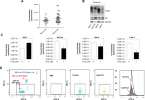
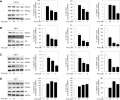
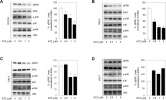
Greenberg, Kim, Moustafa et al
Sci Rep (2021) 11 (1), 10200 DOI: 10.1038/s41598-021-89655-w
Cited by 43
AI Summary: OriGene’s CD63-GFP plasmid (cat# RG201733) was used to generate stable 786-O-CD63-GFP renal cancer cell lines, enabling the study of exosome biogenesis and secretion in this research.
Snippet: … The plasmid (CD63-GFP) (Origene cat#RG201733) was used to generate the stable 786-O-CD63-GFP cells 13;presence of 5 μM sunitinib has been described previously39. … The plasmid (CD63-GFP) (Origene cat#RG201733) was used to generate the stable 786-O-CD63-GFP cells13. For collection of conditioned media (CM), the cells were trypsinized, plated, and allowed to attach overnight in complete;The plasmid (CD63-GFP) (Origene cat#RG201733) was used to generate the stable 786-O-CD63-GFP cells13
Large-scale generation of functional mRNA-encapsulating exosomes via cellular nanoporation
Yang, Shi, Xie et al
Nat Biomed Eng (2019) 4 (1), 69-83 DOI: 10.1038/s41551-019-0485-1
Yang, Shi, Xie et al
Nat Biomed Eng (2019) 4 (1), 69-83 DOI: 10.1038/s41551-019-0485-1
Cited by 741
High-throughput screening identified selective inhibitors of exosome biogenesis and secretion: A drug repurposing strategy for advanced cancer
Datta, Kim, McGee et al
Sci Rep (2018) 8 (1), 8161 DOI: 10.1038/s41598-018-26411-7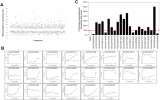
Datta, Kim, McGee et al
Sci Rep (2018) 8 (1), 8161 DOI: 10.1038/s41598-018-26411-7
AI Summary: OriGene contributed to this study by providing the CD63-GFP plasmid (OriGene cat# RG201733), which was used to generate stable C4-2B-CD63-GFP prostate cancer cells essential for the high-throughput screening of exosome biogenesis and secretion modulators.
Snippet: …The plasmid (CD63-GFP) (Origene cat# RG201733) was used to generate the stable C4-2B-CD63-GFP cells
Expression of MicroRNA-34a in Alzheimer's Disease Brain Targets Genes Linked to Synaptic Plasticity, Energy Metabolism, and Resting State Network Activity
Sarkar, Jun, Rellick et al
Brain Res. (2016)
Sarkar, Jun, Rellick et al
Brain Res. (2016)
Cited by 203
AI Summary: In this study, the OriGene GFP-tagged-human CD63 expression vector was used to label and track exosomes in primary neuronal cultures, enabling the researchers to investigate the secretion and uptake of miR-34a-containing exosomes in Alzheimer's disease models.
Snippet: Rat cortical primary neuronal cultures were grown in poly-l-lysine coated 150mm dishes for 7 days in vitro (7DIV) in neurobasal medium supplemented with B27. Six of each 150mm dishes with 75% confluence were transfected either GFP-tagged-human CD63 expression vector (Origene) alone or co-transfected with miR-34a expression vector by lipofectamine 2000. …
Inhibition of Oncogenic Epidermal Growth Factor Receptor Kinase Triggers Release of Exosome-like Extracellular Vesicles and Impacts Their Phosphoprotein and DNA Content
Montermini, Meehan, Garnier et al
J. Biol. Chem. (2015)
Montermini, Meehan, Garnier et al
J. Biol. Chem. (2015)
Detachment of breast tumor cells induces rapid secretion of exosomes which subsequently mediate cellular adhesion and spreading
Koumangoye, Sakwe, Goodwin et al
PLoS ONE (2011) 6 (9), e24234 DOI: 10.1371/journal.pone.0024234
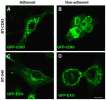
Koumangoye, Sakwe, Goodwin et al
PLoS ONE (2011) 6 (9), e24234 DOI: 10.1371/journal.pone.0024234
Cited by 232
AI Summary: OriGene's monoclonal antibody to green fluorescent protein (GFP) was used in this study to detect and track GFP-tagged exosomes, enabling the researchers to monitor exosome release and uptake in breast tumor cells.
Snippet: Due to multiple extracellular and intracellular physiological processes that can be attributed to exosomes, there is a need to define biochemical mechanisms that mediate ... Monoclonal antibody to green fluorescent protein (GFP) was purchased from OriGene Technologies Inc.
Showing 1-6 of 6 papers.
Powered by BizGenius
*Delivery time may vary from web posted schedule. Occasional delays may occur due to unforeseen
complexities in the preparation of your product. International customers may expect an additional 1-2 weeks
in shipping.
Related Products
- Price:
- Actual Price:
Welcome to OriGene AI!
I'm your AI-powered guide to everything OriGene.
Ask me anything:
- Product specs
- Ordering help
- Technical questions
- How to find exactly what your experiment needs
Prefer a live agent? Connect with us by clicking the green chat icon, as seen in the image below or email our team at custsupport@origene.com.
