
CD36 (NM_001001548) Human Tagged ORF Clone

SKU
RC221976
CD36 (Myc-DDK-tagged)-Human CD36 molecule (thrombospondin receptor) (CD36), transcript variant 1

$457.00
In Stock*
Specifications
| Product Data | |
| Type | Human Tagged ORF Clone |
|---|---|
| Target Symbol | CD36 |
| Synonyms | BDPLT10; CHDS7; FAT; GP3B; GP4; GPIV; PASIV; SCARB3 |
| Vector | pCMV6-Entry |
| E. coli Selection | Kanamycin (25 ug/mL) |
| Mammalian Cell Selection | Neomycin |
| Sequence Data | |
| Chromatograms |
Chromatograms
 Sequencher program is needed, download here |
| Restriction Sites |
SgfI-MluI Cloning Scheme for this gene
|
Plasmid Map

|
| ACCN | NM_001001548 |
| ORF Size | 1416 bp |
| OTI Disclaimer | The molecular sequence of this clone aligns with the gene accession number as a point of reference only. However, individual transcript sequences of the same gene can differ through naturally occurring variations (e.g. polymorphisms), each with its own valid existence. This clone is substantially in agreement with the reference, but a complete review of all prevailing variants is recommended prior to use. More info |
| OTI Annotation | This clone was engineered to express the complete ORF with an expression tag. Expression varies depending on the nature of the gene. |
| Components | The ORF clone is ion-exchange column purified and shipped in a 2D barcoded Matrix tube containing 10ug of transfection-ready, dried plasmid DNA (reconstitute with 100 ul of water). |
| Reconstitution Method | 1. Centrifuge at 5,000xg for 5min. 2. Carefully open the tube and add 100ul of sterile water to dissolve the DNA. 3. Close the tube and incubate for 10 minutes at room temperature. 4. Briefly vortex the tube and then do a quick spin (less than 5000xg) to concentrate the liquid at the bottom. 5. Store the suspended plasmid at -20°C. The DNA is stable for at least one year from date of shipping when stored at -20°C. |
| Note | Plasmids are not sterile. For experiments where strict sterility is required, filtration with 0.22um filter is required. |
| Shipping | Ambient |
| Reference Data | |
| RefSeq | NM_001001548.2 |
| RefSeq Size | 4727 bp |
| RefSeq ORF | 1419 bp |
| Locus ID | 948 |
| UniProt ID | P16671 |
| Cytogenetics | 7q21.11 |
| Protein Families | Druggable Genome, Transmembrane |
| Protein Pathways | Adipocytokine signaling pathway, ECM-receptor interaction, Hematopoietic cell lineage, PPAR signaling pathway |
| MW | 53.1 kDa |
| Summary | The protein encoded by this gene is the fourth major glycoprotein of the platelet surface and serves as a receptor for thrombospondin in platelets and various cell lines. Since thrombospondins are widely distributed proteins involved in a variety of adhesive processes, this protein may have important functions as a cell adhesion molecule. It binds to collagen, thrombospondin, anionic phospholipids and oxidized LDL. It directly mediates cytoadherence of Plasmodium falciparum parasitized erythrocytes and it binds long chain fatty acids and may function in the transport and/or as a regulator of fatty acid transport. Mutations in this gene cause platelet glycoprotein deficiency. Multiple alternatively spliced transcript variants have been found for this gene. provided by RefSeq, Feb 2014 |
Reviews


Documents
| Product Manuals |
| FAQs |
| SDS |
Resources
"NM_001001548" in other vectors (6)
| SKU | Description | Size | Price | |
|---|---|---|---|---|
| RC221976L1 | Lenti ORF clone of Human CD36 molecule (thrombospondin receptor) (CD36), transcript variant 1, Myc-DDK-tagged | 10 ug |
$757.00
|
|
| RC221976L2 | Lenti ORF clone of Human CD36 molecule (thrombospondin receptor) (CD36), transcript variant 1, mGFP tagged | 10 ug |
$757.00
|
|
| RC221976L3 | Lenti ORF clone of Human CD36 molecule (thrombospondin receptor) (CD36), transcript variant 1, Myc-DDK-tagged | 10 ug |
$757.00
|
|
| RC221976L4 | Lenti ORF clone of Human CD36 molecule (thrombospondin receptor) (CD36), transcript variant 1, mGFP tagged | 10 ug |
$757.00
|
|
| RG221976 | CD36 (tGFP-tagged) - Human CD36 molecule (thrombospondin receptor) (CD36), transcript variant 1 | 10 ug |
$489.00
$657.00
|
|
| SC300210 | CD36 (untagged)-Human CD36 molecule (thrombospondin receptor) (CD36), transcript variant 1 | 10 ug |
$457.00
|
|
Citations
Lipoprotein (a) Triggers CD36-Dependent IL-6/RhoA-GTP Axis Activation and Epigenetic Regulation of miRNA Expression in Coronary Artery Spasm
Lin, Hsieh, Yeh et al
Preprints (2025)
Lin, Hsieh, Yeh et al
Preprints (2025)
AI Summary: OriGene products, specifically the CD36-targeting short hairpin RNA (Cat # TL314090) and CD36 overexpression vector (Cat # RC221976), were used to manipulate CD36 expression in human coronary artery smooth muscle cells, enabling the study of CD36’s role in Lp(a)-induced signaling pathways in coronary artery spasm.
Pathogenic effects of Desulfovibrio in the gut on fatty liver in diet-induced obese mice and children with obesity
Lin, Lin, Wu et al
J Gastroenterol (2022)
Lin, Lin, Wu et al
J Gastroenterol (2022)
Cited by 86
Upregulation of CD36, a Fatty Acid Translocase, Promotes Colorectal Cancer Metastasis by Increasing MMP28 and Decreasing E-Cadherin Expression
Drury, Rychahou, Kelson et al
Cancers (Basel) (2022) 14 (1) DOI: 10.3390/cancers14010252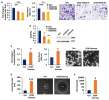
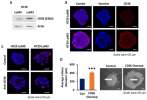
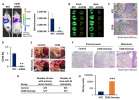
Drury, Rychahou, Kelson et al
Cancers (Basel) (2022) 14 (1) DOI: 10.3390/cancers14010252
Cited by 64
AI Summary: OriGene products pLenti-C-Myc-DDK-P2A-Puro-CD36 overexpression (RC221976L1V) and pLenti-C-Myc-DDK-P2A-Puro-Empty-Vector (PS1000064) were used to generate colorectal cancer cell lines with altered CD36 expression, enabling the study of CD36's role in cancer metastasis in this paper.
Snippet: prior to performing in vitro and in vivo experiments. Overexpression cell lines were established by transfecting HCT116 and HT29 LuM0 cells with either pLenti-C-Myc-DDK-P2A-Puro-CD36 overexpression (OriGene #RC221976L1V) or pLenti-C-Myc-DDK-P2A-Puro-Empty-Vector (OriGene #PS1000064) lentiviral transduction particles. MMP28 knockdown cell lines were generated by transfecting CRC cells with scrambl
Fluorescent labelling of membrane fatty acid transporter CD36 (SR-B2) in the extracellular loop
Liu, Rodriguez-Calvo, Wang et al
PLoS ONE (2019) 14 (1), e0210704 DOI: 10.1371/journal.pone.0210704
Liu, Rodriguez-Calvo, Wang et al
PLoS ONE (2019) 14 (1), e0210704 DOI: 10.1371/journal.pone.0210704
AI Summary: OriGene’s pCMV6 construct was used as the source for the three mutant CD36 sequences, which were excised and subcloned for lentiviral transduction in the study.
Snippet: The three mutant sequences of CD36 were cut from pCMV6 construct (Origene, Rockville, United States) using the restriction enzymes, BglII/SmaI, and subcloned to the lentiviral vector pLVX by ligation to the same restriction sites Cached
Ligand-induced growth and compaction of CD36 nanoclusters enriched in Fyn induces Fyn signaling
Githaka, Vega, Baird et al
J. Cell. Sci. (2016) 129 (22), 4175-4189 DOI: 10.1242/jcs.188946
Githaka, Vega, Baird et al
J. Cell. Sci. (2016) 129 (22), 4175-4189 DOI: 10.1242/jcs.188946
Cited by 41
AI Summary: OriGene contributed to this study by providing the human CD36 cDNA (OriGene Technologies), which was used to express CD36 and investigate its nanoclustering and role in Fyn signaling.
Snippet: ...Human CD36 cDNA was obtained from Origene (OriGene Technologies). The coding sequence...Cell Signaling;1:1000) antibodies, respectively. Anti-Fyn...Sigma-Aldrich;1:10,000) antibodies were used to probe for total...
Selenoprotein K is required for palmitoylation of CD36 in macrophages: implications in foam cell formation and atherogenesis
Meiler, Baumer, Huang et al
J. Leukoc. Biol. (2013) 93 (5), 771-80 DOI: 10.1189/jlb.1212647
Meiler, Baumer, Huang et al
J. Leukoc. Biol. (2013) 93 (5), 771-80 DOI: 10.1189/jlb.1212647
Cited by 75
Showing 1-6 of 6 papers.
Powered by BizGenius
*Delivery time may vary from web posted schedule. Occasional delays may occur due to unforeseen
complexities in the preparation of your product. International customers may expect an additional 1-2 weeks
in shipping.
Related Products
- Price:
- Actual Price:
Welcome to OriGene AI!
I'm your AI-powered guide to everything OriGene.
Ask me anything:
- Product specs
- Ordering help
- Technical questions
- How to find exactly what your experiment needs
Prefer a live agent? Connect with us by clicking the green chat icon, as seen in the image below or email our team at custsupport@origene.com.
