
NLRP3 (NM_004895) Human Tagged ORF Clone

SKU
RC220952
NLRP3 (Myc-DDK-tagged)-Human NLR family, pyrin domain containing 3 (NLRP3), transcript variant 1

$902.00
In Stock*
Specifications
| Product Data | |
| Type | Human Tagged ORF Clone |
|---|---|
| Target Symbol | NLRP3 |
| Synonyms | AGTAVPRL; AII; AVP; C1orf7; CIAS1; CLR1.1; DFNA34; FCAS; FCAS1; FCU; KEFH; MWS; NALP3; PYPAF1 |
| Vector | pCMV6-Entry |
| E. coli Selection | Kanamycin (25 ug/mL) |
| Mammalian Cell Selection | Neomycin |
| Sequence Data | |
| Chromatograms |
Chromatograms
 Sequencher program is needed, download here |
| Restriction Sites |
SgfI-MluI Cloning Scheme for this gene
|
Plasmid Map

|
| ACCN | NM_004895 |
| ORF Size | 3108 bp |
| OTI Disclaimer | The molecular sequence of this clone aligns with the gene accession number as a point of reference only. However, individual transcript sequences of the same gene can differ through naturally occurring variations (e.g. polymorphisms), each with its own valid existence. This clone is substantially in agreement with the reference, but a complete review of all prevailing variants is recommended prior to use. More info |
| OTI Annotation | This clone was engineered to express the complete ORF with an expression tag. Expression varies depending on the nature of the gene. |
| Components | The ORF clone is ion-exchange column purified and shipped in a 2D barcoded Matrix tube containing 10ug of transfection-ready, dried plasmid DNA (reconstitute with 100 ul of water). |
| Reconstitution Method | 1. Centrifuge at 5,000xg for 5min. 2. Carefully open the tube and add 100ul of sterile water to dissolve the DNA. 3. Close the tube and incubate for 10 minutes at room temperature. 4. Briefly vortex the tube and then do a quick spin (less than 5000xg) to concentrate the liquid at the bottom. 5. Store the suspended plasmid at -20°C. The DNA is stable for at least one year from date of shipping when stored at -20°C. |
| Note | Plasmids are not sterile. For experiments where strict sterility is required, filtration with 0.22um filter is required. |
| Shipping | Ambient |
| Reference Data | |
| RefSeq | NM_004895.5 |
| RefSeq Size | 4484 bp |
| RefSeq ORF | 3111 bp |
| Locus ID | 114548 |
| UniProt ID | Q96P20 |
| Cytogenetics | 1q44 |
| Domains | LRR, LRR_RI, PAAD_DAPIN |
| Protein Families | Druggable Genome |
| Protein Pathways | NOD-like receptor signaling pathway |
| MW | 118 kDa |
| Summary | This gene encodes a pyrin-like protein containing a pyrin domain, a nucleotide-binding site (NBS) domain, and a leucine-rich repeat (LRR) motif. This protein interacts with the apoptosis-associated speck-like protein PYCARD/ASC, which contains a caspase recruitment domain, and is a member of the NLRP3 inflammasome complex. This complex functions as an upstream activator of NF-kappaB signaling, and it plays a role in the regulation of inflammation, the immune response, and apoptosis. The SARS-CoV 3a protein, a transmembrane pore-forming viroporin, has been shown to activate the NLRP3 inflammasome via the formation of ion channels in macrophages. Mutations in this gene are associated with familial cold autoinflammatory syndrome (FCAS), Muckle-Wells syndrome (MWS), chronic infantile neurological cutaneous and articular (CINCA) syndrome, neonatal-onset multisystem inflammatory disease (NOMID), keratoendotheliitis fugax hereditarian, and deafness, autosomal dominant 34, with or without inflammation. Multiple alternatively spliced transcript variants encoding distinct isoforms have been identified for this gene. Alternative 5' UTR structures are suggested by available data; however, insufficient evidence is available to determine if all of the represented 5' UTR splice patterns are biologically valid. provided by RefSeq, Aug 2020 |
Reviews


Documents
| Product Manuals |
| FAQs |
| SDS |
Resources
"NM_004895" in other vectors (6)
| SKU | Description | Size | Price | |
|---|---|---|---|---|
| RC220952L1 | Lenti ORF clone of Human NLR family, pyrin domain containing 3 (NLRP3), transcript variant 1, Myc-DDK-tagged | 10 ug |
$1,202.00
|
|
| RC220952L2 | Lenti ORF clone of Human NLR family, pyrin domain containing 3 (NLRP3), transcript variant 1, mGFP tagged | 10 ug |
$1,202.00
|
|
| RC220952L3 | Lenti ORF clone of Human NLR family, pyrin domain containing 3 (NLRP3), transcript variant 1, Myc-DDK-tagged | 10 ug |
$1,202.00
|
|
| RC220952L4 | Lenti ORF clone of Human NLR family, pyrin domain containing 3 (NLRP3), transcript variant 1, mGFP tagged | 10 ug |
$1,202.00
|
|
| RG220952 | NLRP3 (tGFP-tagged) - Human NLR family, pyrin domain containing 3 (NLRP3), transcript variant 1 | 10 ug |
$789.00
$1,102.00
|
|
| SC110747 | NLRP3 (untagged)-Human NLR family, pyrin domain containing 3 (NLRP3), transcript variant 1 | 10 ug |
$903.00
|
|
Citations
A derivative of PD156707 selectively inhibits NLRP3 inflammasome activation by directly binding to NLRP3
Jung, Fei, Lee et al
Sci Rep (2026)
Jung, Fei, Lee et al
Sci Rep (2026)
The glycolytic metabolite methylglyoxal covalently inactivates the NLRP3 inflammasome
Stanton, Buasakdi, Sun et al
Cell Rep (2024) 43 (9), 114688 DOI: 10.1016/j.celrep.2024.114688
Stanton, Buasakdi, Sun et al
Cell Rep (2024) 43 (9), 114688 DOI: 10.1016/j.celrep.2024.114688
Cited by 12
Novel Activity of ODZ10117, a STAT3 Inhibitor, for Regulation of NLRP3 Inflammasome Activation
Kang, Lee, Seok et al
Int J Mol Sci (2023) 24 (7) DOI: 10.3390/ijms24076079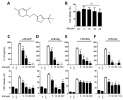
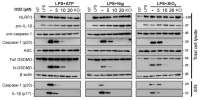
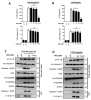
Kang, Lee, Seok et al
Int J Mol Sci (2023) 24 (7) DOI: 10.3390/ijms24076079
Cited by 12
AI Summary: In this study, OriGene products—specifically the NLRP3 (Cat# RC210329) and NEK7 (Cat# RC221364) expression plasmids—were used to investigate the molecular mechanism by which the STAT3 inhibitor ODZ10117 regulates NLRP3 inflammasome activation.
Novel Activity of ODZ10117, a STAT3 Inhibitor, for Regulation of NLRP3 Inflammasome Activation
Kang, Lee, Seok et al
IJMS (2023) 24 (7), 6079 DOI: 10.3390/ijms24076079
Kang, Lee, Seok et al
IJMS (2023) 24 (7), 6079 DOI: 10.3390/ijms24076079
Cited by 12
AI Summary: OriGene’s DDK-tagged hNLRP3 plasmid (RC220952) was used in this study to facilitate overexpression and co-immunoprecipitation experiments investigating the mechanism by which ODZ10117 inhibits NLRP3 inflammasome activation.
Snippet: … The plasmid for DDK-tagged hNLRP3 (RC220952) was purchased from ORIGENE. … For NEK7-NLRP3 co-immunoprecipitation in a HEK293T overexpression system, HEK293T cells;- The plasmid for DDK-tagged hNLRP3 (RC220952) was purchased from ORIGENE. This process creates a plasmid with the HA-tagged NEK7 gene, which can be used for Save Cached;- The plasmid for DDK-tagged hNLRP3 (RC220952) was purchased from ORIGENE. …
NLRP3 expression in mesencephalic neurons and characterization of a rare NLRP3 polymorphism associated with decreased risk of Parkinson's disease
von Herrmann, Salas, Martinez et al
NPJ Parkinsons Dis (2018) 4, 24 DOI: 10.1038/s41531-018-0061-5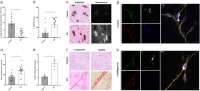
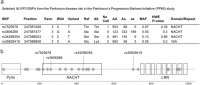
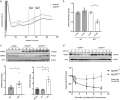
von Herrmann, Salas, Martinez et al
NPJ Parkinsons Dis (2018) 4, 24 DOI: 10.1038/s41531-018-0061-5
AI Summary: OriGene’s human NLRP3 gene clone (RC220952) was used as the template for site-directed mutagenesis to generate NLRP3 variants for functional studies in this paper.
Snippet: ssion inheritance model was used to evaluate the chi-squared test for linear trend of the variants. Site-directed mutagenesis DNA corresponding to the human NLRP3 gene (NM_004895) was purchased from Origene (clone RC220952, Rockville, MD). Site-directed mutagenesis to generate NLRP3 harboring the rs7525979 variant (NLRP3979) was performed using the Stratagene QuikChange Kit (Agilent Technologies,
Showing 1-5 of 5 papers.
Powered by BizGenius
*Delivery time may vary from web posted schedule. Occasional delays may occur due to unforeseen
complexities in the preparation of your product. International customers may expect an additional 1-2 weeks
in shipping.
Related Products
- Price:
- Actual Price:
Welcome to OriGene AI!
I'm your AI-powered guide to everything OriGene.
Ask me anything:
- Product specs
- Ordering help
- Technical questions
- How to find exactly what your experiment needs
Prefer a live agent? Connect with us by clicking the green chat icon, as seen in the image below or email our team at custsupport@origene.com.
