
MLKL (NM_152649) Human Tagged ORF Clone
- TrueORF®
SKU
RC213152
MLKL (Myc-DDK-tagged)-Human mixed lineage kinase domain-like (MLKL), transcript variant 1

$289.00
$686.00
In Stock*
Specifications
| Product Data | |
| Type | Human Tagged ORF Clone |
|---|---|
| Target Symbol | MLKL |
| Synonyms | hMLKL |
| Vector | pCMV6-Entry |
| E. coli Selection | Kanamycin (25 ug/mL) |
| Mammalian Cell Selection | Neomycin |
| Sequence Data | |
| Chromatograms |
Chromatograms
 Sequencher program is needed, download here |
| Restriction Sites |
SgfI-MluI Cloning Scheme for this gene
|
Plasmid Map

|
| ACCN | NM_152649 |
| ORF Size | 1413 bp |
| OTI Disclaimer | The molecular sequence of this clone aligns with the gene accession number as a point of reference only. However, individual transcript sequences of the same gene can differ through naturally occurring variations (e.g. polymorphisms), each with its own valid existence. This clone is substantially in agreement with the reference, but a complete review of all prevailing variants is recommended prior to use. More info |
| OTI Annotation | This clone was engineered to express the complete ORF with an expression tag. Expression varies depending on the nature of the gene. |
| Components | The ORF clone is ion-exchange column purified and shipped in a 2D barcoded Matrix tube containing 10ug of transfection-ready, dried plasmid DNA (reconstitute with 100 ul of water). |
| Reconstitution Method | 1. Centrifuge at 5,000xg for 5min. 2. Carefully open the tube and add 100ul of sterile water to dissolve the DNA. 3. Close the tube and incubate for 10 minutes at room temperature. 4. Briefly vortex the tube and then do a quick spin (less than 5000xg) to concentrate the liquid at the bottom. 5. Store the suspended plasmid at -20°C. The DNA is stable for at least one year from date of shipping when stored at -20°C. |
| Note | Plasmids are not sterile. For experiments where strict sterility is required, filtration with 0.22um filter is required. |
| Shipping | Ambient |
| Reference Data | |
| RefSeq | NM_152649.4 |
| RefSeq Size | 2496 bp |
| RefSeq ORF | 1416 bp |
| Locus ID | 197259 |
| UniProt ID | Q8NB16 |
| Cytogenetics | 16q23.1 |
| Domains | pkinase |
| Protein Families | Druggable Genome, Protein Kinase |
| MW | 54.3 kDa |
| Summary | This gene belongs to the protein kinase superfamily. The encoded protein contains a protein kinase-like domain; however, is thought to be inactive because it lacks several residues required for activity. This protein plays a critical role in tumor necrosis factor (TNF)-induced necroptosis, a programmed cell death process, via interaction with receptor-interacting protein 3 (RIP3), which is a key signaling molecule in necroptosis pathway. Inhibitor studies and knockdown of this gene inhibited TNF-induced necrosis. High levels of this protein and RIP3 are associated with inflammatory bowel disease in children. Alternatively spliced transcript variants have been described for this gene. provided by RefSeq, Sep 2015 |
Reviews


Documents
| Product Manuals |
| FAQs |
| SDS |
Resources
"NM_152649" in other vectors (6)
| SKU | Description | Size | Price | |
|---|---|---|---|---|
| RC213152L1 | Lenti ORF clone of Human mixed lineage kinase domain-like (MLKL), transcript variant 1, Myc-DDK-tagged | 10 ug |
$986.00
|
|
| RC213152L2 | Lenti ORF clone of Human mixed lineage kinase domain-like (MLKL), transcript variant 1, mGFP tagged | 10 ug |
$986.00
|
|
| RC213152L3 | Lenti ORF clone of Human mixed lineage kinase domain-like (MLKL), transcript variant 1, Myc-DDK-tagged | 10 ug |
$986.00
|
|
| RC213152L4 | Lenti ORF clone of Human mixed lineage kinase domain-like (MLKL), transcript variant 1, mGFP tagged | 10 ug |
$986.00
|
|
| RG213152 | MLKL (tGFP-tagged) - Human mixed lineage kinase domain-like (MLKL), transcript variant 1 | 10 ug |
$489.00
$886.00
|
|
| SC108101 | MLKL (untagged)-Human mixed lineage kinase domain-like (MLKL), transcript variant 1 | 10 ug |
$686.00
|
|
Citations
Loss of MLKL impairs abdominal aortic aneurysm development by attenuating smooth muscle cell necroptosis
Nemade, Mehrkens, Lottermoser et al
Cell Death Dis (2026) 17 (1), 217 DOI: 10.1038/s41419-026-08427-4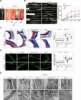
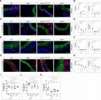
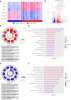
Nemade, Mehrkens, Lottermoser et al
Cell Death Dis (2026) 17 (1), 217 DOI: 10.1038/s41419-026-08427-4
Cited by 2
AI Summary: OriGene’s MLKL cDNA clone (RC213152) was used to amplify full-length and N-domain MLKL for constructing an inducible overexpression system, enabling the study of MLKL-driven necroptosis in smooth muscle cells within this research.
Snippet: p id="Par45">To induce necroptosis in SMCs, we opted for an inducible MLKL overexpression system. The full-length MLKL and N-domain MLKL (amino acid 1–182) were amplified from cDNA clone (RC213152, Origene, USA) using a two-step PCR reaction with primers mentioned in Table 2. The primers are designed to incorporate the attL1 and attL2 overhangs on either
Apomorphine is a novel necroptosis inhibitor targeting mixed lineage kinase domain-like protein oligomerization
Han, Seo, Kwak et al
Cell Death Discov (2025) 11 (1), 457 DOI: 10.1038/s41420-025-02763-8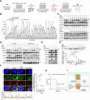
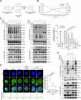
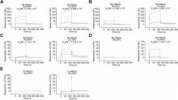
Han, Seo, Kwak et al
Cell Death Discov (2025) 11 (1), 457 DOI: 10.1038/s41420-025-02763-8
Cited by 3
AI Summary: OriGene’s hMLKL plasmid (RC213152) was used in this study to investigate the molecular mechanisms by which apomorphine inhibits necroptosis via targeting MLKL oligomerization.
Snippet: opy (FV1000, Olympus, Tokyo, Japan) was used for image analysis. The signal intensity was measured using FluoView FV1000 software. DNA constructs and recombinant proteins The hMLKL plasmid (RC213152, OriGene, Rockville, MD, USA), and recombinant Wt-hMLKL (ab241453, Abcam) and Wt-mMLKL (MBS1379843, MyBioSource, San Diego, CA, USA) proteins were purchased. Nt-hMLKL (2–154), Nt-mMLKL (1–180), and
Skp2-mediated MLKL degradation confers cisplatin-resistant in non-small cell lung cancer cells
Zhou, Zhou, Guan et al
Commun Biol (2023) 6 (1), 805 DOI: 10.1038/s42003-023-05166-6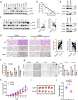
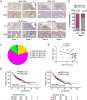
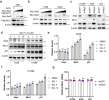
Zhou, Zhou, Guan et al
Commun Biol (2023) 6 (1), 805 DOI: 10.1038/s42003-023-05166-6
Cited by 30
AI Summary: OriGene products, specifically the Skp2 shRNA (shSkp2) and MLKL cDNA constructs, were used to manipulate gene expression in NSCLC cell lines, enabling the authors to investigate the roles of Skp2 and MLKL in cisplatin resistance and tumor growth.
Snippet: ith the shGFP control, knockdown of Skp2 inhibited cell proliferation (Fig. 1f) and anchorage-independent cell growth (Fig. 1g) of these cell lines. In order to determine the role of Skp2 in the tumorigenesis of NSCLC in vivo, we conducted athymic nude mouse models. We found that inhibition of Skp2 expression significantly suppressed tumor growth in the H23 xenograft model (Fig. 1h–j). These
Site-specific ubiquitination of MLKL targets it to endosomes and targets Listeria and Yersinia to the lysosomes
Yoon, Bogdanov, Wallach
Cell Death Differ (2022) 29 (2), 306-322 DOI: 10.1038/s41418-021-00924-7
Yoon, Bogdanov, Wallach
Cell Death Differ (2022) 29 (2), 306-322 DOI: 10.1038/s41418-021-00924-7
Cited by 38
AI Summary: OriGene’s human MLKL cDNA (RC213152) and mouse MLKL cDNA (MR207406) products were used as templates to generate site-directed MLKL mutants, enabling the study of how specific ubiquitination sites affect MLKL’s cellular localization and antibacterial functions.
Snippet: 2G/165G mutants (and, as a control, the WT protein) were expressed constitutively in MLKL knocked-down cells as previously described [20]. Site-directed mutations were introduced in human MLKL cDNA (Origene, RC213152) and mouse MLKL cDNA (Origene, MR207406) using the QuickChange II Site Directed Mutagenesis kit (Agilent, 200521). The GEV16/pF5x UAS system [60] was used to inducibly express, in ML;Site-directed mutations were introduced in human MLKL cDNA (Origene, RC213152) and mouse MLKL cDNA (Origene, MR207406) using the QuickChange II Site Directed Mutagenesis kit (Agilent, 200521)
Mixed Lineage Kinase Domain-Like Protein Promotes Human Monocyte Cell Adhesion to Human Umbilical Vein Endothelial Cells Via Upregulation of Intercellular Adhesion Molecule-1 Expression
Cai, Wang, Wu et al
Med. Sci. Monit. (2020) 26, e924242 DOI: 10.12659/MSM.924242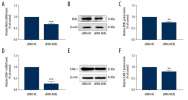
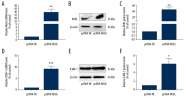
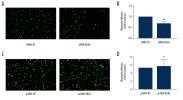
Cai, Wang, Wu et al
Med. Sci. Monit. (2020) 26, e924242 DOI: 10.12659/MSM.924242
AI Summary: OriGene's full-length MLKL cDNA plasmid was used to generate the MLKL overexpression construct (pcDNA-MLKL) for investigating the role of MLKL in cell adhesion and ICAM-1 expression.
Snippet: Plasmid with full-length MLKL cDNA was obtained from OriGene (Rockville, MD, USA). PCR was used to amplify MLKL cDNA, which was subcloned in the pcDNA3.1 (+) vector. The right recombinant plasmid MLKL cDNA (pcDNA-MLKL) sequence was confirmed by sequencing
MLKL Aggravates Ox-LDL-Induced Cell Pyroptosis via Activation of NLRP3 Inflammasome in Human Umbilical Vein Endothelial Cells
Wu, He, Wu et al
Inflammation (2020)
Wu, He, Wu et al
Inflammation (2020)
Cited by 43
Showing 1-6 of 8 papers.
Powered by BizGenius
*Delivery time may vary from web posted schedule. Occasional delays may occur due to unforeseen
complexities in the preparation of your product. International customers may expect an additional 1-2 weeks
in shipping.
Related Products
- Price:
- Actual Price:
Welcome to OriGene AI!
I'm your AI-powered guide to everything OriGene.
Ask me anything:
- Product specs
- Ordering help
- Technical questions
- How to find exactly what your experiment needs
Prefer a live agent? Connect with us by clicking the green chat icon, as seen in the image below or email our team at custsupport@origene.com.
