
Eph receptor A2 (EPHA2) (NM_004431) Human Tagged ORF Clone


$1,340.00
In Stock*
Specifications
| Product Data | |
| Type | Human Tagged ORF Clone |
|---|---|
| Target Symbol | Eph receptor A2 |
| Synonyms | ARCC2; CTPA; CTPP1; CTRCT6; ECK |
| Vector | pCMV6-Entry |
| E. coli Selection | Kanamycin (25 ug/mL) |
| Mammalian Cell Selection | Neomycin |
| Sequence Data | |
| Chromatograms |
Chromatograms
 Sequencher program is needed, download here |
| Restriction Sites |
SgfI-MluI Cloning Scheme for this gene
|
Plasmid Map

|
| ACCN | NM_004431 |
| ORF Size | 2928 bp |
| OTI Disclaimer | Due to the inherent nature of this plasmid, standard methods to replicate additional amounts of DNA in E. coli are highly likely to result in mutations and/or rearrangements. Therefore, OriGene does not guarantee the capability to replicate this plasmid DNA. Additional amounts of DNA can be purchased from OriGene with batch-specific, full-sequence verification at a reduced cost. Please contact our customer care team at custsupport@origene.com or by calling 301.340.3188 option 3 for pricing and delivery. The molecular sequence of this clone aligns with the gene accession number as a point of reference only. However, individual transcript sequences of the same gene can differ through naturally occurring variations (e.g. polymorphisms), each with its own valid existence. This clone is substantially in agreement with the reference, but a complete review of all prevailing variants is recommended prior to use. More info |
| OTI Annotation | This clone was engineered to express the complete ORF with an expression tag. Expression varies depending on the nature of the gene. |
| Components | The ORF clone is ion-exchange column purified and shipped in a 2D barcoded Matrix tube containing 10ug of transfection-ready, dried plasmid DNA (reconstitute with 100 ul of water). |
| Reconstitution Method | 1. Centrifuge at 5,000xg for 5min. 2. Carefully open the tube and add 100ul of sterile water to dissolve the DNA. 3. Close the tube and incubate for 10 minutes at room temperature. 4. Briefly vortex the tube and then do a quick spin (less than 5000xg) to concentrate the liquid at the bottom. 5. Store the suspended plasmid at -20°C. The DNA is stable for at least one year from date of shipping when stored at -20°C. |
| Note | Plasmids are not sterile. For experiments where strict sterility is required, filtration with 0.22um filter is required. |
| Shipping | Ambient |
| Reference Data | |
| RefSeq | NM_004431.5 |
| RefSeq Size | 3963 bp |
| RefSeq ORF | 2931 bp |
| Locus ID | 1969 |
| UniProt ID | P29317, A0A024QZA8 |
| Cytogenetics | 1p36.13 |
| Domains | EPH_lbd, FN3, pkinase, SAM, S_TKc, TyrKc |
| Protein Families | Druggable Genome, Protein Kinase, Transmembrane |
| Protein Pathways | Axon guidance |
| MW | 108.1 kDa |
| Summary | This gene belongs to the ephrin receptor subfamily of the protein-tyrosine kinase family. EPH and EPH-related receptors have been implicated in mediating developmental events, particularly in the nervous system. Receptors in the EPH subfamily typically have a single kinase domain and an extracellular region containing a Cys-rich domain and 2 fibronectin type III repeats. The ephrin receptors are divided into 2 groups based on the similarity of their extracellular domain sequences and their affinities for binding ephrin-A and ephrin-B ligands. This gene encodes a protein that binds ephrin-A ligands. Mutations in this gene are the cause of certain genetically-related cataract disorders.provided by RefSeq, May 2010 |
Reviews


Documents
| Product Manuals |
| FAQs |
| SDS |
Resources
"NM_004431" in other vectors (8)
| SKU | Description | Size | Price | |
|---|---|---|---|---|
| RC205725L1 | Lenti ORF clone of Human EPH receptor A2 (EPHA2), Myc-DDK-tagged | 10 ug |
$1,640.00
|
|
| RC205725L2 | Lenti ORF clone of Human EPH receptor A2 (EPHA2), mGFP tagged | 10 ug |
$1,640.00
|
|
| RC205725L3 | Lenti ORF clone of Human EPH receptor A2 (EPHA2), Myc-DDK-tagged | 10 ug |
$1,640.00
|
|
| RC205725L4 | Lenti ORF clone of Human EPH receptor A2 (EPHA2), mGFP tagged | 10 ug |
$1,640.00
|
|
| RC600038 | EPHA2 (DDK-His-tagged)-Extra Cellular Domain Clone of Homo sapiens EPH receptor A2, Signal peptide (1-23) plus EC domain (24-537) | 10 ug |
$750.00
|
|
| RG205725 | EPHA2 (tGFP-tagged) - Human EPH receptor A2 (EPHA2) | 10 ug |
$1,540.00
|
|
| SC121913 | EPHA2 (untagged)-Human EPH receptor A2 (EPHA2) | 10 ug |
$1,341.00
|
|
| SC323574 | EPHA2 (untagged)-Kinase deficient mutant (K646M) of Human EPH receptor A2 (EPHA2) | 10 ug |
$1,341.00
|
|
Citations
Regorafenib inhibits EphA2 phosphorylation and leads to liver damage via the ERK/MDM2/p53 axis
Yan, Wu, Hu et al
Nat Commun (2023) 14 (1), 2756 DOI: 10.1038/s41467-023-38430-8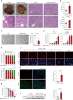
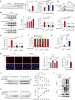
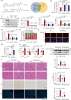
Yan, Wu, Hu et al
Nat Commun (2023) 14 (1), 2756 DOI: 10.1038/s41467-023-38430-8
Cited by 43
AI Summary: OriGene’s anti-p53 antibody (TA502870) was used in this study to assess p53 expression in mouse liver tissues, helping to elucidate the molecular mechanisms underlying regorafenib-induced liver toxicity.
Snippet: min. The p53, phospho-MDM2 (Ser166) or phospho-ERK (Tyr204) expression profile in mice livers was determined by incubating the sections with blocking solution containing anti-p53 (TA502870, 1:100, Origene, MD, USA), anti-phospho-MDM2 (Ser166) (#3521, 1:150, Cell Signaling Technology, Boston, MA, USA) or anti-phospho-ERK (Tyr204) (sc-7383, 1:100, Santa Cruz Biotechnology, Texas, USA) at 4 °C
Manipulation of cell-type selective antibody internalization by a guide-effector bispecific design
Lee, Su, Bidlingmaier et al
Mol. Cancer Ther. (2019) 18 (6), 1092-1103 DOI: 10.1158/1535-7163.MCT-18-1313
Lee, Su, Bidlingmaier et al
Mol. Cancer Ther. (2019) 18 (6), 1092-1103 DOI: 10.1158/1535-7163.MCT-18-1313
EphA2 receptor is a key player in the metastatic onset of Ewing sarcoma
Garcia-Monclús, López-Alemany, Almacellas-Rabaiget et al
Int. J. Cancer (2018) 143 (5), 1188-1201 DOI: 10.1002/ijc.31405
Garcia-Monclús, López-Alemany, Almacellas-Rabaiget et al
Int. J. Cancer (2018) 143 (5), 1188-1201 DOI: 10.1002/ijc.31405
AI Summary: OriGene products contributed to this study by providing the pCMV6-EphA2 Myc-DKK tagged vector (#RC205725) for EphA2 overexpression and the pRS-shEphA2 vector (#TR320327) for EphA2 silencing, enabling the researchers to investigate the role of EphA2 in Ewing sarcoma cell behavior and metastasis.
Cell-type specific potent Wnt signaling blockade by bispecific antibody
Lee, Zhang, Su et al
Sci Rep (2018) 8 (1), 766 DOI: 10.1038/s41598-017-17539-z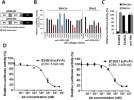
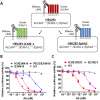
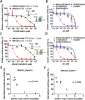
Lee, Zhang, Su et al
Sci Rep (2018) 8 (1), 766 DOI: 10.1038/s41598-017-17539-z
AI Summary: OriGene products, specifically full-length human LRP6, ICAM-1, and EphA2 cDNA cloned into pCMV-Entry, were used for sub-cloning or transient transfection to facilitate the development and testing of bispecific antibodies for cell type-selective Wnt signaling blockade in this study.
Snippet: …A notable difference between our guide/effector approach and oth;Full-length human LRP6, ICAM-1, or EphA2 cDNA cloned into pCMV-Entry (Origene) were used for sub-cloning or transient transfection. pFUSE-hIgG1-Fc2 (InvivoGen) was used for Fc-fusion constructs of truncated LRP6E1E2 and LRP6E3E4 domains. …
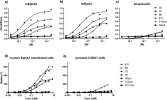
High Affinity Binders to EphA2 Isolated from Abdurin Scaffold Libraries; Characterization, Binding and Tumor Targeting
Ullman, Mathonet, Oleksy et al
PLoS ONE (2015) 10 (8), e0135278 DOI: 10.1371/journal.pone.0135278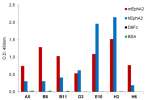
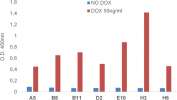
Ullman, Mathonet, Oleksy et al
PLoS ONE (2015) 10 (8), e0135278 DOI: 10.1371/journal.pone.0135278
Cited by 17
AI Summary: OriGene's transfection-ready hEphA2 cDNA was used to generate EphA2-expressing cell lines, enabling the characterization of Abdurin binding specificity in this study.
Snippet: Abdurin binding on EphA2-transfected cells. Chinese Hamster Ovary K1 cells (CHOK1), (ATCC, Manassas, Virginia, USA) were transfected with transfection-ready hEphA2 cDNA (OriGene Technologies, Rockville, Maryland, USA) according to the manufacturer's ... Cite SaveSaving
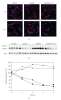
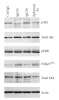
Anti-EphA2 Antibodies with Distinct In Vitro Properties Have Equal In Vivo Efficacy in Pancreatic Cancer
Ansuini, Meola, Gunes et al
J Oncol (2009) 2009, 951917 DOI: 10.1155/2009/951917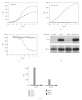
Ansuini, Meola, Gunes et al
J Oncol (2009) 2009, 951917 DOI: 10.1155/2009/951917
Cited by 34
AI Summary: OriGene products contributed to this study by providing the human pancreatic tumor cell line MiaPaCa2 (Cat# CRL-1420) used for evaluating the in vitro properties and in vivo efficacy of the anti-EphA2 monoclonal antibodies.
Showing 1-6 of 7 papers.
Powered by BizGenius
*Delivery time may vary from web posted schedule. Occasional delays may occur due to unforeseen
complexities in the preparation of your product. International customers may expect an additional 1-2 weeks
in shipping.
Related Products
- Price:
- Actual Price:
Welcome to OriGene AI!
I'm your AI-powered guide to everything OriGene.
Ask me anything:
- Product specs
- Ordering help
- Technical questions
- How to find exactly what your experiment needs
Prefer a live agent? Connect with us by clicking the green chat icon, as seen in the image below or email our team at custsupport@origene.com.
