
SIX1 (NM_005982) Human Tagged ORF Clone


$300.00
In Stock*
Specifications
| Product Data | |
| Type | Human Tagged ORF Clone |
|---|---|
| Target Symbol | SIX1 |
| Synonyms | BOS3; DFNA23; TIP39 |
| Vector | pCMV6-Entry |
| E. coli Selection | Kanamycin (25 ug/mL) |
| Mammalian Cell Selection | Neomycin |
| Sequence Data | |
| Chromatograms |
Chromatograms
 Sequencher program is needed, download here |
| Restriction Sites |
SgfI-MluI Cloning Scheme for this gene
|
Plasmid Map

|
| ACCN | NM_005982 |
| ORF Size | 852 bp |
| OTI Disclaimer | The molecular sequence of this clone aligns with the gene accession number as a point of reference only. However, individual transcript sequences of the same gene can differ through naturally occurring variations (e.g. polymorphisms), each with its own valid existence. This clone is substantially in agreement with the reference, but a complete review of all prevailing variants is recommended prior to use. More info |
| OTI Annotation | This clone was engineered to express the complete ORF with an expression tag. Expression varies depending on the nature of the gene. |
| Components | The ORF clone is ion-exchange column purified and shipped in a 2D barcoded Matrix tube containing 10ug of transfection-ready, dried plasmid DNA (reconstitute with 100 ul of water). |
| Reconstitution Method | 1. Centrifuge at 5,000xg for 5min. 2. Carefully open the tube and add 100ul of sterile water to dissolve the DNA. 3. Close the tube and incubate for 10 minutes at room temperature. 4. Briefly vortex the tube and then do a quick spin (less than 5000xg) to concentrate the liquid at the bottom. 5. Store the suspended plasmid at -20°C. The DNA is stable for at least one year from date of shipping when stored at -20°C. |
| Note | Plasmids are not sterile. For experiments where strict sterility is required, filtration with 0.22um filter is required. |
| Shipping | Ambient |
| Reference Data | |
| RefSeq | NM_005982.4 |
| RefSeq Size | 2687 bp |
| RefSeq ORF | 855 bp |
| Locus ID | 6495 |
| UniProt ID | Q15475 |
| Cytogenetics | 14q23.1 |
| Protein Families | Transcription Factors |
| MW | 32.2 kDa |
| Summary | The protein encoded by this gene is a homeobox protein that is similar to the Drosophila 'sine oculis' gene product. This gene is found in a cluster of related genes on chromosome 14 and is thought to be involved in limb development. Defects in this gene are a cause of autosomal dominant deafness type 23 (DFNA23) and branchiootic syndrome type 3 (BOS3). provided by RefSeq, Jul 2008 |
Reviews


Documents
| Product Manuals |
| FAQs |
| SDS |
Resources
"NM_005982" in other vectors (6)
| SKU | Description | Size | Price | |
|---|---|---|---|---|
| RC203465L1 | Lenti ORF clone of Human SIX homeobox 1 (SIX1), Myc-DDK-tagged | 10 ug |
$600.00
|
|
| RC203465L2 | Lenti ORF clone of Human SIX homeobox 1 (SIX1), mGFP tagged | 10 ug |
$600.00
|
|
| RC203465L3 | Lenti ORF clone of Human SIX homeobox 1 (SIX1), Myc-DDK-tagged | 10 ug |
$600.00
|
|
| RC203465L4 | Lenti ORF clone of Human SIX homeobox 1 (SIX1), mGFP tagged | 10 ug |
$600.00
|
|
| RG203465 | SIX1 (tGFP-tagged) - Human SIX homeobox 1 (SIX1) | 10 ug |
$489.00
$500.00
|
|
| SC123830 | SIX1 (untagged)-Human SIX homeobox 1 (SIX1) | 10 ug |
$300.00
|
|
Citations
Phenotypic and molecular basis of SIX1 variants linked to non-syndromic deafness and atypical branchio-otic syndrome in South Korea
Lee, Yun, Cha et al
Sci Rep (2023) 13 (1), 11776 DOI: 10.1038/s41598-023-38909-w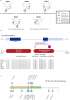
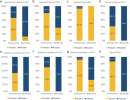
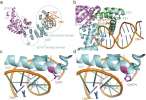
Lee, Yun, Cha et al
Sci Rep (2023) 13 (1), 11776 DOI: 10.1038/s41598-023-38909-w
Cited by 17
AI Summary: OriGene products, specifically the human SIX1 cDNA clone (RC203465) and the EYA1 Human Tagged ORF Clone (RC219782), were used in this study to generate and analyze wild-type and mutant SIX1 and EYA1 proteins, enabling investigation of their molecular interactions and functional effects in non-syndromic deafness and atypical branchio-otic syndrome.
Snippet: ics System v. 2.0, Schrödinger Inc., New York, NY, USA). Plasmids, cell culture, and transfection A human SIX1 cDNA clone (RC203465) and an EYA1 Human Tagged ORF Clone (RC219782) was purchased from Origene. The SIX1 variant plasmids, including pCMV6-Myc-DDK entry, pCMV6-SIX1 wild-type-Myc-DDK, pCMV6-SIX1 p.Leu103Profs*51-Myc-DDK, pCMV6-SIX1 p.Glu125Lys-Myc-DDK, pCMV6-SIX1 p.Tyr129_Cys130del-Myc
Six1 Overexpression Promotes Glucose Metabolism and Invasion Through Regulation of GLUT3, MMP2 and Snail in Thyroid Cancer Cells
Yang, Xu, Gong et al
Onco Targets Ther (2020) 13, 4855-4863 DOI: 10.2147/OTT.S227291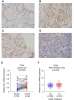
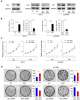
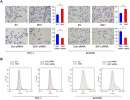
Yang, Xu, Gong et al
Onco Targets Ther (2020) 13, 4855-4863 DOI: 10.2147/OTT.S227291
AI Summary: OriGene’s pCMV-SIX1 transfection plasmid was used to overexpress Six1 in thyroid cancer cells, enabling the study of Six1’s role in promoting glucose metabolism and invasion.
Snippet: Cells were cultured in RPMI-1640 medium con- taining 10% fetal bovine serum (FBS). pCMV-SIX1 trans- fection plasmid was obtained from Origene. siRNA sequences for Six1 and scramble siRNA were purchased from Dharmacon
miR-23a-3p/SIX1 regulates glucose uptake and proliferation through GLUT3 in head and neck squamous cell carcinomas
Wang, Xue, Ouyang et al
J Cancer (2020) 11 (9), 2529-2539 DOI: 10.7150/jca.30995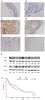
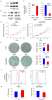
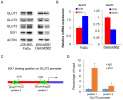
Wang, Xue, Ouyang et al
J Cancer (2020) 11 (9), 2529-2539 DOI: 10.7150/jca.30995
Cited by 16
AI Summary: OriGene products, specifically the SIX1 plasmid (RC208636) and SIX1 shRNA (TL313236), were used in this study to overexpress and knockdown SIX1 in HNSCC cell lines, enabling the authors to investigate the role of SIX1 in regulating glucose uptake and cell proliferation.
MicroRNA-23a inhibits endometrial cancer cell development by targeting SIX1
Li, Sun, Ma et al
Oncol Lett (2019) 18 (4), 3792-3802 DOI: 10.3892/ol.2019.10694
Li, Sun, Ma et al
Oncol Lett (2019) 18 (4), 3792-3802 DOI: 10.3892/ol.2019.10694
microRNA-488 inhibits chemoresistance of ovarian cancer cells by targeting Six1 and mitochondrial function
Yang, Feng, Gu et al
Oncotarget (2017) 8 (46), 80981-80993 DOI: 10.18632/oncotarget.20941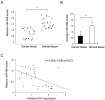
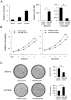
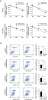
Yang, Feng, Gu et al
Oncotarget (2017) 8 (46), 80981-80993 DOI: 10.18632/oncotarget.20941
Snippet: pCMV6-Six1 construct was purchased from Origene company (Origene, USA). Lipofectamine 3000 (Life technology, USA) was used for transfection
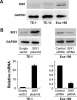
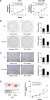
SIX1 overexpression predicts poor prognosis and induces radioresistance through AKT signaling in esophageal squamous cell carcinoma
He, Li, Tang et al
Onco Targets Ther (2017) 10, 1071-1079 DOI: 10.2147/OTT.S125330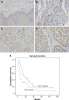
He, Li, Tang et al
Onco Targets Ther (2017) 10, 1071-1079 DOI: 10.2147/OTT.S125330
AI Summary: OriGene contributed to this study by providing the SIX1 plasmid, which was used to overexpress SIX1 in esophageal squamous cell carcinoma cell lines to investigate its role in cancer progression and radioresistance.
Snippet: Cells were cultured in Dulbecco's Modified Eagle's Medium (Thermo Fisher Scientific, Waltham, MA, USA) containing 10% fetal bovine serum (FBS;Gibco, Thermo Fisher Scientific). SIX1 plasmid was obtained from Origene (Rockville, MD, USA). ... All 3 versions Cite SaveSaving
Showing 1-6 of 8 papers.
Powered by BizGenius
*Delivery time may vary from web posted schedule. Occasional delays may occur due to unforeseen
complexities in the preparation of your product. International customers may expect an additional 1-2 weeks
in shipping.
Related Products
- Price:
- Actual Price:
Welcome to OriGene AI!
I'm your AI-powered guide to everything OriGene.
Ask me anything:
- Product specs
- Ordering help
- Technical questions
- How to find exactly what your experiment needs
Prefer a live agent? Connect with us by clicking the green chat icon, as seen in the image below or email our team at custsupport@origene.com.
