
TRIP13 (NM_004237) Human Tagged ORF Clone

SKU
RC201285
TRIP13 (Myc-DDK-tagged)-Human thyroid hormone receptor interactor 13 (TRIP13), transcript variant 1

$457.00
In Stock*
Specifications
| Product Data | |
| Type | Human Tagged ORF Clone |
|---|---|
| Target Symbol | TRIP13 |
| Synonyms | 16E1BP; MVA3; OOMD9 |
| Vector | pCMV6-Entry |
| E. coli Selection | Kanamycin (25 ug/mL) |
| Mammalian Cell Selection | Neomycin |
| Sequence Data | |
| Chromatograms |
Chromatograms
 Sequencher program is needed, download here |
| Restriction Sites |
SgfI-MluI Cloning Scheme for this gene
|
Plasmid Map

|
| ACCN | NM_004237 |
| ORF Size | 1296 bp |
| OTI Disclaimer | The molecular sequence of this clone aligns with the gene accession number as a point of reference only. However, individual transcript sequences of the same gene can differ through naturally occurring variations (e.g. polymorphisms), each with its own valid existence. This clone is substantially in agreement with the reference, but a complete review of all prevailing variants is recommended prior to use. More info |
| OTI Annotation | This clone was engineered to express the complete ORF with an expression tag. Expression varies depending on the nature of the gene. |
| Components | The ORF clone is ion-exchange column purified and shipped in a 2D barcoded Matrix tube containing 10ug of transfection-ready, dried plasmid DNA (reconstitute with 100 ul of water). |
| Reconstitution Method | 1. Centrifuge at 5,000xg for 5min. 2. Carefully open the tube and add 100ul of sterile water to dissolve the DNA. 3. Close the tube and incubate for 10 minutes at room temperature. 4. Briefly vortex the tube and then do a quick spin (less than 5000xg) to concentrate the liquid at the bottom. 5. Store the suspended plasmid at -20°C. The DNA is stable for at least one year from date of shipping when stored at -20°C. |
| Note | Plasmids are not sterile. For experiments where strict sterility is required, filtration with 0.22um filter is required. |
| Shipping | Ambient |
| Reference Data | |
| RefSeq | NM_004237.4 |
| RefSeq Size | 2408 bp |
| RefSeq ORF | 1299 bp |
| Locus ID | 9319 |
| UniProt ID | Q15645 |
| Cytogenetics | 5p15.33 |
| Protein Families | Druggable Genome, Stem cell - Pluripotency, Transcription Factors |
| MW | 48.6 kDa |
| Summary | This gene encodes a protein that interacts with thyroid hormone receptors, also known as hormone-dependent transcription factors. The gene product interacts specifically with the ligand binding domain. This gene is one of several that may play a role in early-stage non-small cell lung cancer. provided by RefSeq, Oct 2009 |
Reviews


Documents
| Product Manuals |
| FAQs |
| SDS |
Resources
"NM_004237" in other vectors (6)
| SKU | Description | Size | Price | |
|---|---|---|---|---|
| RC201285L1 | Lenti ORF clone of Human thyroid hormone receptor interactor 13 (TRIP13), transcript variant 1, Myc-DDK-tagged | 10 ug |
$757.00
|
|
| RC201285L2 | Lenti ORF clone of Human thyroid hormone receptor interactor 13 (TRIP13), transcript variant 1, mGFP tagged | 10 ug |
$757.00
|
|
| RC201285L3 | Lenti ORF clone of Human thyroid hormone receptor interactor 13 (TRIP13), transcript variant 1, Myc-DDK-tagged | 10 ug |
$757.00
|
|
| RC201285L4 | Lenti ORF clone of Human thyroid hormone receptor interactor 13 (TRIP13), transcript variant 1, mGFP tagged | 10 ug |
$757.00
|
|
| RG201285 | TRIP13 (tGFP-tagged) - Human thyroid hormone receptor interactor 13 (TRIP13), transcript variant 1 | 10 ug |
$657.00
|
|
| SC125723 | TRIP13 (untagged)-Human thyroid hormone receptor interactor 13 (TRIP13), transcript variant 1 | 10 ug |
$457.00
|
|
Citations
CCAR2 functions downstream of the Shieldin complex to promote double-strand break end-joining
Iyer, Harada, Clairmont et al
Proc Natl Acad Sci U S A (2022) 119 (49), e2214935119 DOI: 10.1073/pnas.2214935119
Iyer, Harada, Clairmont et al
Proc Natl Acad Sci U S A (2022) 119 (49), e2214935119 DOI: 10.1073/pnas.2214935119
Cited by 15
TRIP13 promotes the proliferation and invasion of lung cancer cells via the Wnt signaling pathway and epithelial-mesenchymal transition
Li, Lei, Fei et al
J Mol Histol (2020)
Li, Lei, Fei et al
J Mol Histol (2020)
Cited by 26
TRIP13 and APC15 drive mitotic exit by turnover of interphase- and unattached kinetochore-produced MCC
Kim, Han, Ly et al
Nat Commun (2018) 9 (1), 4354 DOI: 10.1038/s41467-018-06774-1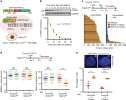
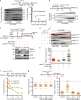
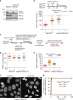
Kim, Han, Ly et al
Nat Commun (2018) 9 (1), 4354 DOI: 10.1038/s41467-018-06774-1
AI Summary: OriGene's full-length TRIP13 ORF product was used to generate TRIP13 expression constructs, enabling the study of TRIP13's role in mitotic checkpoint regulation and mitotic exit in this research.
Snippet: several studies have highlighted that TRIP13 is overexpressed in many cancer types, and that high-level TRIP13 expression correlates with poor patient outcomes57,58. The contributions of TRIP13 to tumorigenesis and cancer progression remain largely mysterious. Here, we develop an inducible system to rapidly and completely deplete TRIP13 in cultured human cells by engineering auxin-inducible degro;Full-length ORFs of TRIP13 were obtained from OriGene technologies (Rockville, MD). cDNAs of TRIP13 were cloned into a pcDNA5/FRT/TO-based vector (Invitrogen) modified to contain an amino-terminus LAP tag. … TRIP13EQ variant (E253Q) was generated by QuickChangeII site-directed mutagenesis kit (Agilent)
TRIP13 promotes error-prone nonhomologous end joining and induces chemoresistance in head and neck cancer
Banerjee, Russo, Liu et al
Nat Commun (2014) 5, 4527 DOI: 10.1038/ncomms5527
Banerjee, Russo, Liu et al
Nat Commun (2014) 5, 4527 DOI: 10.1038/ncomms5527
Cited by 156
AI Summary: OriGene's pCMV6-Flag-TRIP13 and pCMV6-Flag control vector were used to overexpress TRIP13 in UM-SCC-1 cells, enabling the study of TRIP13's role in promoting error-prone DNA repair and chemoresistance in head and neck cancer.
Snippet: TRIP13 was downregulated with TRIP13 siRNA (Dharmacon, Lafayette, CO, USA;sequence of siRNA used is listed in Supplementary Fig. 1C). For overexpression of TRIP13, UM-SCC-1 cells were transfected with pCMV6-Flag-TRIP13 or pCMV6-Flag control vector (Origene, Rockville, MD, USA). For inducible TRIP13 downregulation, unique microRNA-30-based doxycycline-inducible Expression Arrest TRIPZ Lentiviral shRNAmir constructs were purchased from Thermo Scientific Open Biosystem
Showing 1-4 of 4 papers.
Powered by BizGenius
*Delivery time may vary from web posted schedule. Occasional delays may occur due to unforeseen
complexities in the preparation of your product. International customers may expect an additional 1-2 weeks
in shipping.
Related Products
- Price:
- Actual Price:
Welcome to OriGene AI!
I'm your AI-powered guide to everything OriGene.
Ask me anything:
- Product specs
- Ordering help
- Technical questions
- How to find exactly what your experiment needs
Prefer a live agent? Connect with us by clicking the green chat icon, as seen in the image below or email our team at custsupport@origene.com.
